
Introduction
In today’s fast-paced digital economy, customer engagement is no longer about sending one-way messages. Customers expect instant, personalized, and reliable communication with the brands they trust. Among all the messaging platforms, WhatsApp has emerged as the global leader—with over 2.8 billion active users worldwide (2025)—making it the most powerful channel for businesses to connect with customers.
This is where the WhatsApp Business API comes into play. It’s not just a tool; it’s a game-changer in modern customer engagement. From enabling automated customer support to creating personalized marketing campaigns, the API empowers businesses of all sizes to engage effectively, drive loyalty, and boost conversions.
In this blog, we’ll explore how WhatsApp Business API is shaping the future of customer engagement, its benefits, practical use cases, and why businesses cannot afford to ignore it.
1. Understanding WhatsApp Business API
Before diving into the future, it’s important to understand what the WhatsApp Business API (WABA) actually is.
Unlike the WhatsApp Business App (which is built for small businesses with limited features), the API is designed for medium to large businesses that need scalability, automation, and multi-agent communication.
Key Features of WhatsApp Business API:
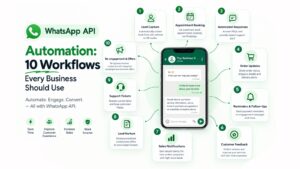
Automated Messaging – Welcome messages, reminders, confirmations.
Multi-Agent Access – Multiple team members can manage one WhatsApp number.
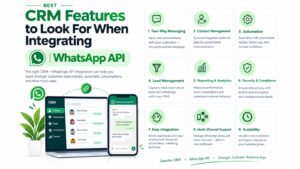
Integration with CRMs – Seamlessly connect with HubSpot, Salesforce, Zoho, etc.
Rich Media Messaging – Send catalogs, videos, PDFs, and interactive buttons.
End-to-End Encryption – Secure communication builds customer trust.
Green Tick Verification – Adds credibility and authenticity to your brand.
The API is not a standalone app—it requires setup via WhatsApp Business Solution Providers (BSPs) or direct integration with platforms.
2. Why WhatsApp Business API is the Future of Customer Engagement
2.1 Customers are Already on WhatsApp
Unlike emails or SMS, where open rates are low, WhatsApp boasts 98% open rates. People check WhatsApp multiple times a day, making it the perfect channel for instant engagement.
2.2 Personalization at Scale
With the API, businesses can send personalized offers, order updates, and tailored recommendations at scale using customer data. Personalized engagement builds loyalty and increases sales.
2.3 Real-Time Support
Customers expect instant solutions. WhatsApp API allows chatbots and human agents to collaborate seamlessly, ensuring 24/7 real-time support.
2.4 Secure & Trusted Communication
WhatsApp’s end-to-end encryption and business verification make it one of the most trusted channels for sensitive communication like banking, healthcare, and e-commerce.
2.5 Future-Ready Customer Experience
As AI and automation evolve, WhatsApp API will integrate with chatbots, AI assistants, and CRM workflows, creating a next-gen customer experience that’s proactive and predictive.
3. Benefits of WhatsApp Business API for Businesses
3.1 Enhanced Customer Engagement
Personalized messages build deeper relationships.
Automated follow-ups increase interaction.
Quick responses reduce customer frustration.
3.2 Increased Conversions
WhatsApp campaigns see 3x higher conversion rates compared to email.
Customers are more likely to purchase when they receive instant updates/offers.
3.3 Cost Efficiency
Reduces dependency on call centers.
One WhatsApp number can handle thousands of queries simultaneously.
3.4 Global Reach
WhatsApp is available in 180+ countries and supports 60+ languages.
Perfect for businesses targeting an international audience.
3.5 Improved Customer Retention
Sending timely reminders, re-engagement messages, and feedback requests boosts retention.
Loyalty programs integrated with WhatsApp make customers feel valued.
4. Practical Use Cases of WhatsApp Business API
4.1 E-Commerce & Retail
Order confirmations & delivery tracking
Sending product catalogs
Abandoned cart recovery messages
4.2 Banking & Finance
Transaction alerts & OTPs
Loan & EMI reminders
Fraud detection alerts
4.3 Healthcare
Appointment reminders
Prescription refills
Patient support & test results
4.4 Travel & Hospitality
Booking confirmations
Check-in & boarding passes
Travel alerts & itinerary updates
4.5 Education
Admission updates
Fee reminders
Online class notifications
4.6 Customer Support & Service Centers
24/7 automated FAQs
Escalation to human agents
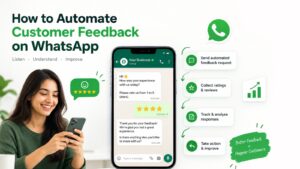
Post-service feedback collection
5. Future Trends in WhatsApp Business API
5.1 AI-Powered Chatbots
Future customer engagement will be driven by AI chatbots integrated with WhatsApp API, offering instant, intelligent solutions.
5.2 Voice & Video Integration
Beyond text, businesses will use voice notes and video messages for richer engagement.
5.3 Advanced Analytics
Businesses will track customer journeys, sentiment analysis, and campaign ROI directly within WhatsApp dashboards.
5.4 Payment Integration
WhatsApp Pay will become a mainstream payment option, enabling seamless in-chat transactions.
5.5 Hyper-Personalization
With data-driven insights, WhatsApp will allow predictive messaging—reaching customers before they even ask.
6. How to Get Started with WhatsApp Business API
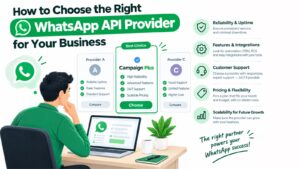
Choose a BSP (Business Solution Provider): Like Twilio, 360dialog, Infobip, etc.
Register Your Business: Apply for API access with your business details.
Verify Business Account: Get the official green tick badge.
Integrate with CRM/Tools: Connect with your marketing and support platforms.
Set Up Templates: Pre-approved WhatsApp templates for notifications and promotions.
Launch Campaigns: Start engaging customers with automation, chatbots, and agents.
7. Challenges & Solutions
7.1 Template Approval Process
Challenge: WhatsApp requires pre-approved templates.
Solution: Plan and submit multiple templates in advance.
7.2 Cost per Conversation
Challenge: WhatsApp API pricing is based on conversations.
Solution: Use automation to minimize unnecessary chats.
7.3 Learning Curve
Challenge: Teams may struggle to adapt to new workflows.
Solution: Train employees and use simple dashboards provided by BSPs.
Conclusion
The WhatsApp Business API is the future of customer engagement. With unmatched reach, personalization, and trust, it allows businesses to provide real-time, secure, and interactive communication. Whether you are an e-commerce store, a bank, a healthcare provider, or a service brand, the API can transform how you interact with your customers.
Businesses that adopt WhatsApp API today will stay ahead in customer engagement tomorrow.
👉 If you want to harness the full power of WhatsApp Business API for your business, contact TrendingBulb and Step4Growth — they’ll help you turn chats into customers.