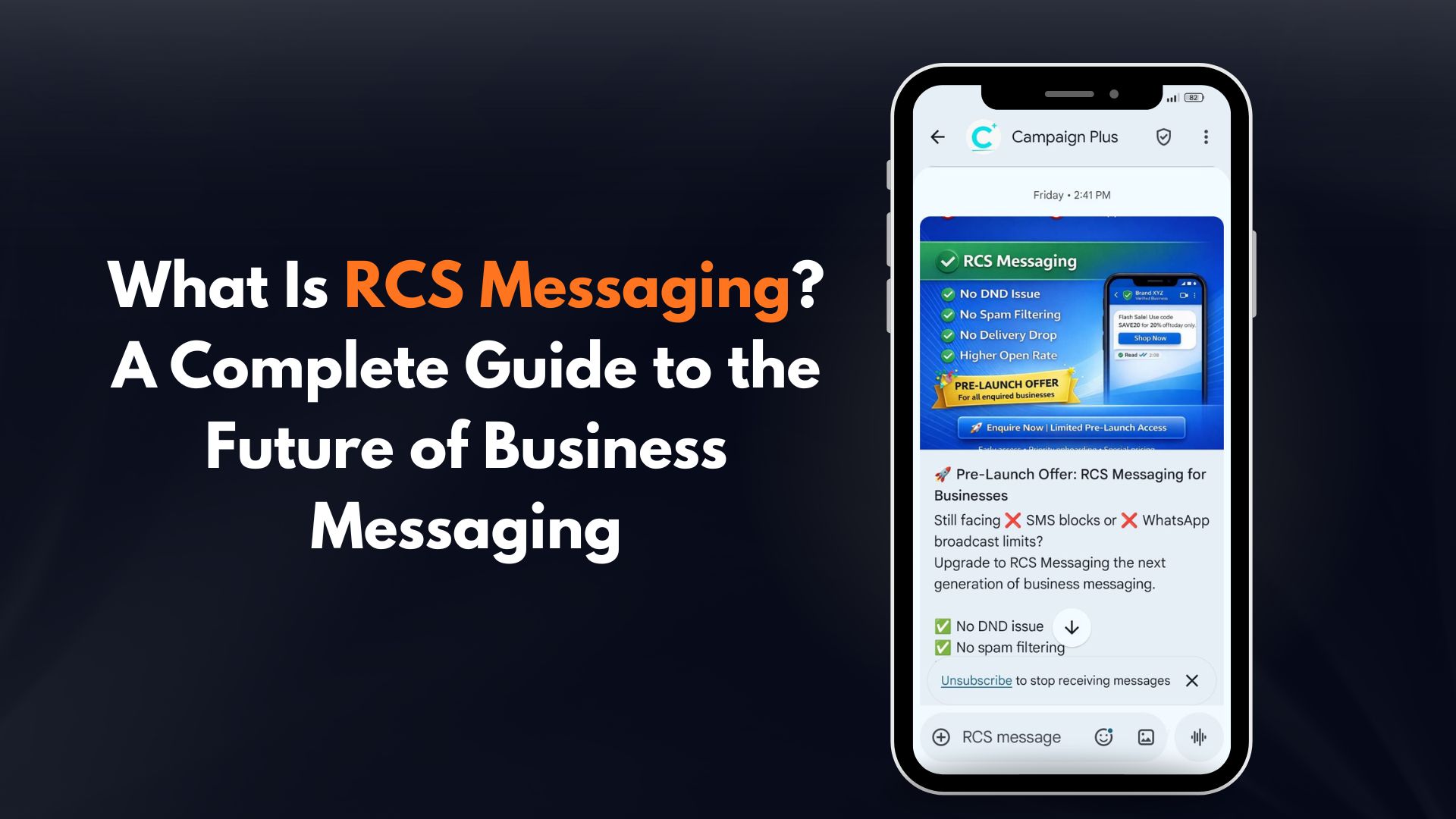
What is RCS Messaging? A Complete Guide to the Future of Business Messaging
In today’s digital-first world, communication between businesses and customers is evolving rapidly. Traditional SMS has been around for decades, but it lacks interactivity, visuals, and engagement. This is where RCS Messaging comes into play.
RCS (Rich Communication Services) is the next-generation messaging protocol designed to replace SMS and MMS. It brings app-like experiences directly into the default messaging app on Android devices, without requiring users to download any additional application.
This blog will help you understand what RCS messaging is, how it works, its features, benefits, use cases, and why it is becoming the future of business messaging.
What is RCS Messaging?
RCS Messaging stands for Rich Communication Services. It is a communication protocol developed by the GSM Association (GSMA) to upgrade traditional SMS.
Unlike SMS, which supports only plain text, RCS enables:
Rich media (images, videos, GIFs)
Interactive buttons
Read receipts
Typing indicators
Verified business profiles
Carousels and suggested replies
RCS works inside the default messaging app on supported Android devices, offering a WhatsApp-like experience without needing third-party apps.
Why Was RCS Introduced?
SMS has several limitations:
No multimedia support (or very limited with MMS)
No delivery/read confirmation
No interactivity
Low engagement rates
With customers expecting rich and instant communication, RCS was introduced to:
Modernize messaging
Improve customer experience
Help businesses communicate more effectively
Bridge the gap between SMS and OTT apps like WhatsApp
How Does RCS Messaging Work?
RCS messaging works over the internet (mobile data or Wi-Fi) instead of traditional cellular networks.
Key Components:
User Device: Android phone with RCS-enabled messaging app
Carrier Support: Telecom operators supporting RCS
Google Jibe Platform: Google provides RCS infrastructure globally
Business Messaging Platform: Used by brands to send RCS messages
When all conditions are met, messages are automatically delivered as RCS. If not, they fall back to SMS.
Key Features of RCS Messaging
1. Rich Media Support
Send high-quality images, videos, audio files, and GIFs.
2. Interactive Buttons
Allow users to take actions like:
Buy Now
Track Order
Call Support
Visit Website
3. Read Receipts & Typing Indicators
Know when your message is read and when the user is typing.
4. Branded Business Profiles
Businesses get verified profiles with:
Brand name
Logo
Description
Contact details
This builds trust and credibility.
5. Carousels & Cards
Show multiple products or offers in a swipeable format.
6. Suggested Replies
One-tap quick replies improve user experience and conversions.
RCS vs SMS: Key Differences
| Feature | SMS | RCS |
|---|---|---|
| Message Type | Text only | Rich multimedia |
| Internet Required | ❌ No | ✅ Yes |
| Read Receipts | ❌ No | ✅ Yes |
| Buttons | ❌ No | ✅ Yes |
| Branding | ❌ No | ✅ Yes |
| Engagement | Low | Very High |
What is RCS Business Messaging?
RCS Business Messaging (RBM) allows brands to communicate with customers using interactive, branded, and rich messages.
Businesses can use RCS for:
Marketing campaigns
Transactional alerts
Customer support
Order updates
Product launches
It offers a conversational commerce experience directly inside the messaging app.
Benefits of RCS Messaging for Businesses
1. Higher Engagement Rates
Rich visuals and interactivity significantly improve CTRs.
2. Improved Customer Trust
Verified sender profiles reduce spam and fraud.
3. Better Conversion Rates
Action buttons reduce friction in customer journeys.
4. No App Download Required
Works on default messaging app.
5. Real-Time Analytics
Track delivery, reads, clicks, and interactions.
Common Use Cases of RCS Messaging
🔔 Transactional Messages
OTPs
Order confirmations
Delivery updates
Payment alerts
📢 Marketing Campaigns
Product launches
Discounts & offers
Festive campaigns
🛍️ E-commerce
Product catalogs
Abandoned cart reminders
Order tracking
📞 Customer Support
Automated responses
Appointment scheduling
Service updates
RCS Adoption & Global Reach
Supported on most Android devices
Powered by Google
Available in many countries including India
Growing rapidly among enterprises
As Android dominates the smartphone market, RCS adoption is increasing every year.
Is RCS Messaging Secure?
Yes, RCS provides:
Verified business identities
Secure message delivery
Reduced phishing risks
However, end-to-end encryption depends on implementation and carrier support.
RCS Messaging in India
India is a high-potential market for RCS due to:
Large Android user base
Growing digital businesses
High SMS marketing usage
Many brands are already shifting from SMS to RCS for better engagement.
Future of RCS Messaging
RCS is expected to:
Replace traditional SMS
Compete strongly with WhatsApp Business
Enable AI-powered chat experiences
Become a key channel for conversational commerce
With continuous support from Google and telecom operators, RCS is positioned as the future of messaging.
Challenges of RCS Messaging
Limited support on iPhones (Apple doesn’t support RCS fully yet)
Requires internet connection
Carrier dependency in some regions
Despite this, adoption is growing steadily.
Conclusion: Why RCS Messaging Matters for Businesses
RCS Messaging is transforming the way businesses communicate with customers. It combines the reach of SMS with the rich experience of chat apps, making it a powerful tool for marketing, engagement, and customer support.
For brands looking to stay ahead in digital communication, adopting RCS is no longer optional—it’s essential.
Platforms and digital growth partners like TrendingBulb and Step4Growth are already helping businesses leverage advanced messaging technologies such as RCS, WhatsApp automation, and conversational marketing to drive better engagement and higher conversions. By integrating RCS into your communication strategy with the right guidance, businesses can unlock the next level of customer experience and growth.