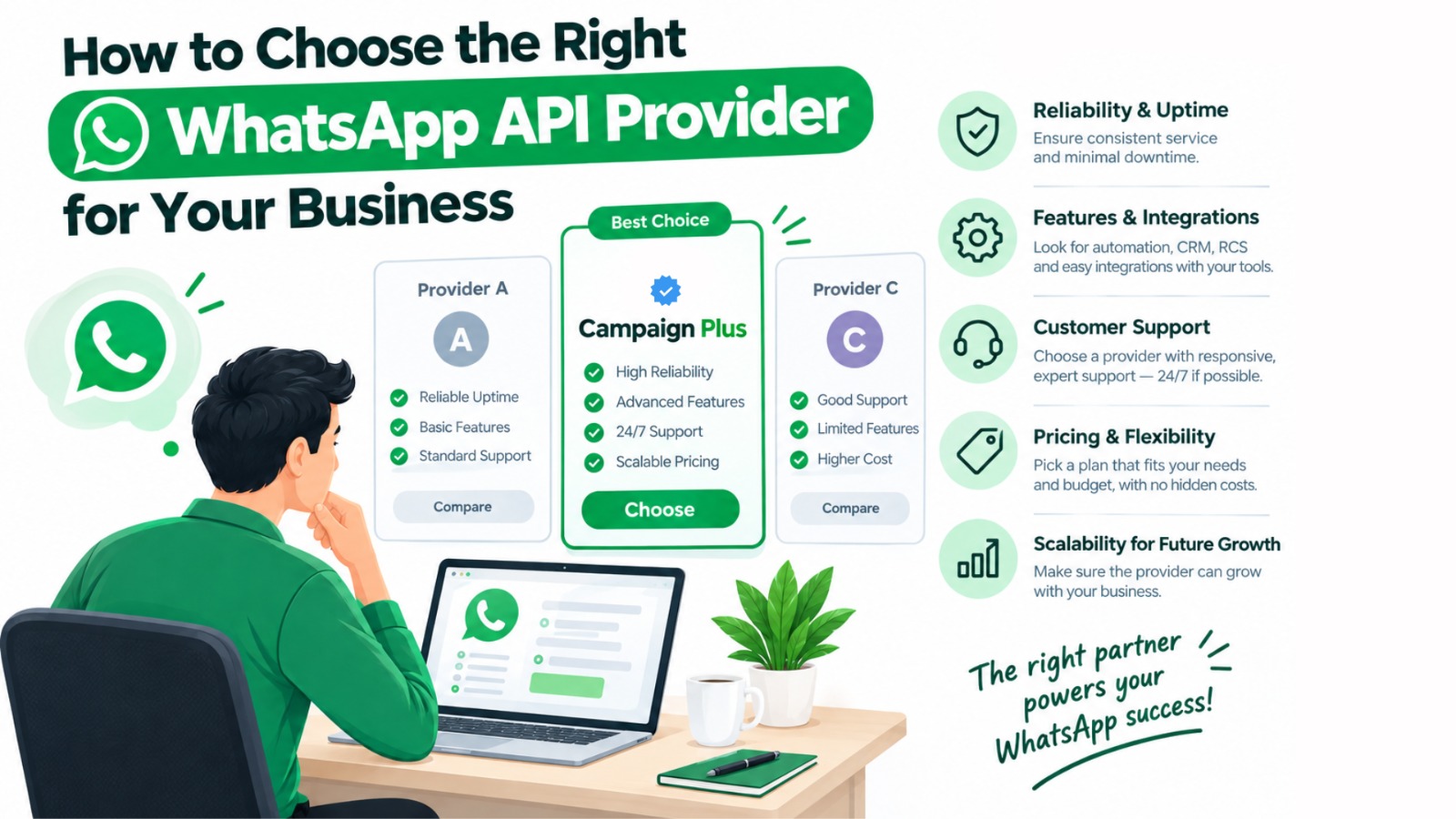
WhatsApp has become an important communication channel for businesses that want to connect with customers quickly. However, simply using WhatsApp for business is not enough when you need automation, multiple-user access, customer support, lead management, and scalable messaging.
That is where a WhatsApp API provider can help.
With the right WhatsApp API solution, businesses can automate conversations, manage leads, send approved message templates, connect WhatsApp with CRM systems, and build structured customer journeys. Moreover, teams can manage customer conversations more efficiently without depending entirely on manual replies.
However, choosing a provider can be challenging. There are many platforms offering WhatsApp API, chatbots, automation, integrations, and different pricing models. Therefore, businesses need to evaluate providers based on their actual requirements rather than choosing a platform simply because it offers the lowest price.
For businesses researching WhatsApp automation, Trending Bulb focuses on digital marketing and content strategies that help brands improve their online presence. Similarly, Step4Growth can support businesses with digital growth strategies, while Campaign Plus provides WhatsApp automation, chatbot and more to make business growth.
So, how do you choose the right WhatsApp API provider?
Let’s explore the key factors you should consider.
What Is a WhatsApp API Provider?
A WhatsApp API provider offers technology and tools that allow businesses to use WhatsApp for structured, scalable business communication.
Unlike the regular WhatsApp Business app, an API-based solution can support more advanced business workflows.
For example, businesses can use WhatsApp API solutions for:
- Automated customer messages
- Lead follow-ups
- Customer support
- WhatsApp chatbots
- Order notifications
- Appointment reminders
- Marketing communication
- CRM integration
- Lead qualification
- Multiple-agent conversations
- Customer journey automation
As a result, businesses can move beyond basic one-to-one communication and create automated customer experiences.
However, every provider offers different features. Therefore, you should compare the platform capabilities with your business requirements before making a decision.
Why Choosing the Right WhatsApp API Provider Matters
The provider you select can directly affect your customer communication workflow.
For instance, imagine a customer sends a message after business hours. If your WhatsApp setup cannot automate the initial response, the customer may have to wait until the next working day.
On the other hand, an automated workflow can instantly acknowledge the message, collect basic information, answer frequently asked questions, or route the conversation to the right team.
Furthermore, a suitable provider can help you:
- Respond to customers faster
- Reduce repetitive manual work
- Improve lead follow-up
- Organize customer conversations
- Connect WhatsApp with business systems
- Automate customer support
- Track communication workflows
- Scale communication as your business grows
Therefore, the decision should not be based only on pricing. Instead, look at the complete value offered by the WhatsApp API provider.
10 Factors to Consider When Choosing a WhatsApp API Provider
Choosing a provider becomes easier when you have a clear checklist.
Here are the most important factors to evaluate.
1. Reliability and Uptime
First, check the reliability of the platform.
Your WhatsApp communication may handle customer inquiries, sales conversations, notifications, and support requests. Therefore, downtime can interrupt important business processes.
A reliable provider should offer a stable platform and dependable infrastructure.
Before choosing a provider, consider:
- Platform reliability
- Message delivery performance
- System stability
- Monitoring capabilities
- Downtime communication
- Backup and recovery processes
Moreover, ask how the provider handles technical issues.
A provider may have impressive features, but those features are less useful if the platform is unreliable.
2. WhatsApp API Features
Next, evaluate the features available through the platform.
Different businesses have different requirements. A small business may only need automated replies, while a growing company may require CRM integration, chatbots, lead routing, and advanced automation.
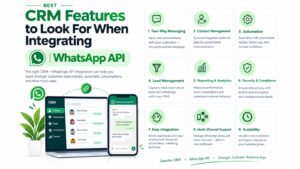
Look for features such as:
- WhatsApp automation
- Chatbot builder
- Message templates
- Automated follow-ups
- Broadcast functionality
- Customer segmentation
- Multi-agent inbox
- Lead management
- Analytics
- CRM integrations
- Webhooks and APIs
- Automated notifications
For example, a real estate company may use WhatsApp automation to qualify property inquiries. Similarly, an e-commerce company may use WhatsApp communication for order updates and customer support.
Therefore, always evaluate features according to your business use case.
3. Automation Capabilities
Automation is one of the biggest reasons businesses consider WhatsApp API.
Instead of manually responding to every common question, businesses can create automated workflows.
For example:
Customer: “I want to know the price.”
Automation: “Sure! Please select the product you are interested in.”
The customer can then select an option and continue through the workflow.
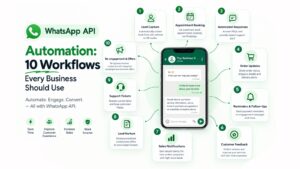
Similarly, automation can help with:
- Welcome messages
- FAQs
- Lead qualification
- Appointment booking
- Follow-up reminders
- Order updates
- Customer surveys
- Support routing
- Sales conversations
Consequently, your team can spend more time on conversations that require human attention.
When comparing providers, check whether the automation builder is easy to use. A powerful platform should not require your team to depend on technical experts for every small workflow change.
4. WhatsApp Chatbot Capabilities
A WhatsApp chatbot can help businesses manage repetitive conversations at scale.
However, not every chatbot platform offers the same flexibility.
Before choosing a provider, check whether you can create workflows based on:
- Customer responses
- Buttons
- Lists
- Keywords
- Lead information
- Customer actions
- Business rules
Furthermore, consider whether the chatbot can hand over a conversation to a human agent when necessary.
This is important because automation should support customer service rather than create unnecessary barriers.
For example, a customer may start with a chatbot but later ask for a sales representative. The platform should make the transition between automation and human support simple.
5. CRM and Business Integrations
Another important factor is integration.
Your WhatsApp communication should ideally work with the tools your business already uses.
For example, you may want to connect WhatsApp with:
- CRM software
- E-commerce platforms
- Lead management systems
- Customer support platforms
- Marketing automation tools
- Payment systems
- Internal business applications
With the right integration, a sales team can receive customer information without manually copying data between different platforms.
For example, when a new lead comes through WhatsApp, the system can potentially send relevant information to your CRM based on the available integration.
Therefore, ask the provider about available integrations and API capabilities before signing up.
6. Customer Support
Technical support becomes particularly important when WhatsApp communication is connected to your sales or customer service process.
If your automation stops working or a campaign encounters an issue, your team may need assistance quickly.
Therefore, evaluate:
- Support availability
- Response time
- Support channels
- Technical assistance
- Documentation
- Onboarding support
- Account management
Additionally, ask whether support is available during the hours your business operates.
A provider that offers clear documentation and responsive support can make implementation much easier.
7. Pricing and Cost Transparency
Pricing is another major consideration.
However, businesses should avoid selecting a WhatsApp API provider based only on the lowest advertised price.
Instead, understand the complete pricing structure.
Ask about:
- Platform subscription fees
- WhatsApp messaging charges
- Setup fees
- Conversation-related costs
- Additional user charges
- Automation charges
- Integration costs
- Premium feature charges
- Support charges
Most importantly, check for hidden costs.
For example, a platform may appear inexpensive initially but become more expensive when you add users, automation, integrations, or advanced features.
Therefore, calculate your expected monthly cost based on your actual usage.
8. Scalability for Future Growth
Your WhatsApp requirements may change as your business grows.
Initially, you may only have a few hundred customer conversations. However, your communication volume could increase significantly as you acquire more customers.
Therefore, choose a provider that can support future growth.
Consider whether the platform can handle:
- More customers
- More agents
- More messages
- Multiple departments
- Multiple workflows
- Advanced automation
- Additional integrations
Scalability is particularly important for businesses investing in long-term WhatsApp automation.
Instead of asking, “Does this provider work for us today?” also ask, “Will this provider continue to support our business as we grow?”
9. Analytics and Reporting
Automation without measurement can make it difficult to understand performance.
Therefore, check what analytics the WhatsApp API provider offers.
Useful reporting capabilities may include:
- Message delivery
- Message status
- Customer interactions
- Response activity
- Lead information
- Agent performance
- Campaign performance
- Conversation data
These insights can help businesses identify where customers are dropping off.
For example, if many users start a chatbot conversation but do not complete the next step, you may need to simplify the workflow.
Similarly, if a particular campaign generates many conversations but few qualified leads, the messaging or targeting may need improvement.
10. Security and Data Protection
Businesses handle customer information through WhatsApp every day.
Therefore, security should be part of your provider evaluation.
Before choosing a platform, understand how it handles:
- Customer information
- Account access
- User permissions
- Data security
- API credentials
- Conversation records
- Data storage
Also, review the provider’s documentation and policies carefully.
Furthermore, make sure your internal team follows appropriate data-handling practices.
A WhatsApp API platform should fit not only your marketing requirements but also your operational and security requirements.
WhatsApp API Provider vs WhatsApp Business App
It is also important to understand the difference between the WhatsApp Business app and an API-based solution.
The WhatsApp Business app works well for businesses that need basic customer communication.
However, growing businesses often need more advanced capabilities.
| Feature | WhatsApp Business App | WhatsApp API Solution |
|---|---|---|
| Basic messaging | Yes | Yes |
| Business profile | Yes | Yes |
| Automated workflows | Limited | Advanced |
| Chatbot | Limited | Available through solutions |
| Multiple-agent workflows | Limited | Supported by platforms |
| CRM integration | Limited | Available |
| Advanced automation | Limited | Available |
| Scalable communication | Limited | Designed for larger workflows |
| Analytics | Basic/limited | More advanced depending on provider |
Therefore, if your business wants automation, integrations, structured lead management, or scalable customer communication, an API-based solution may be worth evaluating.
How to Compare Different WhatsApp API Providers
Once you have shortlisted a few providers, create a comparison checklist.
For example:
| Factor | Provider A | Provider B | Provider C |
|---|---|---|---|
| Reliability | Check | Check | Check |
| Automation | Check | Check | Check |
| Chatbot | Check | Check | Check |
| CRM Integration | Check | Check | Check |
| Customer Support | Check | Check | Check |
| Pricing | Compare | Compare | Compare |
| Scalability | Check | Check | Check |
| Analytics | Check | Check | Check |
| Security | Review | Review | Review |
This approach makes the decision more structured.
Moreover, it helps you avoid choosing a platform based on one feature alone.
Common Mistakes When Choosing a WhatsApp API Provider
Many businesses make the same mistakes during the selection process.
Choosing Only Based on Price
A low-cost platform may look attractive initially. However, the overall cost can change when additional features, users, integrations, or usage charges are included.
Therefore, compare total value rather than just the starting price.
Ignoring Integrations
If your sales team already uses a CRM, make sure your WhatsApp solution can work with it.
Otherwise, your team may continue performing manual data entry.
Not Testing Automation
Do not assume that every chatbot works the same way.
Instead, test a few real customer journeys before implementation.
Overlooking Customer Support
Technical issues can affect customer communication.
Therefore, understand the support process before committing to a provider.
Choosing a Platform That Cannot Scale
A platform may work for a small business but become difficult to manage as message volumes increase.
Consequently, consider future requirements from the beginning.
How Businesses Can Use WhatsApp API
A WhatsApp API provider can support different departments and industries.
E-commerce
Businesses can use WhatsApp automation for:
- Order updates
- Delivery notifications
- Customer support
- Product inquiries
- Follow-ups
Education
Educational institutions can use WhatsApp for:
- Course inquiries
- Admission information
- Reminders
- Student communication
- Lead nurturing
Healthcare
Healthcare businesses can use WhatsApp workflows for:
- Appointment reminders
- Basic inquiries
- Follow-ups
- Patient communication
Real Estate
Real estate companies can automate:
- Property inquiries
- Lead qualification
- Site visit follow-ups
- Agent routing
Automotive
Dealerships can use WhatsApp automation for:
- Test-drive inquiries
- Service reminders
- Vehicle information
- Lead follow-ups
As a result, WhatsApp API can become more than a messaging tool. It can become part of a broader customer communication strategy.
How Campaign Plus Can Fit Into Your WhatsApp Strategy
Businesses looking for WhatsApp automation can also evaluate platforms based on their ability to combine messaging, automation, and customer journeys.
Campaign Plus provides WhatsApp automation, chatbot and more to make business growth.
For example, businesses can explore WhatsApp-based workflows for lead generation, customer support, automated responses, and follow-ups.
However, the right setup depends on your business model, customer journey, messaging requirements, and existing technology stack.
Therefore, start by defining your requirements before selecting the tools you need.
Where Trending Bulb and Step4Growth Fit In
Choosing a WhatsApp API provider is only one part of a successful digital communication strategy.
The next step is using the platform effectively.
Trending Bulb can focus on content, digital marketing, and online brand visibility. Meanwhile, Step4Growth can support broader digital growth strategies.
Together with WhatsApp automation, these activities can help businesses create a more connected customer journey.
For example:
Content → Ad → WhatsApp Conversation → Chatbot → Lead Qualification → Sales Team → Follow-Up → Conversion
This is where strategy becomes important.
Simply having WhatsApp API does not automatically generate sales. Instead, businesses need relevant content, effective campaigns, quick responses, useful automation, and consistent follow-ups.
Questions to Ask Before Selecting a WhatsApp API Provider
Before making your final decision, ask the provider:
- What WhatsApp API features are included?
- What automation options are available?
- Can I create WhatsApp chatbots?
- Can the platform integrate with my CRM?
- How does the pricing work?
- Are there additional platform or setup fees?
- What customer support is available?
- Can multiple team members manage conversations?
- What analytics and reporting are available?
- Can the platform scale as my business grows?
- What integrations are available?
- How are customer data and account access handled?
- Can I test the platform before committing?
- How easy is it to create and modify workflows?
These questions can help you understand whether a provider actually matches your requirements.
Final Checklist for Choosing the Right WhatsApp API Provider
Before selecting your provider, review this checklist:
✅ Reliability
Choose a platform with dependable service and suitable infrastructure.
✅ Features
Make sure it offers the automation, chatbot, messaging, and integration capabilities you need.
✅ Support
Check whether responsive technical and customer support is available.
✅ Pricing
Understand the complete pricing structure before making a commitment.
✅ Integrations
Confirm that the platform can connect with your CRM and other business tools.
✅ Scalability
Make sure it can support your future customer and messaging volume.
✅ Analytics
Look for reporting that helps you understand conversations and customer journeys.
✅ Security
Review data handling, access controls, and relevant security information.
✅ Ease of Use
Your team should be able to manage workflows without unnecessary complexity.
Conclusion: Choose a WhatsApp API Provider Based on Your Business Needs
Choosing the right WhatsApp API provider is an important decision for businesses that want to build scalable customer communication.
However, there is no single provider that fits every business.
Your ideal solution depends on your goals, customer volume, automation requirements, CRM setup, budget, support expectations, and future growth plans.
Therefore, compare providers carefully. Look beyond pricing and evaluate reliability, automation, chatbot capabilities, integrations, analytics, support, scalability, and security.
Most importantly, think about the complete customer journey.
A strong WhatsApp strategy can help businesses respond faster, nurture leads, automate repetitive conversations, and create better customer experiences. When combined with the right digital marketing and growth strategy, WhatsApp can become an important part of your business communication ecosystem.
Trending Bulb can help businesses build stronger digital visibility and content strategies. Step4Growth can support broader digital growth initiatives. Meanwhile, Campaign Plus provides WhatsApp automation, chatbot and more to make business growth.
The right technology is only the starting point. The real value comes from how effectively you use it to connect with customers, manage conversations, and support your business goals.