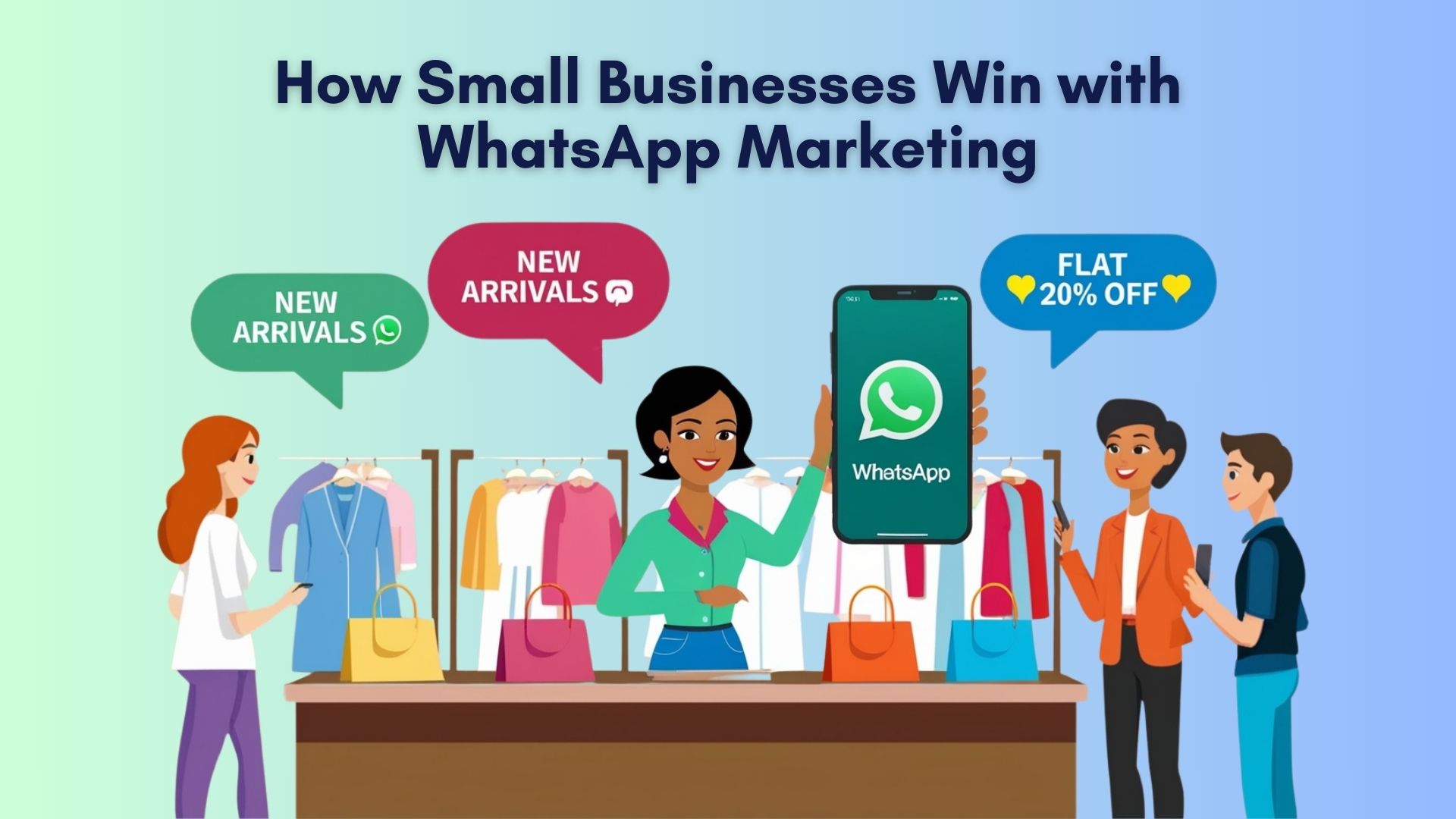
In today’s competitive digital landscape, small businesses often struggle to match the marketing budgets, brand reach, and resources of big corporations. Yet, there’s one platform that has leveled the playing field: WhatsApp Marketing.
With more than 2.7 billion monthly active users worldwide, WhatsApp is no longer just a messaging app—it’s a powerful marketing, customer engagement, and sales tool. For small businesses, WhatsApp provides an opportunity to connect directly with customers, build trust, and even outperform bigger brands when used strategically.
In this blog, we’ll explore how small businesses can compete with big brands using WhatsApp marketing, actionable strategies, and real-world examples you can apply today.
1. Why WhatsApp Marketing Is a Game-Changer for Small Businesses
Unlike traditional advertising platforms dominated by big-budget corporations, WhatsApp creates direct, personal, and cost-effective communication channels.
Here’s why WhatsApp is especially powerful for small businesses:
High Open Rates: WhatsApp messages boast an open rate of 98%, compared to just 20–25% for emails.
Personalized Connection: Unlike social media ads that target broadly, WhatsApp allows one-on-one engagement.
Global Reach: With presence in 180+ countries, even local businesses can scale globally.
Trust Factor: Customers trust WhatsApp messages more because they feel personal rather than promotional.
💡 Big takeaway: A small business with smart WhatsApp strategies can outshine big brands that rely heavily on traditional ads.
2. WhatsApp Business vs WhatsApp Business API
Before jumping into strategies, let’s clarify the two key tools available:
WhatsApp Business App (Best for Small Businesses)
Free to use
Simple features: labels, automated greetings, product catalog
One number on one device
Best suited for solo entrepreneurs, local shops, or startups
WhatsApp Business API (Best for Scaling Businesses)
Paid, advanced version
Supports multiple users and devices
Enables bulk messaging & automation
Integrates with CRMs and chatbots
👉 Small businesses can start with the free Business App, but as they grow, moving to the API unlocks advanced features to compete directly with bigger players.
3. How Small Businesses Can Compete with Big Brands Using WhatsApp
Now let’s get into the strategies that make WhatsApp a competitive equalizer.
3.1 Direct, Personalized Communication
Big brands often rely on generic mass advertising. Small businesses can stand out by making their WhatsApp messages personal and authentic.
Examples:
Use customer names in messages.
Send personalized offers based on purchase history.
Create birthday/anniversary special discounts.
💡 Customers value the human touch—something big brands often lack.
3.2 Cost-Effective Marketing Campaigns
While big brands spend millions on ads, small businesses can run budget-friendly WhatsApp campaigns:
Share daily deals and offers.
Send product updates via broadcast lists.
Promote referral programs through WhatsApp shares.
This reduces dependency on expensive platforms like Google Ads or Facebook Ads.
3.3 Faster Customer Support
Big corporations often struggle with slow support systems. Small businesses can turn WhatsApp into a 24/7 customer service desk.
Use quick replies to answer FAQs.
Provide real-time order updates.
Solve issues instantly through chat.
This builds trust and customer loyalty faster.
3.4 Building Communities with WhatsApp Groups
Small businesses can create niche WhatsApp groups for their loyal customers—something big brands rarely do.
Examples:
A local boutique creating a VIP group for new arrivals.
A café creating a “coffee lovers club” for discounts.
A fitness trainer running group sessions on WhatsApp.
These groups help businesses build community engagement beyond simple transactions.
3.5 Leveraging Status Updates for Visibility
WhatsApp Status is like Instagram Stories but less crowded. Small businesses can use it to:
Showcase behind-the-scenes moments.
Share limited-time offers.
Run polls or quick Q&As.
Big brands often overlook WhatsApp Status, giving small businesses a competitive advantage.
3.6 Automating with Chatbots and API
Even without a big team, small businesses can automate interactions using chatbots:
Automated greetings for new customers.
Product catalogs shared instantly.
Order tracking through automated messages.
This creates a big-brand experience at small-business costs.
4. Step-by-Step WhatsApp Marketing Strategy for Small Businesses
Here’s a roadmap to start strong:
Set Up WhatsApp Business Profile
Add business logo, description, website, and working hours.
Build a Quality Contact List
Collect numbers via website forms, social media, or offline stores.
Always get consent to avoid spamming.
Segment Your Audience
Separate customers into groups: new leads, regular buyers, inactive users.
Send tailored messages for each segment.
Create Valuable Content
Share tips, industry news, or tutorials.
Mix promotional and non-promotional content.
Use Broadcast Lists & Groups Smartly
Broadcast lists for updates.
Groups for community engagement.
Leverage Multimedia
Send product videos, images, and PDFs.
Use voice notes for personal communication.
Automate Where Possible
Use API or third-party tools to schedule campaigns.
Set automated replies for FAQs.
Track & Improve
Monitor delivery, read rates, and conversions.
Refine campaigns based on performance.
5. Case Studies: Small Businesses Winning with WhatsApp
Case Study 1: Local Bakery Boosting Sales
A small bakery in Mumbai used WhatsApp broadcasts to announce daily fresh offers. Within 6 months, sales increased by 40% without spending a rupee on ads.
Case Study 2: Fitness Coach Growing Client Base
A fitness coach created a WhatsApp VIP group offering workout tips and personalized diet plans. This helped grow the client base by 60% through referrals.
Case Study 3: Boutique Competing with Big Fashion Brands
A boutique store sent personalized styling tips and product images directly via WhatsApp. Customers preferred the personal touch over browsing large fashion brand websites.
6. WhatsApp Features Small Businesses Must Use
Catalog: Showcase products like a mini-store inside WhatsApp.
Quick Replies: Save time by setting canned responses.
Labels: Organize chats by order status, payment, etc.
Interactive Buttons: Use call-to-action buttons for booking, visiting websites, or calling.
Click-to-Chat Links: Place links on websites or social media to bring customers directly into WhatsApp.
7. Challenges Small Businesses Face (and How to Overcome Them)
Even though WhatsApp marketing is powerful, there are challenges:
Limited Reach Without Consent: Must collect numbers ethically.
Risk of Spamming: Avoid sending too many promotions.
Scaling Issues: Manual messaging becomes difficult as business grows.
Solution: Upgrade to WhatsApp Business API and use tools like automation, segmentation, and analytics.
8. Future of WhatsApp Marketing for Small Businesses
The future is AI-powered conversations, smart chatbots, and seamless shopping experiences inside WhatsApp. Features like WhatsApp Pay and in-app shopping will make WhatsApp a complete sales and support ecosystem, helping small businesses compete with even the largest brands.
Conclusion
For decades, big brands had an unfair advantage over small businesses due to massive advertising budgets and resources. But with WhatsApp marketing, the tables have turned.
Small businesses can connect with customers directly and personally.
They can run cost-effective campaigns.
They can provide faster customer support.
They can build loyal communities.
With the right WhatsApp marketing strategy, even a small shop can compete with—and sometimes outperform—big brands.
🚀 At Trendingbulb, we believe WhatsApp is the ultimate tool for small businesses to shine. And with expert guidance from Step4Growth, you can take your WhatsApp marketing to the next level and grow your business exponentially.