1. Introduction: Why WhatsApp Business API is a Game-Changer in 2025
The digital marketplace has never been as competitive. All businesses are competing on websites, social media, email, and advertising. But customers today want instant, personal, and convenient interactions.
• Emails: Usually ignored or stuck in spam boxes.
• Telephone calls: Felt to be intrusive; customers rarely pick up unknown numbers.
Social media: Algorithms limit visibility, and interactions are unstable.
WhatsApp changed everything.
With 2.7 billion+ monthly users in 2025, WhatsApp is:
•Ubiquitous: Utilized by every audience, from baby boomers to Gen Z.
•Trusted: Your customer is more likely to answer a WhatsApp message than an email.
Always-On: Customers open it a couple of times a day, ideal for support and marketing.
And for companies:
- Your brand can be in the customer’s first interaction point.
- You can connect, respond, and sell in real-time with no resistance.
Because WhatsApp Business API is a conversion monster. It helps businesses to:
1.Automate chats and eliminate latency.
2.Carry out personalized campaigns at scale.
3.Offer instant support and transaction capability with chat.
Short story: If your company needs to turn discussions into cash, WhatsApp Business API in 2025 is not a luxury—it’s a requirement.
2. What is WhatsApp Business API?
The WhatsApp Business API (Application Programming Interface) is designed for medium and large businesses to handle high-volume customer interactions and integrate WhatsApp into existing marketing, sales, and support systems.
It’s not an app you download—it’s a backend integration that allows:
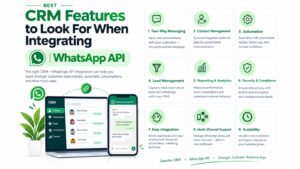
- Multi-user access (multiple agents can chat simultaneously).
- Chatbots and workflow automation.
- CRM and e-commerce integrations.
- Advanced analytics and reporting.
Key Advantages of WhatsApp Business API
- Scalability
Unlike the standard WhatsApp Business app (for small businesses), the API can:
- Handle thousands of conversations simultaneously.
- Allow multiple support agents to respond to customers in real time.
- Eliminate device limitations—no more being stuck to a single phone.
Example:
A large e-commerce store with 10,000 daily visitors can:
- Respond instantly to product inquiries.
- Handle return requests without overloading agents.
- Send mass shipping updates automatically.
- Automation and Chatbots
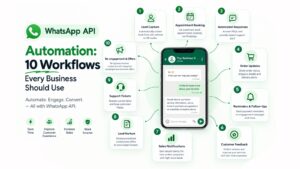
Automation is at the heart of WhatsApp API. It allows you to:
- Respond 24/7 with auto-replies and conversational flows.
- Qualify leads before sending them to human agents.
- Nurture prospects with drip messages.
Example:
A fitness brand can set up an AI chatbot that:
- Greets users who click a WhatsApp ad.
- Asks their fitness goal: weight loss, muscle gain, or endurance.
- Sends a personalized 3-day workout plan
- Promotes a paid subscription via WhatsApp with a one-click payment link.
- CRM and E-commerce Integration
The WhatsApp API can connect with:
- HubSpot, Zoho, Salesforce (CRM)
- Shopify, WooCommerce, Magento (E-commerce)
Why it matters:
- Customer conversations are logged automatically.
- Sales teams get context-rich leads.
- Marketing teams can segment users based on chat behavior.
- Rich Media Messaging
You are not limited to text. WhatsApp API supports:
- Images and GIFs to showcase products.
- Videos for demos or testimonials.
- PDFs for brochures or price lists.
- Buttons & Quick Replies for instant actions.
Example:
A real estate firm can send:
- Property videos and PDF brochures,
- Interactive buttons like “Book a Visit” or “Get Price Sheet,”
- All inside WhatsApp without forcing customers to check email.
5. High Open and Response Rates
WhatsApp is a direct communication channel:
- 90%+ open rate within the first 15 minutes.
- 50%+ response rate for conversational campaigns.
This outperforms email and SMS marketing by a wide margin.
Difference Between WhatsApp Business App vs API
| Feature | WhatsApp Business App | WhatsApp Business API |
| Users | Small local shops | Medium & large businesses |
| Devices | 1 phone + 1 desktop | Multi-device, multi-agent |
| Automation | Limited quick replies | Chatbots & advanced workflows |
| Bulk Messaging | Limited | Large-scale, segmented campaigns |
| Integrations | None | Full CRM, ERP, and e-commerce |
| Analytics | Minimal | Advanced metrics and reports |
3. Key Features & 2025 Updates of WhatsApp API
WhatsApp constantly upgrades its API. 2025 brings several features that transform how businesses operate.
1. AI-Powered Chatbots (Smarter Than Ever)
- Modern chatbots can understand context and predict customer needs.
- Use machine learning to recommend products or solutions automatically.
Example:
A telecom company can:
- Resolve billing queries instantly.
- Upsell data packs or OTT subscriptions based on customer history.
2. Interactive Templates & Buttons
- Allow users to act in one tap without typing.
- Types of buttons:
- Quick Reply – “Yes / No / Send me details”
- Call to Action (CTA) – Opens a link or phone call
- List Messages – Display multiple product/service options
Benefit:
- Boosts engagement & conversion by removing friction.
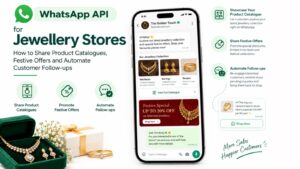
3. Product Catalogs and In-Chat Payments
- Showcase products with photos, descriptions, and prices inside WhatsApp.
- Accept payments via UPI, debit/credit card, or digital wallets.
Example:
A restaurant can:
- Send today’s menu with images,
- Allow customers to tap to order,
- Collect payment without leaving chat.
4. Multi-Agent and Team Collaboration
- Multiple team members can respond from the same WhatsApp number.
- Combine automation + human takeover for efficiency.
5. Real-Time Analytics and Insights
- Measure:
- Delivery rates
- Open rates
- Click-through rates
- Conversion metrics
- Identify top-performing campaigns for future optimization.
6. Voice Notes and Video Marketing (New in 2025)
- Businesses can now send voice greetings, announcements, and video updates.
- Creates emotional engagement and breaks the monotony of text messages.
Example:
A coach or influencer can send personalized voice tips to clients.
4. WhatsApp Business API Pricing in 2025
Pricing is conversation-based, not per message.
Types of Conversations:
- Marketing Conversations – Promotions and campaigns.
- Utility Conversations – Order updates, confirmations, reminders.
- Authentication Conversations – OTPs and verification codes.
Key Facts:
- Each 24-hour session = 1 conversation charge.
- Costs vary by region & type.
- Example (India 2025):
- Marketing: ₹0.40 – ₹0.60
- Utility: ₹0.25 – ₹0.35
Pro Tip:
Use drip messages within 24 hours to maximize ROI per conversation.
5. Automating Customer Journeys with WhatsApp API
A well-designed customer journey on WhatsApp can increase conversion rates by up to 50%.
Step-by-Step Example:
- Lead Generation
- Run Click-to-WhatsApp ads on Facebook/Instagram.
- Add WhatsApp chat widgets to your website.
- Lead Qualification
- Chatbot asks: “Are you interested in Product A, B, or C?”
- Segments users into relevant funnels.
- Nurturing with Rich Media
- Send videos, testimonials, and pricing info.
- Build trust without human intervention.
- Conversion
- Trigger time-limited offers or abandoned cart reminders.
- Share payment links or COD confirmations.
- Post-Sales Engagement
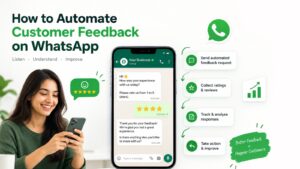
- Collect feedback, offer loyalty points, and upsell.
6. Case Studies of WhatsApp API Success
- Tata CLiQ
- Automated shipping updates & promotions.
- Result: 20% higher repeat orders.
- IndusInd Bank
- Instant account statements & credit approvals.
- Result: 40% drop in call center dependency.
- Maggi India
- Invited recipes via WhatsApp campaign.
- Result: Viral UGC marketing and millions of interactions.
7. Best Practices & Compliance in 2025
- Get customer consent (opt-in) before sending campaigns.
- Segment your audience to avoid spamming irrelevant users.
- Use friendly, human-like messaging to boost engagement.
- Monitor KPIs: response time, open rate, CTR.
- Follow template approval guidelines to prevent account bans.
8. Integration Tips & Tech Stack
To maximize efficiency:
- CRM: HubSpot, Zoho, Salesforce
- E-Commerce: Shopify, WooCommerce
- Automation: Zapier, Gupshup, WATI
- AI Chatbots: Twilio, Yellow.ai, Interakt
9. Future Trends: WhatsApp API Beyond 2025
- AI-Powered Sales Agents – Predict buying behavior.
- Conversational Commerce – Full shopping experience in chat.
- Voice/Video Campaigns – More human and engaging.
- Status-Based Advertising – 24-hour FOMO-driven promos.
10. Conclusion: Your Roadmap to WhatsApp Success
By 2025, the WhatsApp Business API is no longer just for messaging—it’s a complete customer engagement ecosystem.
By:
- Automating customer journeys,
- Personalizing every interaction,
- Integrating with your marketing tech stack,
You can convert conversations into revenue and build lifelong brand loyalty.
If your business hasn’t adopted WhatsApp API yet, now is the time to start.