Introduction
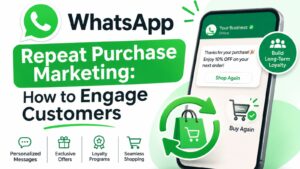
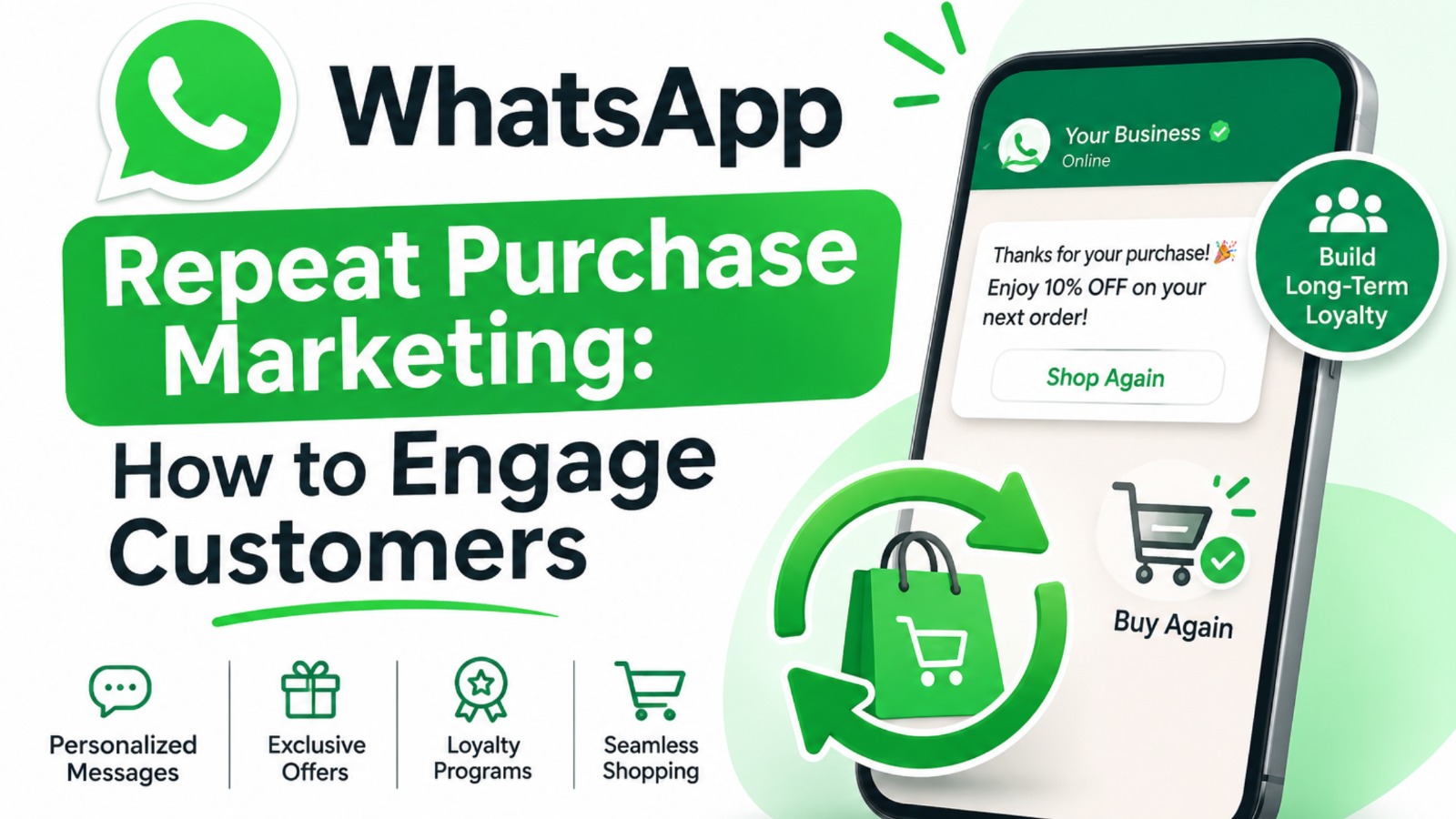
Getting a customer to make their first purchase is an important achievement for every business. However, encouraging that customer to return and buy again is equally important. This is where WhatsApp Repeat Purchase Marketing becomes a powerful business growth strategy.
Today, customers expect more than promotional messages and occasional discounts. They want personalised communication, helpful product recommendations, timely updates and a convenient shopping experience. Therefore, businesses need to build meaningful relationships even after completing the first sale.
WhatsApp offers an effective way to maintain these relationships. Businesses can use WhatsApp Business messaging, automated notifications, personalised offers and chatbot conversations to reconnect with existing customers. As a result, they can encourage repeat orders, improve customer retention and build long-term loyalty.
Moreover, WhatsApp automation platforms such as Campaign Plus help businesses manage customer conversations and marketing campaigns more efficiently. With the right digital marketing strategy from agencies such as Trending Bulb and Step4Growth, businesses can turn one-time buyers into regular customers.
In this guide, we will explore how WhatsApp repeat purchase marketing works, which strategies businesses should follow and how automation can improve customer engagement.
What Is WhatsApp Repeat Purchase Marketing?
WhatsApp Repeat Purchase Marketing is a customer engagement strategy that uses WhatsApp to encourage existing customers to purchase products or services again.
Instead of focusing only on acquiring new customers, businesses communicate with people who have already purchased from them. They share relevant product suggestions, personalised offers, reorder reminders, loyalty rewards and useful updates.
For example, imagine a customer purchases skincare products from an online store. After a few weeks, the business can send a personalised WhatsApp message asking whether the customer needs a refill. It can also recommend a complementary product based on the customer’s previous purchase.
Similarly, a restaurant can send special weekend offers to previous customers. Meanwhile, an online clothing store can notify customers about new arrivals that match their interests.
Consequently, businesses create more opportunities for repeat purchases without depending entirely on new customer acquisition.
Why Is Repeat Purchase Marketing Important?
A first purchase does not automatically create a loyal customer. Businesses must continue providing value after the transaction.
Repeat purchase marketing helps companies:
- Increase customer lifetime value.
- Encourage regular purchases.
- Improve customer retention.
- Build stronger customer relationships.
- Increase opportunities for cross-selling and upselling.
- Generate more revenue from existing customers.
- Reduce dependence on continuous customer acquisition.
Furthermore, existing customers already know the brand and have experienced its products or services. Therefore, relevant communication can make their next purchase easier.
Why Choose WhatsApp for Repeat Purchase Marketing?
WhatsApp has become an important communication channel for businesses because customers already use it for everyday conversations. Consequently, brands can connect with customers through a familiar and convenient platform.
Here are some important reasons why WhatsApp works well for repeat purchase marketing.
1. Direct Customer Communication
WhatsApp allows businesses to communicate directly with existing customers.
Unlike generic advertising messages, personalised WhatsApp communication can address individual customer requirements. Businesses can share relevant offers, answer questions and provide product recommendations.
For instance, a customer who previously purchased running shoes might receive information about new sportswear collections.
As a result, the communication feels more relevant and useful.
2. Personalised Shopping Experience
Customers appreciate recommendations that match their interests.
With customer purchase history, preferences and suitable CRM data, businesses can create more relevant WhatsApp campaigns.
For example, an electronics retailer can recommend accessories to customers who recently purchased smartphones. Likewise, a beauty brand can suggest complementary products to previous buyers.
Therefore, personalisation helps businesses improve engagement and create additional sales opportunities.
3. Automated Customer Follow-Ups
Manually contacting every previous customer can become difficult as a business grows.
However, WhatsApp automation allows businesses to schedule or trigger suitable follow-ups based on customer actions and marketing workflows.
For example, businesses can create automated workflows for:
- Post-purchase thank-you messages.
- Product feedback requests.
- Reorder reminders.
- Back-in-stock notifications.
- Loyalty programme updates.
- Special customer offers.
Consequently, businesses can maintain regular communication while reducing repetitive manual work.
4. Convenient Customer Conversations
Customers may have questions before placing another order. They might want to confirm product availability, check delivery details or understand an offer.
WhatsApp makes these conversations convenient.
Additionally, chatbots can answer common questions and guide customers towards relevant products. When a conversation requires personal attention, businesses can connect customers with a human support agent.
This combination improves the shopping experience and reduces communication delays.
10 Effective WhatsApp Repeat Purchase Marketing Strategies
A successful WhatsApp marketing campaign needs more than sending promotional messages. Businesses should understand customer behaviour and deliver relevant communication at the right time.
Here are ten practical strategies to encourage repeat purchases.
1. Send Personalised Reorder Reminders
Reorder reminders are one of the simplest ways to encourage repeat sales.
Several products have predictable usage cycles. For example, customers regularly purchase groceries, skincare products, nutritional supplies, pet food and household essentials.
Businesses can use previous purchase information to identify suitable reorder periods.
Example WhatsApp message:
“Hello! It’s been a few weeks since your last purchase. Running low on your favourite products? Reorder today and enjoy a convenient shopping experience with us.”
Moreover, businesses should avoid sending reminders too frequently. Instead, they should consider product usage patterns and customer preferences.
2. Create Exclusive Offers for Existing Customers
Customers appreciate feeling valued by a brand.
Therefore, businesses can introduce exclusive offers for previous buyers. These offers may include special discounts, loyalty benefits, early access to new products or limited-time promotions.
For example, an online fashion store can send an exclusive offer to customers who purchased from its previous collection.
Example WhatsApp message:
“Thank you for shopping with us! As one of our valued customers, enjoy an exclusive offer on your next purchase. Explore our latest collection today.”
Additionally, businesses can segment customers based on their purchase history to make offers more relevant.
3. Use WhatsApp Automation for Follow-Ups
Consistent follow-ups help businesses maintain customer relationships. However, sending every message manually takes time and effort.
WhatsApp Business API automation makes it possible to organise customer communication through automated workflows.
For example, a business can create a post-purchase workflow:
- Send an order confirmation.
- Share order and delivery updates.
- Send a thank-you message after purchase.
- Request product feedback.
- Share relevant product recommendations.
- Send a reorder reminder at an appropriate time.
Campaign Plus helps businesses manage WhatsApp automation, chatbot conversations and customer communication through a central platform.
As a result, businesses can improve follow-up consistency and manage larger customer databases more efficiently.
4. Recommend Products Based on Previous Purchases
Product recommendations can introduce customers to items they may genuinely need.
For instance, someone who purchases a laptop might also need a laptop bag, wireless mouse or keyboard. Similarly, a customer purchasing a face cleanser may be interested in a suitable moisturiser.
Businesses can use past purchase information to identify complementary products.
Example WhatsApp message:
“Enjoying your recent purchase? We have a few products that go perfectly with your selection. Explore our recommendations and find your next favourite.”
However, recommendations should remain relevant. Sending unrelated product promotions can reduce customer interest.
5. Introduce a WhatsApp Loyalty Programme
Customer loyalty programmes encourage people to continue purchasing from the same business.
Businesses can use WhatsApp to communicate loyalty benefits, reward updates and special customer privileges.
For example, an online store can offer reward points for every eligible purchase. Customers can then redeem those points against future orders.
Similarly, restaurants can reward regular customers with exclusive deals.
WhatsApp makes it easier to share programme updates and answer customer questions.
Therefore, loyalty communication can help businesses create stronger long-term relationships.
6. Send Back-in-Stock Notifications
Customers sometimes want to purchase a product that is temporarily unavailable.
Instead of allowing that interest to disappear, businesses can invite customers to receive a notification when the product becomes available again.
Once the product returns, the business can send a relevant WhatsApp update.
Example WhatsApp message:
“Good news! The product you were interested in is back in stock. Place your order today before it sells out again.”
This strategy helps businesses reconnect with interested buyers and create additional sales opportunities.
7. Use Festival and Seasonal Campaigns
Festivals and seasonal occasions create opportunities for businesses to reconnect with previous customers.
In India, occasions such as Diwali, Holi, Raksha Bandhan, Eid and Christmas can support targeted promotional campaigns.
For example, a jewellery business can share festive collections with previous buyers. Meanwhile, an electronics store can promote seasonal shopping offers.
However, businesses should personalise campaigns rather than sending identical promotional messages to every contact.
As a result, customers receive offers that are more relevant to their interests.
8. Collect Customer Feedback After Every Purchase
Customer feedback plays an important role in improving products and services.
After completing an order, businesses can send a WhatsApp message asking customers about their experience.
For example:
“Thank you for shopping with us! How was your experience? Your feedback helps us improve our products and services.”
Businesses can use simple questions, rating requests or approved interactive messaging features to collect responses.
Furthermore, customer feedback can reveal product issues, delivery concerns and service improvements.
When businesses respond to feedback, customers feel heard and valued.
9. Create Re-engagement Campaigns for Inactive Customers
Some customers purchase once and then stop interacting with a brand.
However, inactivity does not always mean that they have lost interest. They might have forgotten about the brand, found another option or simply not needed another product yet.
A carefully planned re-engagement campaign can bring these customers back.
For example, businesses can share:
- New product announcements.
- Relevant product recommendations.
- Exclusive returning-customer offers.
- New collection updates.
- Helpful product information.
Example WhatsApp message:
“It’s been a while! We have something new for you. Explore our latest collection and discover products you might love.”
Nevertheless, businesses should respect customer preferences and avoid excessive promotional messages.
10. Make Repeat Ordering Simple
A complicated ordering process can discourage customers from purchasing again.
Therefore, businesses should make the repeat purchase journey as convenient as possible.
They can share product catalogues, direct product links, reorder options and helpful chatbot menus.
For example, a customer can select a previously purchased product, confirm the quantity and proceed to checkout.
Additionally, businesses can use automated responses to answer common questions about pricing, availability and delivery.
The easier the ordering process becomes, the fewer unnecessary steps customers face before completing another purchase.
How WhatsApp Business API Helps Increase Repeat Purchases
WhatsApp Business API provides businesses with capabilities to manage customer communication at scale through approved business messaging solutions.
It is particularly useful for businesses that handle large customer databases and frequent customer conversations.
Here are some ways the WhatsApp Business API supports repeat purchase marketing.
Automated Messaging Workflows
Businesses can create automated communication journeys based on customer actions and defined marketing rules.
For example, a customer who completes an order can receive a confirmation message followed by relevant post-purchase communication.
Personalised Message Templates
Approved message templates can help businesses send structured notifications and promotional communication.
Depending on the message category and applicable WhatsApp requirements, businesses can use suitable templates for customer engagement.
Chatbot Integration
Chatbots can guide customers through common questions, product discovery and ordering processes.
Moreover, they can handle repetitive enquiries while allowing human agents to manage complex conversations.
Team Inbox and Customer Support
Businesses with multiple customer support agents can use shared inbox functionality to organise conversations.
As a result, teams can respond more efficiently and maintain better communication records.
Campaign Management
Businesses can organise targeted campaigns for different customer segments.
For example, they can create separate campaigns for previous buyers, inactive customers and customers interested in particular products.
However, businesses must follow WhatsApp messaging policies, obtain the required customer consent and respect opt-out requests.
How to Segment Customers for Better Repeat Purchase Campaigns
Sending the same message to every customer is not always effective.
Instead, businesses should divide their customer database into meaningful groups. This process is known as customer segmentation.
Here are five useful customer segments.
| Customer segment | Recommended WhatsApp campaign |
|---|---|
| Recent buyers | Thank-you messages and product guidance |
| Frequent buyers | Loyalty rewards and exclusive offers |
| Inactive buyers | Re-engagement campaigns |
| High-value customers | VIP benefits and early access |
| Interested customers | Relevant product recommendations |
For example, a fashion retailer can send new collection updates to frequent buyers while sharing a returning-customer offer with inactive customers.
Similarly, a grocery business can send suitable reorder reminders based on previous purchasing patterns.
Consequently, segmentation improves message relevance and helps businesses avoid unnecessary communication.
WhatsApp Repeat Purchase Marketing Examples Across Industries
Different industries can use WhatsApp marketing in different ways. The best strategy depends on product type, customer behaviour and purchasing frequency.
1. E-commerce Businesses
Online stores can use WhatsApp to recommend related products, share new arrivals and send reorder reminders.
For instance, a customer who purchases a mobile phone might receive information about compatible accessories.
Additionally, businesses can share order updates and customer support information.
2. Healthcare and Wellness Brands
Wellness brands can use WhatsApp for appropriate product information, service updates and customer support.
For example, a business selling personal care products can share relevant product usage information and reorder reminders.
However, healthcare businesses should handle sensitive information carefully and follow applicable privacy and communication requirements.
3. Restaurants and Food Businesses
Restaurants can reconnect with previous customers through menu updates, special offers and seasonal promotions.
For instance, a restaurant can share a weekend family meal offer with customers who previously ordered similar meals.
Furthermore, convenient ordering options can encourage customers to return.
4. Fashion and Jewellery Businesses
Fashion and jewellery brands can use WhatsApp to announce new collections, festive offers and exclusive launches.
For example, a jewellery store can share a personalised collection update with customers who previously purchased similar designs.
As a result, customers can discover new products without repeatedly searching for the brand.
5. Education and Service Businesses
Educational institutions and service providers can maintain relationships through course updates, renewal reminders, event announcements and relevant service information.
For example, an online learning platform can inform previous students about advanced courses.
Similarly, a subscription-based service can send renewal reminders before the subscription expires.
How Campaign Plus Supports WhatsApp Repeat Purchase Marketing
Managing repeat purchase campaigns manually becomes difficult when businesses have hundreds or thousands of customers.
This is where Campaign Plus can help.
Campaign Plus is a WhatsApp Business API and automation platform designed to support business communication, chatbot automation and customer engagement.
Businesses can use its capabilities to organise conversations and create more structured WhatsApp marketing workflows.
Important capabilities include:
1. WhatsApp Bulk Campaigns: Businesses can organise promotional campaigns for relevant customer segments using approved messaging templates and applicable WhatsApp requirements.
2. Chatbot Automation: Automated chatbot conversations can answer common questions and guide customers towards relevant products or services.
3. Live Chat Inbox: Teams can manage customer conversations through a shared communication environment.
4. Automated Follow-Ups: Businesses can create suitable follow-up workflows to maintain customer engagement after purchases.
5. Customer Communication Management: Organised conversations can help businesses manage enquiries and provide more consistent customer support.
With these capabilities, Campaign Plus can support businesses that want to improve WhatsApp customer engagement and encourage repeat purchases.
However, automation works best when businesses combine it with relevant content, customer consent and a clear marketing strategy.
How Trending Bulb and Step4Growth Help Businesses Build Better WhatsApp Marketing Strategies
Choosing the right platform is only one part of successful WhatsApp marketing. Businesses also need a clear strategy, effective messaging and consistent digital marketing execution.
This is where Trending Bulb and Step4Growth can contribute.
Trending Bulb: Digital Marketing Strategies That Improve Customer Engagement
Trending Bulb focuses on digital marketing, social media growth, content strategy and online brand visibility.
For businesses planning WhatsApp repeat purchase campaigns, a strong digital presence helps create awareness and maintain customer interest.
Trending Bulb can support businesses through:
- Social media marketing strategies.
- SEO-friendly content marketing.
- Brand awareness campaigns.
- Customer engagement strategies.
- Social media advertising.
- Digital content planning.
Moreover, businesses can combine social media marketing with WhatsApp communication to create a more connected customer journey.
Step4Growth: Building a Strong Digital Marketing Foundation
Step4Growth supports businesses with digital marketing and online growth strategies.
A well-planned digital marketing approach can help companies attract relevant audiences, generate enquiries and build stronger customer relationships.
For example, businesses can use SEO content to attract potential buyers, social media campaigns to increase brand awareness and WhatsApp communication to engage existing customers.
Therefore, integrating customer acquisition and retention strategies creates a more sustainable marketing approach.
Campaign Plus: Making WhatsApp Communication More Efficient
While Trending Bulb and Step4Growth support digital marketing strategy and growth, Campaign Plus helps businesses manage WhatsApp communication through automation and chatbot capabilities.
Together, these solutions can support a connected marketing approach:
- Attract potential customers through digital marketing.
- Convert interested audiences into buyers.
- Maintain communication through WhatsApp.
- Share relevant product recommendations.
- Encourage repeat purchases.
- Build long-term customer relationships.
Ultimately, businesses need both effective marketing strategies and suitable communication technology to improve customer retention.
Best Practices for Successful WhatsApp Repeat Purchase Campaigns
A successful campaign should focus on customer value rather than simply increasing message volume.
Follow these best practices to improve your results.
1. Obtain Customer Consent
Always follow applicable WhatsApp policies and obtain the required consent before sending marketing messages.
Additionally, respect customer opt-out requests.
2. Send Messages at Appropriate Times
Avoid sending promotional messages at inconvenient hours.
Instead, consider customer preferences, local time zones and relevant purchasing patterns.
3. Keep Messages Short and Clear
Customers should understand the purpose of a message quickly.
Use simple language, clear offers and relevant calls to action.
4. Avoid Excessive Promotions
Too many promotional messages can reduce customer interest.
Therefore, balance promotional communication with useful updates, product information and customer support.
5. Personalise Every Campaign
Use relevant customer information to make communication more meaningful.
However, avoid collecting or using personal information without an appropriate legal basis and customer permission.
6. Track Campaign Performance
Monitor important metrics to understand whether your campaigns are working.
Useful performance indicators include:
- Message delivery rate.
- Read rate, where available.
- Customer response rate.
- Click-through rate.
- Repeat purchase rate.
- Conversion rate.
- Revenue from repeat customers.
- Customer retention rate.
These metrics help businesses identify successful campaigns and improve underperforming strategies.
Common WhatsApp Repeat Purchase Marketing Mistakes to Avoid
Even a well-designed campaign can fail when businesses overlook customer experience.
Here are some common mistakes to avoid.
Sending irrelevant offers: Customers may ignore messages that do not match their interests. Therefore, use appropriate customer segmentation.
Ignoring customer feedback: Unanswered complaints can damage customer relationships. Instead, provide timely support.
Overusing automation: Chatbots should simplify communication rather than create frustrating conversations. Always provide a suitable way to reach human support when needed.
Not measuring results: Without performance tracking, businesses cannot identify which campaigns generate repeat sales.
Ignoring messaging policies: Businesses must follow applicable WhatsApp policies, template requirements and consent guidelines.
Making ordering complicated: A long purchasing process can discourage returning customers. Therefore, provide simple product links and convenient ordering options.
Future of WhatsApp Repeat Purchase Marketing
Customer expectations continue to change as digital communication becomes more personalised and convenient.
Consequently, WhatsApp marketing is moving beyond basic promotional messages towards more connected customer experiences.
Businesses are increasingly exploring automation, conversational commerce, CRM integration and AI-powered customer support.
In the future, these technologies can help brands understand customer requirements, organise conversations and provide more relevant product recommendations.
Furthermore, businesses that connect their marketing platforms with customer relationship management systems can build better customer journeys.
However, technology alone will not create customer loyalty. Brands must continue offering quality products, reliable support and valuable experiences.
Therefore, businesses should focus on combining automation with meaningful human interaction.
Conclusion
WhatsApp Repeat Purchase Marketing is an effective strategy for businesses that want to improve customer retention, increase repeat orders and build long-term relationships.
Instead of concentrating only on acquiring new customers, businesses can use WhatsApp to reconnect with existing buyers through personalised messages, reorder reminders, loyalty programmes, product recommendations and automated follow-ups.
Moreover, WhatsApp Business API automation makes it easier to manage customer communication and organise marketing campaigns at scale.
Platforms such as Campaign Plus help businesses manage WhatsApp automation and chatbot conversations. Meanwhile, Trending Bulb and Step4Growth support digital marketing strategies that help businesses improve their online presence and customer engagement.
Ultimately, repeat purchases happen when customers receive consistent value and enjoy a convenient buying experience.
Start building stronger customer relationships with the right WhatsApp marketing strategy and turn more first-time buyers into loyal customers.
Frequently Asked Questions (FAQs)
1. What is WhatsApp Repeat Purchase Marketing?
WhatsApp Repeat Purchase Marketing is a strategy that uses WhatsApp messages, personalised offers, reorder reminders and automated follow-ups to encourage existing customers to purchase again.
2. How does WhatsApp help increase repeat sales?
WhatsApp helps businesses reconnect with previous customers through personalised recommendations, exclusive offers, loyalty updates and convenient customer conversations. As a result, customers have more opportunities to return and purchase again.
3. How can businesses automate repeat purchase messages on WhatsApp?
Businesses can use WhatsApp Business API solutions and automation platforms such as Campaign Plus to organise follow-ups, reorder reminders, customer notifications and chatbot conversations.
4. What is the best time to send WhatsApp reorder reminders?
The best time depends on the product, customer purchasing behaviour and expected usage cycle. Businesses should analyse previous purchases and send reminders when customers are most likely to need a replacement or refill.
5. Can WhatsApp chatbots help generate repeat purchases?
Yes. WhatsApp chatbots can guide customers through product discovery, answer common questions, share product information and simplify repeat ordering. They can also direct customers to human agents when necessary.
6. How can businesses improve customer retention through WhatsApp?
Businesses can improve customer retention by sending relevant messages, offering loyalty rewards, collecting feedback, providing timely support and creating personalised customer experiences.
7. Is WhatsApp Business API suitable for small businesses?
Yes. WhatsApp Business API solutions can support small and growing businesses that need structured customer communication, automation and scalable messaging. Businesses should choose a solution that matches their requirements and budget.
8. What is the role of Campaign Plus in WhatsApp marketing?
Campaign Plus provides WhatsApp automation, chatbot and business communication capabilities that can help businesses organise customer conversations and marketing workflows.
9. How often should businesses send repeat purchase messages?
There is no universal frequency. Businesses should consider customer preferences, product usage cycles and engagement patterns. Most importantly, they should avoid excessive messaging and respect opt-out requests.
10. What is the difference between customer acquisition and customer retention?
Customer acquisition focuses on attracting new buyers, while customer retention focuses on maintaining relationships with existing customers and encouraging them to continue purchasing. Both are important for sustainable business growth.
Final Call to Action
Want to improve customer engagement and generate more repeat purchases?
Build a smarter digital marketing strategy with Trending Bulb and Step4Growth, and explore WhatsApp automation solutions with Campaign Plus.
Connect with your customers, strengthen relationships and turn repeat purchases into long-term business growth.