Introduction
Customers no longer follow a single path before buying from a business. They may discover a brand through Google, see an Instagram post, click a Facebook ad, visit a website, receive an RCS message, and finally start a conversation on WhatsApp.
As a result, businesses need more than individual marketing channels. They need a connected experience that follows the customer across every touchpoint.
This is where WhatsApp API + RCS can make a major difference.
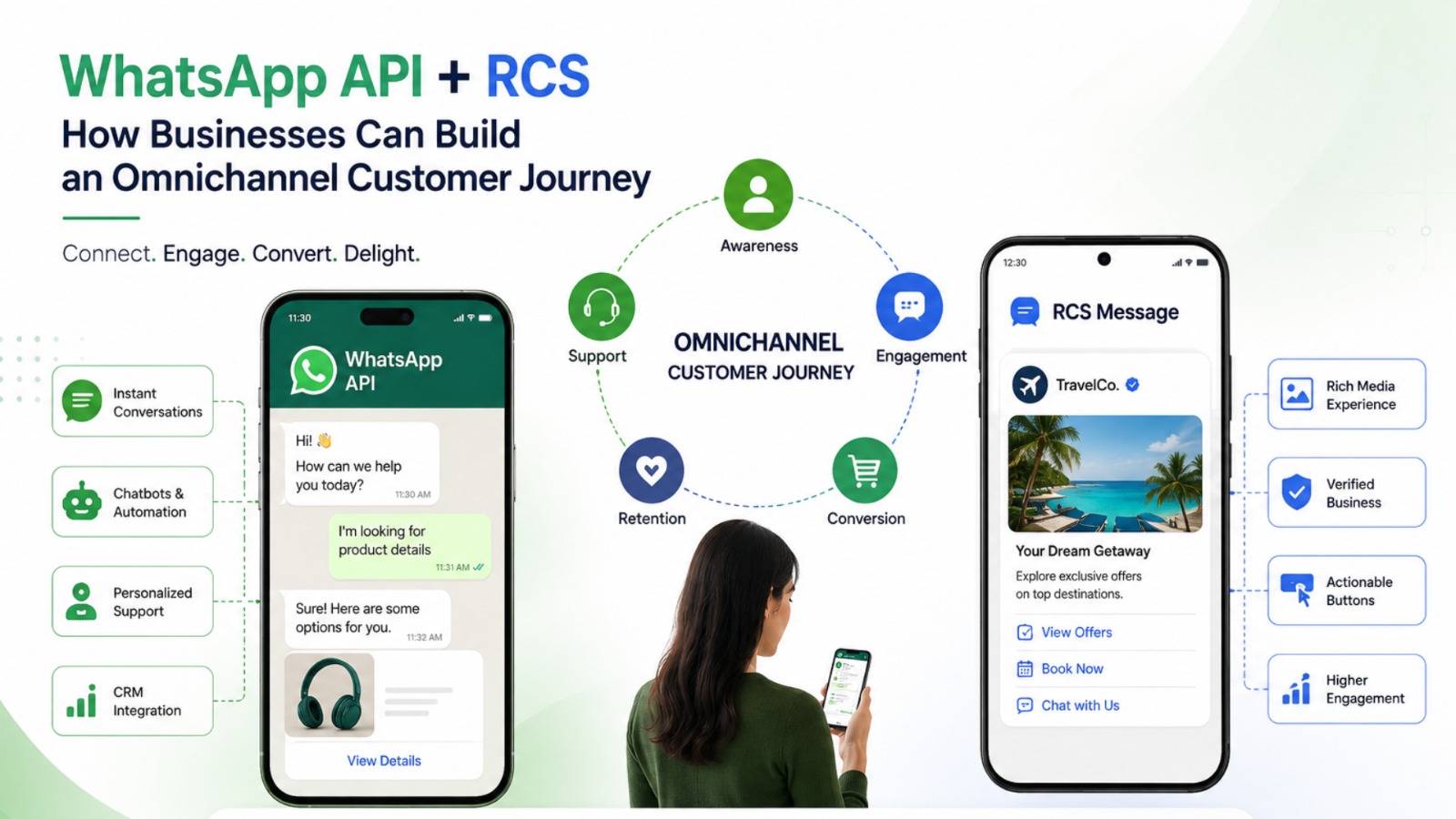
WhatsApp Business Platform helps businesses communicate with customers through conversations, notifications, support, automation, and personalized interactions. Meanwhile, RCS can deliver richer mobile messaging experiences with images, buttons, carousels, branding, and interactive content.
When businesses connect these channels with their CRM, website, advertising platforms, and other communication channels, they can create a powerful omnichannel customer journey.
Instead of treating WhatsApp and RCS as separate communication tools, businesses can use them as connected parts of one customer experience.
For brands such as Trending Bulb, this approach also creates an opportunity to educate businesses about how digital marketing, automation, and conversational communication can work together.
Similarly, Step4Growth can help businesses understand how marketing strategies can attract prospects, while platforms such as Campaign Plus can support WhatsApp automation and conversational engagement.
So, how does this omnichannel journey work?
Let’s explore it step by step.
What Is an Omnichannel Customer Journey?
An omnichannel customer journey connects different customer touchpoints into one consistent experience.
These touchpoints can include:
- Google Search
- Google Ads
- Websites
- RCS
- CRM systems
- Physical stores
- Customer support channels
The important part is not simply having multiple channels.
Instead, the goal is to connect those channels.
For example, imagine a customer discovers a fashion brand through Instagram. They visit the website and browse a product. Later, the business sends an RCS message featuring a relevant offer.
The customer clicks the CTA and starts a WhatsApp conversation.
Instead of asking the customer to explain everything again, the business can continue the conversation based on the available customer information.
That creates a smoother experience.
Therefore, an omnichannel strategy focuses on one customer moving through multiple channels rather than managing every channel independently.
Why WhatsApp API + RCS Matter for Modern Businesses
Customers expect businesses to respond quickly.
They also expect relevant communication.
At the same time, customers do not want to repeat their requirements every time they switch channels.
This creates a major challenge for businesses.
Traditional communication methods often operate separately. Marketing may use one platform, sales another, and customer support another.
Consequently, customer information can become fragmented.
WhatsApp API + RCS can help businesses create a more connected communication strategy.
WhatsApp can support conversational communication, automation, customer support, notifications, and lead engagement.
RCS, on the other hand, can provide a rich messaging experience directly through supported mobile messaging apps.
Together, they can help businesses move customers from discovery to engagement, qualification, conversion, and retention.
WhatsApp API + RCS: Understanding the Difference
Although WhatsApp API and RCS can work together, they are not the same technology.
Understanding their strengths helps businesses use them effectively.
WhatsApp API
The WhatsApp Business Platform enables businesses to communicate with customers through WhatsApp at scale.
Businesses can use it for:
- Automated customer conversations
- Lead engagement
- Customer support
- Order notifications
- Appointment reminders
- Personalized communication
- Product conversations
- Chatbot interactions
- Customer follow-ups
- CRM integration
For example, a real estate company can use WhatsApp automation to ask a new lead about their preferred location, budget, property type, and buying timeline.
The system can then qualify the lead before passing the conversation to a sales representative.
As a result, sales teams can spend more time on high-intent prospects.
RCS
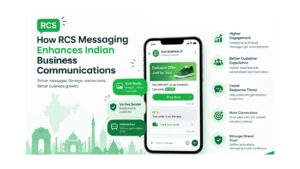
RCS, or Rich Communication Services, provides a richer messaging experience than traditional SMS where supported.
Depending on device, carrier, market, and business configuration, RCS can support features such as:
- Rich images
- Videos
- Suggested replies
- Action buttons
- Carousels
- Branding
- Product information
- Location-related actions
- Interactive experiences
For example, an ecommerce business could send an RCS campaign showing a product image, price, promotion, and a Shop Now button.
Therefore, RCS can make promotional and informational messaging more engaging.
How WhatsApp API + RCS Create a Connected Customer Journey
The real value appears when businesses connect these channels to the complete customer journey.
A typical journey can look like this:
Discover → Engage → Qualify → Convert → Support → Retain
Let’s break it down.
1. Awareness: Attract the Customer
The journey begins before the customer sends a message.
A business can use:
- SEO
- Google Ads
- Meta Ads
- Content marketing
- Influencer marketing
- Email marketing
These channels help attract potential customers.
For example, a customer searches Google for “best digital marketing agency for small business.”
They discover a blog published by Trending Bulb.
The article explains how businesses can improve lead generation.
The customer then clicks a WhatsApp CTA.
Now, the customer has moved from a marketing channel into a conversational channel.
That transition is important.
Instead of leaving the customer alone after the website visit, the business creates an opportunity for immediate engagement.
2. Engagement: Start a Conversation
Once a customer enters WhatsApp, automation can immediately respond.
For example:
Customer: Hi, I want to know more about your service.
WhatsApp Bot: Welcome! 👋 What are you looking for?
Options:
- WhatsApp Automation
- RCS Messaging
- CRM Integration
- Digital Marketing
The customer selects an option.
The chatbot can then ask additional questions.
Because the conversation happens instantly, customers do not have to wait for a sales representative to become available.
Moreover, businesses can personalize the conversation according to customer responses.
This creates a faster and more convenient experience.
3. Qualification: Turn Conversations Into Valuable Leads
Not every lead has the same level of buying intent.
Some customers are researching.
Others are ready to purchase.
Therefore, businesses need a way to identify high-intent prospects.
WhatsApp automation can ask qualification questions such as:
- What product are you interested in?
- What is your budget?
- When do you plan to purchase?
- Which service do you need?
- What location do you prefer?
The answers can be connected with a CRM.
Consequently, sales teams can receive structured lead information instead of starting every conversation from zero.
For example:
Lead: Interested in WhatsApp automation
Industry: Real Estate
Budget: ₹50,000+
Requirement: Lead qualification chatbot
Intent: High
Now, a salesperson has useful context before starting the conversation.
This can reduce response time and improve sales efficiency.
4. RCS: Deliver Rich and Interactive Messages
RCS can play a valuable role when businesses want to communicate visually.
Imagine a customer has shown interest in a product.
Instead of sending a basic text message, the business can use an RCS message with:
New Collection
📸 Product image
20% Off This Week
[Shop Now]
[View Collection]
[Find a Store]
This type of communication can provide customers with more information before they take action.
For ecommerce, travel, retail, banking, automotive, education, and other industries, rich messaging can make customer communication more interactive.
However, businesses should always consider device and market support before designing an RCS strategy.
5. Conversion: Move Customers Toward Action
The ultimate goal of communication is not simply sending messages.
It is helping customers take the next step.
That step could be:
- Making a purchase
- Booking an appointment
- Requesting a quotation
- Scheduling a demo
- Registering for an event
- Visiting a store
- Completing a payment
- Talking to a sales representative
WhatsApp and RCS can support different stages of this process.
For example, RCS could introduce a product through a rich promotional message.
The customer could then select an action and move into a WhatsApp conversation.
The WhatsApp chatbot can answer questions and collect requirements.
Finally, a sales representative can take over when human assistance becomes necessary.
Therefore, the journey becomes more connected.
6. Customer Support: Continue the Journey After Conversion
The customer journey does not end after a purchase.
In fact, post-purchase communication can have a major impact on customer satisfaction.
Businesses can use WhatsApp for:
- Order updates
- Delivery notifications
- Appointment reminders
- Service updates
- Support conversations
- Feedback requests
- Payment reminders
RCS can also support rich informational experiences where available.
For example, a travel business can send an RCS message with booking information and useful actions.
The customer may then move to WhatsApp for personalized assistance.
As a result, customers can receive support without searching for contact details or navigating complicated websites.
7. Retention: Build Long-Term Customer Relationships
Acquiring a customer is only one part of growth.
Businesses also need to retain customers.
This is where personalized communication becomes important.
Instead of sending the same message to everyone, businesses can segment customers according to:
- Purchase history
- Interests
- Location
- Engagement
- Previous conversations
- Customer lifecycle stage
For example, an ecommerce brand can send relevant product recommendations to existing customers.
A service business can send renewal reminders.
A restaurant can share personalized offers.
A real estate company can notify prospects about relevant properties.
Therefore, WhatsApp API + RCS can support communication beyond the first sale.
WhatsApp API + RCS With CRM Integration
An omnichannel strategy becomes significantly stronger when communication platforms connect with CRM systems.
A CRM can help businesses maintain customer information in one place.
For example, a business can track:
Customer Name → Source → Interest → Conversation → Lead Score → Purchase → Support → Follow-Up
Without CRM integration, teams may struggle to understand the complete customer journey.
With integration, businesses can create more personalized workflows.
For example:
Instagram Ad → Website → WhatsApp → CRM → Sales Team → Purchase → WhatsApp Support
Or:
RCS Campaign → Product Interest → WhatsApp → Lead Qualification → CRM → Sales Follow-Up
This creates a connected flow between marketing, sales, and customer support.
How Campaign Plus Can Support WhatsApp Automation
Businesses looking to implement WhatsApp automation can explore platforms such as Campaign Plus.
Campaign Plus can be positioned as part of a broader conversational marketing strategy where businesses use WhatsApp automation to manage customer conversations, lead engagement, follow-ups, and support.
For example, businesses can build automated workflows that:
- Welcome new leads.
- Ask qualification questions.
- Share relevant information.
- Route qualified leads to sales teams.
- Trigger follow-ups.
- Support customers after conversion.
When combined with CRM integration and other marketing channels, WhatsApp automation can become more than a messaging tool.
It can become part of the business’s customer journey.
The Role of Step4Growth in an Omnichannel Strategy
A strong omnichannel strategy begins with attracting the right audience.
That is where digital marketing becomes important.
Step4Growth can be connected with strategies such as:
- SEO
- Search marketing
- Social media marketing
- Content marketing
- Paid advertising
- Lead generation
- Conversion optimization
However, generating traffic is not enough.
A business can spend money on advertising and still lose potential customers if there is no fast follow-up system.
Therefore, the combination becomes powerful:
Step4Growth → Attract the Audience
WhatsApp API + RCS → Engage the Audience
Campaign Plus → Automate Conversations
CRM → Manage Customer Data
Sales Team → Convert Qualified Leads
This creates a complete customer journey rather than an isolated marketing campaign.
How Trending Bulb Can Use This Strategy for Business Education
For a digital marketing platform such as Trending Bulb, educating businesses about new communication technologies is equally important.
Many businesses understand WhatsApp.
However, they may not understand how WhatsApp API, RCS, CRM, automation, and digital marketing can work together.
Educational content can demonstrate practical use cases.
For example:
Blog → Social Media Post → RCS Awareness Message → WhatsApp Conversation → Lead Qualification → CRM → Sales
This approach allows businesses to understand the journey visually.
Furthermore, it shows why marketing and communication should not operate separately.
Industry Use Cases for WhatsApp API + RCS
Different industries can adapt the strategy according to their customer journey.
Real Estate
Real estate businesses can use digital ads to generate property enquiries.
Then, WhatsApp can qualify prospects based on location, budget, property type, and timeline.
RCS can showcase property images, offers, and location information where supported.
The sales team can then follow up with qualified prospects.
Ecommerce
Ecommerce brands can use RCS to showcase products and promotions.
Customers can interact with rich messages and then move to WhatsApp for questions, order support, or personalized assistance.
This can create a smoother shopping experience.
Travel
Travel companies can use rich messaging for destinations, packages, and booking-related information.
WhatsApp can then handle personalized conversations, customer questions, booking support, and updates.
Education
Educational institutions can use advertising to generate enquiries.
WhatsApp automation can collect information about courses, qualifications, preferred locations, and admission timelines.
RCS can support rich promotional or informational communication where appropriate.
Healthcare
Healthcare organizations can use messaging for appointment-related communication, reminders, and support.
Businesses should, however, follow all applicable privacy, consent, and regulatory requirements.
Automotive
Automotive businesses can use RCS to showcase vehicle models and offers.
WhatsApp can help customers ask questions, request quotations, schedule test drives, and communicate with dealerships.
Benefits of Building an Omnichannel Journey
1. Consistent Customer Experience
Customers receive connected communication across different touchpoints.
Therefore, they do not feel like they are interacting with completely different systems.
2. Faster Responses
Automation can respond instantly to common questions and requests.
As a result, customers can receive help even outside traditional working hours.
3. Better Lead Qualification
Chatbots can collect information before a salesperson joins the conversation.
This helps teams prioritize valuable opportunities.
4. More Personalized Communication
CRM data and customer interactions can help businesses create more relevant messages.
Consequently, customers are more likely to engage with useful content.
5. Better Conversion Opportunities
Businesses can reduce friction between marketing, communication, and sales.
A customer can move from an advertisement to a website, then to WhatsApp, and finally to a sales conversation.
6. Stronger Customer Retention
Post-purchase messaging helps businesses stay connected with customers.
This can support repeat purchases and long-term relationships.
Common Mistakes Businesses Should Avoid
Even a powerful omnichannel strategy can fail if businesses use it incorrectly.
Sending Too Many Messages
More messages do not automatically mean more engagement.
Businesses should focus on relevance and timing.
Treating Every Customer the Same
A first-time visitor should not receive the same communication as a loyal customer.
Segmentation is essential.
Ignoring Human Support
Automation is useful, but customers sometimes need a real person.
Therefore, businesses should create a smooth handover from chatbot to human agent.
Using Channels Without a Strategy
Adding WhatsApp or RCS simply because they are popular is not enough.
Every channel should have a clear purpose.
Ignoring Consent and Policies
Businesses should follow applicable messaging rules, platform policies, privacy requirements, and customer consent practices.
Trust should always come before aggressive marketing.
A Simple WhatsApp API + RCS Omnichannel Framework
Businesses can start with a simple framework.
Step 1: Attract
Use SEO, Google Ads, Meta Ads, social media, and content marketing.
Step 2: Capture
Add WhatsApp CTAs and relevant messaging entry points to websites and campaigns.
Step 3: Engage
Use WhatsApp automation to start conversations immediately.
Step 4: Qualify
Ask questions and identify customer requirements.
Step 5: Personalize
Use CRM information to deliver relevant communication.
Step 6: Enrich
Use RCS for rich, interactive messaging where it fits the customer journey and is supported.
Step 7: Convert
Move qualified customers toward purchases, bookings, demos, or appointments.
Step 8: Support
Continue communication after conversion.
Step 9: Retain
Use personalized follow-ups and relevant offers to build long-term relationships.
This framework helps businesses create a journey that feels connected rather than fragmented.
The Future of Customer Communication Is Connected
Customer expectations will continue to change.
Businesses will need to communicate faster, personalize interactions, and remove unnecessary friction.
At the same time, customers will continue moving between search engines, social media, websites, messaging apps, and other digital touchpoints.
Therefore, businesses cannot depend on one channel alone.
WhatsApp API + RCS can become important components of a broader omnichannel communication strategy.
WhatsApp can support conversations and automation.
RCS can add rich and interactive messaging experiences where available.
CRM systems can connect customer information.
Digital marketing can attract prospects.
Automation can accelerate engagement.
Sales teams can close qualified opportunities.
Together, these elements can create a more connected customer journey.
Final Thoughts
An omnichannel customer journey is not about being present everywhere.
It is about making every customer interaction feel connected.
A customer may discover a brand on Google, interact with an Instagram campaign, receive an RCS message, visit a website, start a WhatsApp conversation, speak with a salesperson, complete a purchase, and later receive customer support.
The customer sees one brand.
Behind the scenes, however, multiple technologies work together.
That is the opportunity businesses can unlock with WhatsApp API + RCS.
For businesses exploring this approach, Trending Bulb can help explain the digital marketing side of the journey, Step4Growth can support the broader growth strategy, and Campaign Plus can play a role in WhatsApp automation and conversational engagement.
The winning formula is simple:
Attract with Digital Marketing → Engage with WhatsApp & RCS → Automate with Campaign Plus → Manage with CRM → Convert with Sales → Retain with Personalized Communication.
In the end, businesses that connect their channels instead of managing them separately can create better experiences, stronger engagement, and more opportunities for sustainable growth.