Introduction: The Evolution of Business Communication in India
Business communication in India is changing rapidly. Customers expect instant updates, personalized offers, convenient support, and reliable interactions with brands. Therefore, businesses must move beyond communication methods that offer limited functionality.
This is where RCS messaging for business in India creates new opportunities.
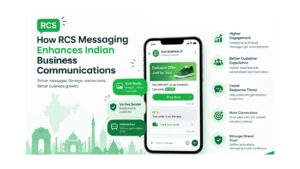
RCS stands for Rich Communication Services. It enhances traditional SMS by supporting rich media, interactive buttons, branded business profiles, and suggested replies in compatible messaging environments. Consequently, businesses can create more informative and engaging customer experiences.
For example, an online retailer can display product images, highlight a special offer, and provide a shopping button within a supported RCS message. Similarly, a travel company can share booking information, while a service provider can offer appointment reminders.
Moreover, businesses can combine RCS with WhatsApp Business API, email, and other digital marketing channels to create a more connected communication strategy.
At Trending Bulb, we explore emerging technologies and digital marketing strategies that help businesses understand changing customer expectations. Campaign Plus supports WhatsApp automation and chatbot solutions, while Step4Growth focuses on digital marketing and business growth.
In this guide, you will discover how RCS works, why it matters for Indian businesses, how it compares with SMS and WhatsApp Business API, and how companies can use it to improve customer communication.
What Is RCS Messaging?
Rich Communication Services is a modern messaging standard designed to offer more capabilities than conventional SMS.
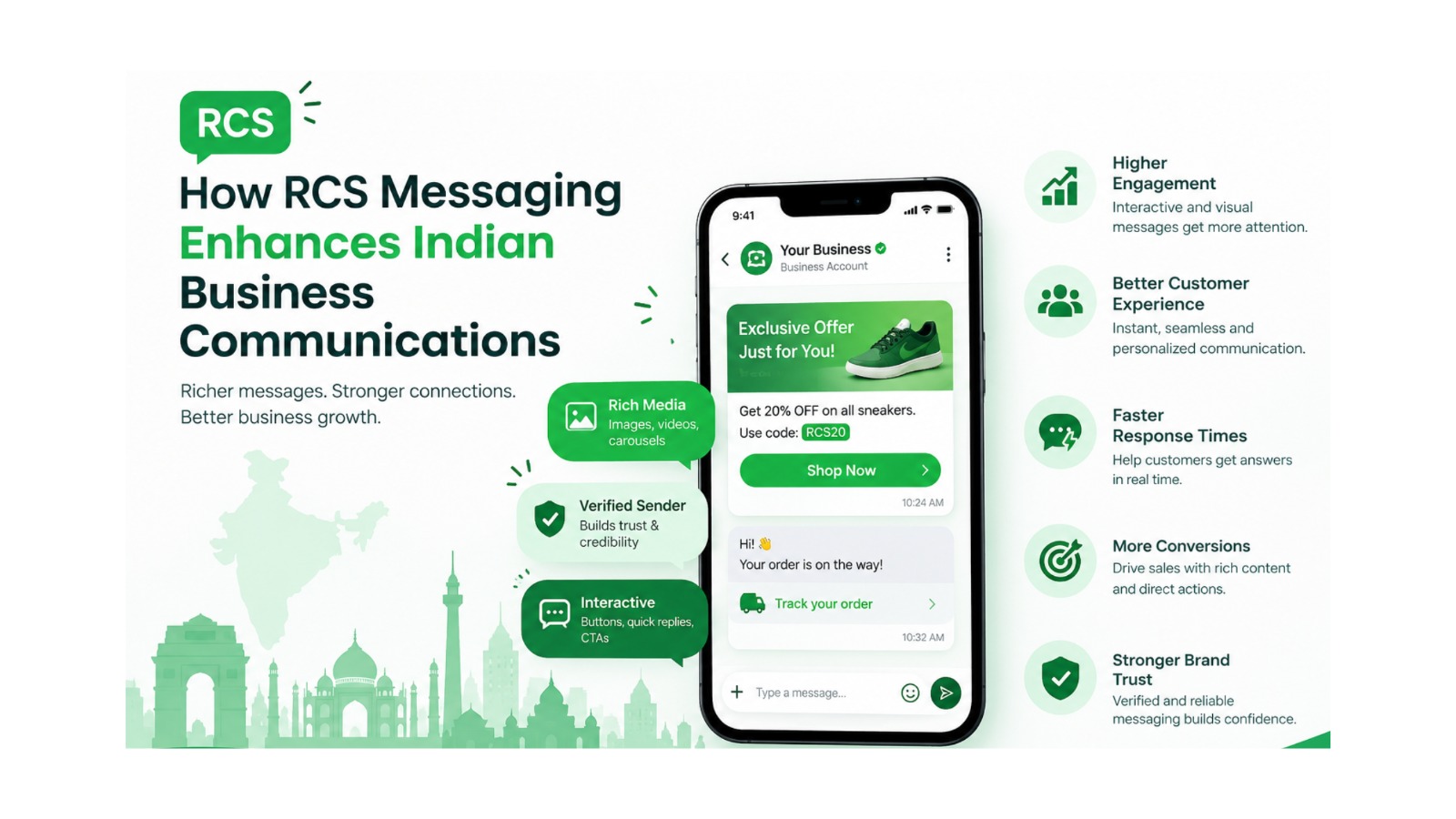
Traditional SMS primarily delivers text. In comparison, RCS can support images, videos, rich cards, carousels, suggested replies, and action buttons, depending on the messaging environment and provider.
As a result, businesses can present information visually and give customers convenient ways to interact with messages.
How Does RCS Business Messaging Work?
RCS Business Messaging allows organizations to communicate with customers through supported messaging applications and mobile networks.
A typical process includes these steps:
- Choose a provider: A business works with an eligible RCS messaging provider or aggregator.
- Configure the business profile: The company completes the applicable registration and verification process.
- Create the message: The marketing or customer service team prepares the message, images, and available interactive actions.
- Deliver the message: The provider routes the message through supported infrastructure.
- Enable customer interaction: Customers can use available buttons, suggested replies, or other supported features.
- Measure performance: The business reviews available delivery, engagement, and conversion data.
However, RCS availability depends on device compatibility, carrier support, messaging application settings, and provider capabilities. Therefore, businesses should verify these requirements before launching a campaign.
Google explains the RCS Business Messaging ecosystem and provider requirements in its official RCS for Business FAQ.
Why Is RCS Messaging Important for Indian Businesses?
India has a diverse customer base with different languages, shopping habits, devices, and communication preferences. Consequently, companies need flexible communication channels that make information easy to understand and act upon.
RCS offers another option for businesses that want to improve the messaging experience.
1. Rich Media Creates More Engaging Messages
Customers often understand products more easily when they can see them. Therefore, RCS allows businesses to present suitable content through supported images, product cards, and other rich media.
For instance, an electronics retailer can showcase a smartphone with its key features and a button to explore the product.
Similarly, a clothing brand can display a new collection rather than sending a plain-text promotional message.
This approach can make promotional communication more informative. Furthermore, relevant visuals can help customers evaluate products before visiting a website or store.
2. Verified Business Profiles Help Build Trust
Customers may hesitate when they receive messages from unfamiliar senders. For this reason, recognizable business identity plays an important role in customer communication.
Supported RCS Business Messaging implementations can display a verified business profile with elements such as a company name, logo, and verification indicator.
According to Google’s guide to RCS chats with businesses, verified business conversations can display a branded identity and verification check mark. Availability varies by region and carrier.
Consequently, businesses can make it easier for customers to recognize the organization behind a message.
Nevertheless, verification is not a substitute for good security practices. Companies must protect customer information, follow applicable policies, and avoid misleading communication.
3. Interactive Buttons Make Customer Actions Easier
Traditional SMS usually requires customers to read a message and then take the next step separately. In contrast, RCS can provide interactive buttons that simplify common actions.
For example, an online shopper receiving a delivery update might see an option to track an order.
Likewise, a travel company could offer buttons to view booking details or explore a destination.
As a result, customers can move from receiving information to taking action with fewer steps.
4. Personalized Messages Improve Relevance
Generic promotional messages do not always match customer interests. However, businesses can improve relevance by segmenting their audiences and using appropriate customer information.
For example, a fashion retailer might share recommendations based on a customer’s stated preferences, where permitted.
Similarly, an educational platform could send relevant course information to prospective students who have requested details.
When combined with suitable automation, personalization can make communication more useful. Importantly, businesses should respect customer consent, privacy requirements, and applicable messaging rules.
5. Faster Access to Important Information
Customers frequently look for order updates, booking details, appointment reminders, and service information.
RCS can present such information in a structured message with suitable interactive actions.
For instance, a customer could receive an appointment reminder with a button to view the appointment details. Therefore, the customer may not need to search through multiple emails or messages to find the relevant information.
The exact experience depends on the provider and the system supporting the message.
Key Benefits of RCS Messaging for Business in India
RCS can support marketing, customer service, and transactional communication. However, businesses should evaluate its performance against measurable objectives rather than assuming that richer messages automatically deliver better results.
Improved Customer Engagement
Rich media and interactive elements give businesses more ways to communicate useful information.
For example, a retailer can present a product image alongside a relevant action button. Customers can then explore the offer more conveniently.
Consequently, RCS may help businesses encourage meaningful interactions when the content matches customer needs.
Better Customer Experience
Customers value convenient, clear communication. RCS can combine product details, service information, and supported actions within a single messaging experience.
Furthermore, well-designed messages can reduce unnecessary steps in common customer journeys.
Stronger Brand Recognition
Consistent branding helps customers recognize a business across communication channels.
Where supported, RCS business profiles can display recognizable brand information. Therefore, companies can provide a more consistent communication experience.
More Convenient Customer Journeys
RCS can connect promotional messages with relevant next steps.
For example, a customer may receive an offer, view a product card, and select an action to explore the product. Depending on the implementation, the action may lead to a website, an application, or another supported destination.
This convenience can help reduce friction during product discovery.
Campaign Insights and Measurement
Depending on the provider, businesses may be able to review delivery information, message interactions, clicks, and other campaign metrics.
These insights can help marketing teams identify which messages attract attention and which actions customers take.
However, a click does not necessarily represent a purchase. Businesses should connect available messaging data with appropriate website analytics, CRM records, and sales outcomes to evaluate campaign performance.
How Different Indian Industries Can Use RCS Messaging
RCS can support different communication needs across industries. The following examples demonstrate how businesses could apply its features.
1. E-Commerce and Retail
Online retailers need to communicate product offers, order confirmations, delivery updates, and customer support information.
With RCS, eligible customers can receive rich product messages containing images, descriptions, and action buttons.
For example, an apparel brand could showcase a festive collection and offer an option to explore the products.
Additionally, an order notification could include a tracking action where supported.
Therefore, retailers can explore RCS for both promotional campaigns and customer service.
2. Banking and Financial Services
Banks and financial service providers regularly communicate account-related updates, service information, and product details.
RCS may support richer educational messages and convenient ways to access relevant services.
For instance, a bank could share information about a new service with an action to learn more or contact an authorized representative.
Nevertheless, financial institutions must follow applicable regulations and security requirements. Sensitive information should be handled through suitable secure systems.
3. Healthcare and Hospitals
Hospitals, clinics, and diagnostic centers need to communicate appointment details, reminders, and general service information.
RCS can help present appointment information in a structured format, along with supported actions to view details or contact the facility.
Similarly, a diagnostic center could share preparation instructions before a scheduled test.
However, healthcare businesses must protect patient information and use appropriate consent and privacy safeguards.
4. Education and EdTech
Educational institutions communicate admission updates, examination schedules, course details, and important announcements.
RCS can make these messages more interactive by presenting relevant information and links in a structured format.
For example, an educational institution could share a course overview with an option to explore the syllabus or request further information.
As a result, prospective students can access relevant details more conveniently.
5. Travel and Hospitality
Travel agencies, hotels, and hospitality businesses need to share booking confirmations, itineraries, offers, and service updates.
An RCS message could present a travel package with images and a button to explore the details.
Similarly, a hotel could share property information and direct customers to an appropriate booking page.
This approach can make travel communication more organized and easier to navigate.
6. Real Estate
Real estate companies often need to communicate property information, project updates, and site-visit opportunities.
RCS can help showcase property images, highlight project features, and provide buttons for inquiries.
For example, a developer could share a property overview with an option to request more information.
Consequently, prospective buyers may find it easier to move from discovering a property to contacting the sales team.
7. Local Businesses and Service Providers
Restaurants, salons, fitness centers, and other local businesses can use rich messaging to communicate offers, services, and appointment information.
For instance, a salon could showcase a seasonal package with an action to view details or request an appointment.
Similarly, a restaurant could share menu highlights and direct customers to its reservation page.
However, businesses should prioritize relevant communication and avoid sending excessive promotional messages.
RCS Messaging vs Traditional SMS
Both RCS and SMS can serve important business communication needs. The main difference lies in their supported features and compatibility.
| Feature | Traditional SMS | RCS Business Messaging |
|---|---|---|
| Plain-text messaging | Yes | Yes |
| Rich images and media | Limited natively | Supported in compatible environments |
| Interactive buttons | Generally limited | Supported |
| Branded business profile | Limited | Available in supported implementations |
| Suggested replies | Not a standard feature | Supported |
| Interactive product cards | Not natively supported | Supported by compatible implementations |
| Compatibility | Broad mobile support | Depends on device, network, and application support |
| Campaign analytics | Depends on provider | Depends on provider |
RCS offers a richer experience, whereas SMS remains useful when broad compatibility is the priority.
Therefore, businesses should select their messaging channel according to their audience, communication goals, budget, and technical requirements.
RCS Messaging vs WhatsApp Business API
RCS and WhatsApp Business API offer different ways to communicate with customers.
RCS enhances compatible messaging environments, while WhatsApp Business API enables businesses to communicate through WhatsApp using supported business solutions and integrations.
| Comparison | RCS Business Messaging | WhatsApp Business API |
|---|---|---|
| Messaging environment | Compatible RCS applications | |
| Rich media | Supported | Supported |
| Interactive actions | Features depend on implementation | Features depend on supported WhatsApp capabilities |
| Chatbot integration | Depends on provider | Available through supported integrations |
| Automation | Depends on implementation | Available through supported platforms and integrations |
| Customer reach | Depends on RCS availability | Depends on WhatsApp adoption and customer eligibility |
| Pricing | Varies by provider and arrangement | Depends on Meta pricing rules and provider charges |
| Typical use cases | Rich messages, promotions, notifications | Customer conversations, support, notifications, and automation |
Rather than viewing these channels as direct replacements, businesses can assess how they complement one another.
For example, a company might use RCS for eligible rich-message campaigns and WhatsApp for automated customer conversations and support.
Campaign Plus provides WhatsApp automation and chatbot solutions that can help businesses manage customer communication workflows. Meanwhile, Step4Growth can support broader digital marketing and business growth strategies.
Trending Bulb helps businesses understand these technologies so they can evaluate communication options according to their requirements.
How to Implement RCS Messaging in Your Business
A successful RCS strategy starts with clear goals, suitable technology, and an understanding of the customer journey.
Step 1: Define Your Business Objectives
First, identify what you want to achieve. Your goal might be product discovery, lead generation, customer support, appointment reminders, or repeat purchases.
Clear objectives make it easier to select the right message format and measure campaign performance.
Step 2: Understand Your Target Audience
Next, identify your customer segments, preferred communication channels, and common questions.
For example, an e-commerce company may prioritize delivery updates, while a real estate business may focus on property inquiries.
As a result, your messages can provide information that customers actually need.
Step 3: Choose a Suitable RCS Provider
Evaluate providers based on availability, onboarding requirements, verification, integrations, pricing, analytics, and support.
Additionally, confirm whether your target audience can receive the intended RCS experience. Ask about SMS fallback and other options when RCS is unavailable.
Google maintains an official directory of RCS for Business partners, which can help businesses begin their provider research.
Step 4: Design Clear and Useful Messages
Keep messages concise, relevant, and easy to understand.
Use rich media when it improves the customer’s understanding of an offer or service. Furthermore, include a clear action such as viewing a product, tracking an order, or exploring a service.
Avoid misleading claims and unnecessary promotional content.
Step 5: Integrate Messaging With Business Systems
Where supported, connect messaging workflows with your CRM, e-commerce platform, order-management system, or customer support tools.
For instance, an order-management integration could help trigger a delivery notification when an order reaches a particular stage.
Similarly, a lead-management integration could help the sales team follow up on relevant customer inquiries.
Step 6: Test Before Launching
Before launching a large campaign, test message appearance, links, action buttons, personalization, and fallback behavior.
Check the experience on supported devices and confirm that the message accurately reflects your brand.
This step can help identify errors before they affect customers.
Step 7: Measure and Optimize Performance
Finally, review the metrics available through your provider.
These may include delivery rates, message interactions, clicks, inquiries, conversions, and campaign costs.
Compare the results against your objectives. Then, improve the audience selection, message content, or call to action based on the findings.
Best Practices for RCS Business Messaging in India
Businesses should follow a customer-first approach to make RCS communication useful and sustainable.
- Keep messages relevant: Send information that matches customer needs and interests.
- Use clear calls to action: Make the next step easy to understand.
- Maintain consistent branding: Use accurate business information and approved brand assets.
- Respect consent: Follow applicable privacy requirements, messaging policies, and opt-out preferences.
- Protect sensitive data: Use suitable safeguards for confidential customer interactions.
- Test compatibility: Check the experience across supported devices and networks.
- Prepare fallback options: Consider SMS, WhatsApp, or email when RCS is unavailable.
- Monitor performance: Evaluate meaningful business outcomes rather than clicks alone.
- Control message frequency: Avoid overwhelming customers with repeated promotions.
- Review campaign costs: Compare provider charges with the value generated.
By following these practices, businesses can build a more reliable communication strategy while protecting customer trust.
Challenges and Limitations of RCS Messaging
Although RCS offers several benefits, it is not suitable for every communication scenario.
First, availability depends on compatible devices, carriers, messaging applications, and service configuration. Therefore, some customers may not receive the full RCS experience.
Second, implementation may require business verification, technical integration, and coordination with an appropriate provider.
Third, costs vary by provider, message type, volume, and commercial arrangement. Businesses should request current pricing before launching campaigns.
Finally, rich media does not guarantee higher engagement or sales. Poor targeting, irrelevant offers, weak landing pages, and unclear calls to action can still reduce performance.
For these reasons, companies should test RCS carefully and compare it with alternative communication channels before expanding their investment.
The Role of Campaign Plus, Step4Growth, and Trending Bulb
Modern businesses often need several communication channels to reach customers effectively. However, technology works best when it supports a clear marketing strategy.
Campaign Plus: WhatsApp Automation and Customer Communication
Campaign Plus provides WhatsApp automation, chatbot solutions, and business messaging capabilities that can help organizations manage customer conversations.
Businesses exploring RCS, WhatsApp Business API, and messaging automation can consider how these technologies support different stages of the customer journey.
For example, RCS may be suitable for certain rich-message experiences, while WhatsApp automation can support customer inquiries, follow-ups, and service workflows.
The right combination depends on customer preferences, technical requirements, and business objectives.
Step4Growth: Digital Marketing and Business Growth
Step4Growth focuses on digital marketing and growth strategies that help businesses strengthen their online presence and customer acquisition efforts.
When combined with a well-planned messaging strategy, digital marketing can help companies attract relevant audiences, guide prospects towards suitable actions, and measure campaign outcomes.
For instance, a business can align its messaging campaigns with website content, paid advertising, and lead-management processes.
Trending Bulb: Insights Into Emerging Digital Trends
Trending Bulb helps readers explore digital marketing developments, communication technologies, and business growth strategies.
Through educational content about RCS messaging, WhatsApp Business API, chatbots, and automation, Trending Bulb aims to help businesses understand their options and make informed decisions.
Together, these areas highlight an important principle: successful communication depends on choosing suitable technology, delivering relevant information, and creating a useful customer experience.
The Future of RCS Messaging in India
Business communication is moving towards more interactive, personalized, and connected experiences.
As RCS availability and adoption develop, businesses may find new opportunities to combine rich messaging with customer service, digital commerce, and marketing automation.
For instance, retailers may use interactive product discovery messages, while service providers may improve booking and appointment communication.
Likewise, companies could connect messaging with CRM systems to gain a clearer view of customer interactions.
Nevertheless, adoption will depend on network support, device compatibility, customer preferences, implementation quality, and pricing.
Therefore, Indian businesses should monitor developments, test relevant use cases, and choose communication channels according to measurable business needs.
Conclusion
RCS messaging can enhance Indian business communication through rich media, interactive buttons, recognizable business profiles, and more convenient customer interactions.
Compared with traditional SMS, it offers additional ways to present information and guide customers towards useful actions. Moreover, businesses across retail, banking, healthcare, education, travel, and real estate can explore RCS for suitable communication needs.
However, RCS is not a universal replacement for SMS or WhatsApp Business API. Its value depends on customer reach, relevant content, technical support, and campaign execution.
For this reason, businesses should build a balanced communication strategy that combines suitable messaging channels with effective digital marketing practices.
Campaign Plus can help businesses explore WhatsApp automation and chatbot workflows, while Step4Growth can support broader digital marketing and growth objectives. Meanwhile, Trending Bulb provides insights into technologies and strategies shaping business communication.
Ready to improve your business communication? Explore RCS messaging, WhatsApp Business API, and automation solutions to identify the right approach for your customers and business goals.
Frequently Asked Questions (FAQs)
1. What is RCS messaging in India?
RCS messaging is an enhanced messaging standard that supports rich media, interactive buttons, suggested replies, and branded business messaging in compatible environments. Businesses can use it to create more interactive customer communications.
2. How does RCS messaging help businesses?
RCS can help businesses present products visually, share service updates, simplify customer actions, and provide a more interactive messaging experience. However, results depend on audience relevance, technical availability, and campaign quality.
3. Is RCS better than SMS?
RCS offers richer features than traditional SMS, including supported media, interactive buttons, and enhanced business profiles. In contrast, SMS generally offers broader compatibility. Businesses should choose according to their audience and communication objectives.
4. What is the difference between RCS and WhatsApp Business API?
RCS operates through compatible RCS messaging environments, whereas WhatsApp Business API supports business communication on WhatsApp. Both can offer rich content and interactive experiences, but their reach, integrations, pricing, and implementation requirements differ.
5. Can small businesses in India use RCS messaging?
Small businesses can explore RCS through providers that support their requirements and target audience. Before starting, they should verify availability, onboarding requirements, pricing, and device compatibility.
6. Does RCS messaging support business automation?
RCS can support interactive communication and integrations, depending on the provider and implementation. Businesses should confirm which automation, CRM connectivity, reporting, and customer-service features are available.
7. Is RCS messaging secure?
Security depends on the messaging implementation, provider, and type of conversation. Businesses should verify sender identity, protect customer data, and follow applicable regulations. They should also check which security protections apply to business messaging rather than assuming all RCS conversations use end-to-end encryption.
8. Can RCS messaging increase sales?
RCS may help businesses improve product discovery and make customer actions more convenient. Nevertheless, higher sales are not guaranteed. Audience targeting, offer quality, pricing, landing pages, and follow-up processes also influence conversions.
9. How much does RCS Business Messaging cost in India?
RCS pricing depends on the provider, message type, campaign volume, and commercial arrangement. Businesses should request current quotations and clarify any setup, integration, platform, and messaging fees before launching campaigns.
10. How can Campaign Plus and Step4Growth help businesses improve communication?
Campaign Plus supports WhatsApp automation and chatbot solutions, while Step4Growth focuses on digital marketing and business growth strategies. Businesses can explore these services as part of a broader communication plan that may include RCS and other relevant channels.