Introduction
Winning a new customer is important for every business. However, keeping existing customers engaged is equally essential for long-term growth. When customers return to purchase again, recommend your brand, and interact with your business regularly, you can build a stronger and more profitable customer base.
Unfortunately, many businesses focus heavily on acquiring new customers while overlooking the people who have already purchased from them. As a result, customers may forget about the brand, lose interest in its products, or choose a competitor that communicates with them more effectively.
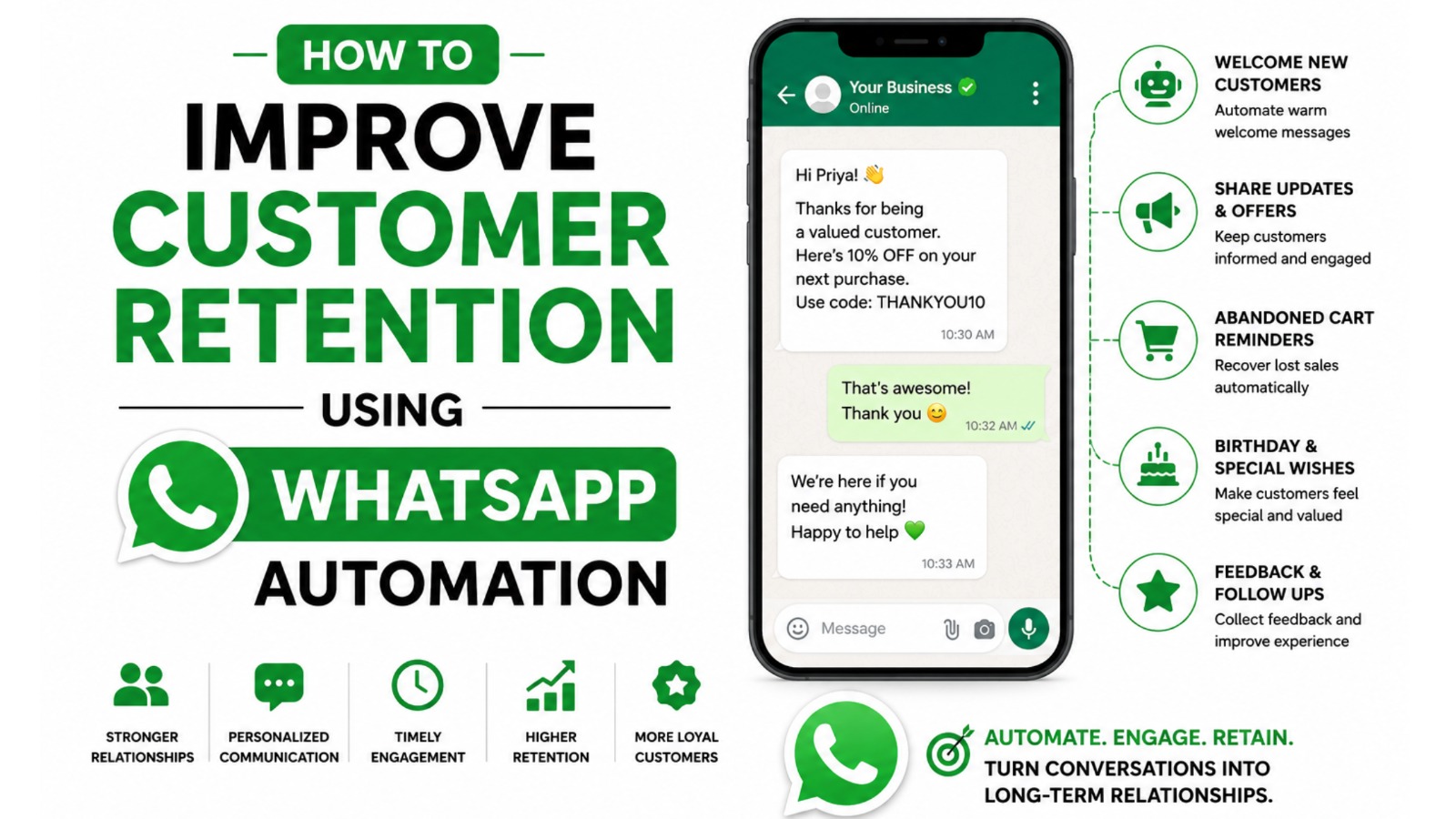
This is where WhatsApp automation for customer retention becomes valuable. It allows businesses to send timely updates, personalized offers, order notifications, feedback requests, and follow-up messages without manually contacting every customer.
Moreover, WhatsApp helps brands maintain convenient and familiar conversations with their audiences. When businesses combine relevant messaging with thoughtful customer service, they can encourage repeat purchases and build lasting relationships.
At Trending Bulb, we recognize the importance of using digital communication to strengthen customer relationships. Solutions from Campaign Plus can help businesses manage WhatsApp automation and customer conversations, while Step4Growth can support broader digital marketing and growth strategies.
In this guide, you will learn how to improve customer retention using WhatsApp automation, which workflows businesses should implement, and how to measure their effectiveness.
What Is Customer Retention?
Customer retention refers to a business’s ability to keep existing customers engaged and encourage them to continue buying its products or services over time.
Instead of concentrating only on attracting new buyers, customer retention focuses on delivering value after the first purchase. It involves maintaining communication, resolving problems, understanding customer preferences, and providing reasons to return.
For example, an online clothing store might send a delivery update after an order. A few days later, it could ask the customer for feedback. After an appropriate interval, it might recommend complementary products based on the customer’s previous purchase.
These interactions make the customer experience more helpful and consistent.
Furthermore, customer retention can reduce dependence on constantly acquiring new customers. Although every business needs new buyers, encouraging satisfied customers to return can create more opportunities for sustainable revenue.
Why Is Customer Retention Important?
Customer retention matters for several reasons:
- Encourages repeat purchases: Existing customers already know your brand and products.
- Builds customer trust: Consistent communication helps customers feel supported.
- Improves customer experience: Timely updates reduce confusion and unnecessary effort.
- Creates cross-selling opportunities: Relevant recommendations introduce customers to complementary products.
- Strengthens brand loyalty: Helpful experiences give customers more reasons to choose your business again.
- Generates useful feedback: Customer responses can reveal areas that need improvement.
However, retention does not happen automatically. Businesses must continue delivering value after the initial transaction. Therefore, an effective communication strategy is essential.
What Is WhatsApp Automation?
WhatsApp automation uses predefined rules, approved integrations, and messaging workflows to handle customer communication automatically.
For example, a business can trigger a confirmation message when a customer places an order. Similarly, it can schedule an appointment reminder, send a feedback request, or follow up with a customer who has shown interest in a product.
Depending on the setup, businesses can use the WhatsApp Business Platform, also known as WhatsApp Business API, to manage communication at scale and connect messaging with other business systems.
In addition, chatbot workflows can answer common questions, collect information, and route complicated requests to human support agents.
Campaign Plus provides WhatsApp automation and chatbot solutions that businesses can use to organize customer communication and improve follow-up processes. Meanwhile, TrendingBulb can help brands communicate the value of these tools through educational content and digital marketing.
The key is to automate repetitive tasks without making customer interactions feel impersonal.
10 Ways to Improve Customer Retention Using WhatsApp Automation
1. Send Personalized Welcome Messages
The customer relationship should not end immediately after someone subscribes, registers, or makes a first enquiry. Instead, businesses should use the opportunity to establish a helpful connection.
A welcome message can introduce your brand, explain what customers can expect, and provide useful information about your products or services.
For example, an online skincare store could send:
“Hi [Customer Name]! Welcome to [Brand Name]. We’re happy to have you here. You can message us whenever you need product information or order assistance.”
This message creates a friendly first impression without overwhelming the customer.
Moreover, personalization makes communication feel more relevant. Businesses can use appropriate customer details, such as a name or previously selected product, when those details are available and permitted for the intended use.
However, avoid sending too many messages immediately after registration. A simple welcome followed by useful communication is generally better than a series of promotional notifications.
2. Automate Order Confirmations and Delivery Updates
Customers appreciate knowing what happens after they place an order. When businesses fail to communicate clearly, buyers may worry about payment status, shipping delays, or delivery dates.
WhatsApp automation can reduce this uncertainty by sending timely transactional updates.
For example, an e-commerce business can automate messages for:
- Order confirmation
- Payment confirmation
- Order dispatch
- Shipment tracking
- Delivery confirmation
- Return or exchange instructions
Consequently, customers receive important information without repeatedly contacting customer support.
These updates also create opportunities to provide assistance when something goes wrong. For instance, a delivery notification could include an appropriate support option for customers who need help.
However, businesses should keep transactional communication accurate and concise. They should also follow applicable WhatsApp rules, privacy requirements, and customer communication preferences.
3. Create Post-Purchase Follow-Up Workflows
The period immediately after a purchase is an important opportunity to strengthen customer relationships.
Instead of ending communication at delivery, businesses can follow up with helpful information related to the product or service.
For example, a fitness equipment retailer might share setup instructions after delivery. Similarly, a beauty brand could provide product-use guidance, while a software company might share a quick-start tutorial.
A simple post-purchase workflow could look like this:
Day 0: Send the order confirmation.
After delivery: Share relevant usage instructions or support information.
A few days later: Ask whether the customer needs assistance.
After an appropriate interval: Request feedback or introduce a related product when relevant.
The exact timing should depend on the product, customer expectations, and purchase cycle.
Furthermore, these messages should provide genuine value rather than repeatedly pushing customers toward another purchase. Helpful follow-ups can improve satisfaction and give customers a reason to trust your brand.
4. Use WhatsApp Chatbots for Faster Customer Support
Slow responses can frustrate customers, especially when they need help with an order, payment, booking, or product question.
WhatsApp chatbots can answer frequently asked questions and guide customers toward the information they need. As a result, customers can receive assistance without waiting for an employee to respond to every routine query.
For example, a chatbot could offer options such as:
- Track my order
- View product information
- Check appointment details
- Understand return policies
- Speak to a support agent
This approach makes common support tasks easier to manage.
In addition, businesses can configure chatbots to collect relevant details before transferring a complicated issue to a human agent. Therefore, support teams can spend more time resolving problems that require personal attention.
Campaign Plus can be part of a WhatsApp automation strategy that combines chatbot interactions with organized customer conversations.
Nevertheless, automation should not replace human support completely. Customers must have a clear way to reach a person when a chatbot cannot resolve their concern.
5. Send Personalized Offers and Product Recommendations
Generic promotions often fail because they do not match the customer’s interests or needs. On the other hand, relevant recommendations can make shopping more convenient.
WhatsApp automation allows businesses to organize customers into appropriate segments and send offers based on permitted information, preferences, and purchase history.
For instance, a jewellery business could introduce matching earrings to customers who purchased a necklace. Similarly, a clothing store might share new arrivals in a category the customer previously explored.
A personalized message could say:
“Hi [Customer Name]! Since you liked our festive collection, you may also enjoy these new designs. Explore the collection here: [Link].”
This approach connects recommendations with customer interests instead of sending the same message to everyone.
However, businesses should avoid making assumptions based on sensitive personal information. They should also respect opt-outs and applicable messaging rules.
Most importantly, measure whether recommendations generate meaningful engagement and repeat purchases. Sending more promotional messages does not automatically lead to better retention.
6. Recover Inactive Customers With Re-Engagement Campaigns
Some customers stop interacting with a brand after their first purchase. Others may have purchased regularly in the past but have not returned recently.
Instead of ignoring these customers, businesses can create a re-engagement workflow.
First, identify inactivity based on a reasonable period for your product category. For example, a business selling everyday essentials may use a different interval from one selling furniture or premium jewellery.
Next, send a relevant message that offers a reason to reconnect.
A re-engagement message might say:
“Hi [Customer Name]! It’s been a while since your last purchase. We’ve added some new products that may interest you. Take a look at our latest collection here: [Link].”
Alternatively, a business could share helpful tips, product updates, or a feedback request.
If appropriate, it may offer a limited promotion. However, discounts should not be the only reason customers return, because excessive discounting can reduce profit margins and train customers to wait for sales.
Therefore, focus on relevance, timing, and customer value.
7. Automate Feedback and Customer Satisfaction Surveys
Customer feedback helps businesses understand what customers appreciate and where their experience needs improvement.
However, many customers do not complete long surveys. WhatsApp provides a convenient channel for asking short, straightforward questions after a purchase or service interaction.
For example, a business could send:
“Hi [Customer Name]! We hope you enjoyed your experience with us. How would you rate our service from 1 to 5?”
Based on the response, the automation workflow can guide the next step.
A satisfied customer might receive a polite request to leave a review on an appropriate platform. Meanwhile, an unhappy customer could be directed to a support representative who can investigate the issue.
This approach helps businesses identify problems before they lead to lost customers.
Additionally, feedback can reveal recurring concerns about delivery, product quality, pricing, or customer service. Businesses can use these insights to improve their processes.
Remember to ask for honest feedback rather than pressuring customers to provide positive reviews.
8. Send Appointment Reminders and Service Notifications
Businesses that depend on appointments or scheduled services can use WhatsApp automation to maintain customer engagement.
For example, clinics, salons, consultants, educational institutions, and repair services can send appointment confirmations and reminders.
A typical workflow might include:
- Confirmation immediately after booking
- A reminder before the scheduled appointment
- Instructions for rescheduling
- A follow-up message after the service
- A request for feedback when appropriate
As a result, customers have easier access to essential information, and businesses can reduce avoidable communication gaps.
Furthermore, a follow-up message can invite customers to book their next appointment when the timing is appropriate.
For example, a salon could remind a customer about a recommended future visit, provided the customer has agreed to receive such communications.
The timing and content should reflect the actual service cycle rather than a fixed schedule for every customer.
9. Build Loyalty Through Helpful, Consistent Communication
Customer loyalty grows when a business consistently provides value. Although promotional messages can encourage purchases, customers also appreciate useful information and thoughtful service.
WhatsApp automation can help businesses share educational content, product-care instructions, seasonal announcements, service updates, and relevant loyalty benefits.
For instance, a gardening brand might share seasonal plant-care tips. Similarly, a food business could send useful menu updates, while a technology company might share practical product tutorials.
TrendingBulb can help businesses develop educational and promotional content that supports a consistent digital presence. Meanwhile, Step4Growth can complement retention efforts with broader digital marketing, customer journey planning, and growth-focused campaigns.
The objective is to create communication that customers find useful rather than intrusive.
In addition, businesses should maintain a sensible messaging frequency. Sending too many notifications can lead to muted conversations, opt-outs, or reduced trust.
A thoughtful combination of useful content, customer support, and relevant offers is more sustainable than constant promotion.
10. Connect WhatsApp Automation With Your CRM
A customer relationship management system, or CRM, helps businesses organize customer information, interactions, purchase history, and sales activities.
When WhatsApp automation connects with a CRM, businesses can create more coordinated customer journeys.
For example, a CRM-integrated workflow could identify a recent buyer and trigger an appropriate follow-up. It could also record a support request, assign a conversation to an employee, or help a team track customers who need additional assistance.
Consequently, employees can understand previous interactions instead of asking customers to repeat the same information.
A connected system can also help businesses segment customers according to relevant criteria, such as purchase stage, order history, or support status, subject to appropriate permissions and data-protection practices.
Campaign Plus can support businesses exploring WhatsApp automation and customer communication workflows. In addition, Step4Growth can help integrate retention activities into a wider digital marketing strategy.
Before implementing a CRM connection, businesses should confirm that the selected tools support the required integration, data synchronization, access controls, and reporting.
Best WhatsApp Automation Workflows for Different Industries
WhatsApp automation becomes more effective when workflows reflect the needs of each industry. Therefore, businesses should avoid using one identical retention strategy for every customer.
E-commerce and Retail
Online stores can automate order updates, delivery notifications, product-care tips, feedback requests, and relevant repeat-purchase reminders.
For example, a skincare store could provide usage instructions after delivery and share complementary products at a suitable time.
Healthcare and Clinics
Clinics can automate appointment confirmations, reminders, rescheduling instructions, and post-visit service feedback.
However, they must handle personal information carefully and avoid exposing sensitive details through inappropriate notifications.
Education and Training
Educational businesses can send class reminders, learning resources, course updates, and renewal notifications.
As a result, students can stay informed and receive timely support throughout their learning journey.
Beauty, Jewellery, and Lifestyle Brands
These businesses can use WhatsApp to introduce new collections, announce relevant seasonal offers, share product information, and invite customers to explore complementary products.
Nevertheless, messages should reflect customer preferences and applicable marketing permissions.
B2B and Professional Services
B2B companies can automate meeting confirmations, onboarding instructions, service updates, feedback requests, and account follow-ups.
Furthermore, sales teams can use connected systems to maintain organized communication across longer buying cycles.
How to Measure Customer Retention Through WhatsApp Automation
Implementing automation is only the beginning. Businesses must also measure whether their workflows improve customer relationships and business results.
Track the following metrics to understand performance.
1. Customer Retention Rate
Customer retention rate measures the proportion of customers who remain customers during a selected period.
A common formula is:
Customer Retention Rate = ((Customers at the End of the Period − New Customers Acquired During the Period) ÷ Customers at the Start of the Period) × 100
For example, suppose a business starts a month with 500 customers, ends with 550, and acquires 100 new customers during the month.
Its retention rate would be:
((550 − 100) ÷ 500) × 100 = 90%
This example illustrates the calculation. Actual results depend on the period and how the business defines an active customer.
2. Repeat Purchase Rate
Repeat purchase rate shows the proportion of customers who make more than one purchase during a specified period.
If this metric improves after introducing relevant follow-ups or replenishment reminders, automation may be contributing to repeat sales. However, compare results carefully because other marketing activities and seasonal trends can also influence purchases.
3. Message Delivery and Read Rates
Delivery and read metrics help businesses understand whether messages reach customers and whether recipients open them, where the platform provides these indicators.
However, a read message does not necessarily indicate interest, satisfaction, or purchase intent.
Therefore, use these metrics alongside conversions and customer feedback.
4. Click-Through Rate
Click-through rate measures how often recipients click a link included in a message relative to the relevant number of messages delivered or another clearly defined reporting denominator.
Use a consistent definition when comparing campaigns.
A higher click-through rate may indicate that a message or offer attracts attention. Nevertheless, clicks alone do not establish whether customers complete a purchase.
5. Repeat Revenue and Conversion Rate
Track purchases, bookings, or other meaningful conversions that follow your WhatsApp campaigns.
Where possible, use campaign links, CRM records, and attribution tools to understand which workflows contribute to results.
Additionally, compare revenue with the cost of messaging, discounts, tools, and staff time. This provides a clearer picture of commercial value.
6. Opt-Out and Complaint Rates
Customer retention depends on maintaining trust. Therefore, monitor opt-outs, negative responses, and messaging complaints.
If these indicators increase, review the relevance, frequency, timing, and permission status of your messages.
The goal is not simply to send more messages. Instead, it is to deliver useful communication that customers are comfortable receiving.
Best Practices for WhatsApp Customer Retention
To build a sustainable retention strategy, follow these practical guidelines.
Obtain appropriate permission: Follow WhatsApp’s applicable messaging requirements and obtain the necessary customer consent before sending business-initiated messages.
Use approved templates where required: Business-initiated messages on the WhatsApp Business Platform may require approved message templates, depending on the message type and applicable rules.
Personalize responsibly: Use relevant customer information only when permitted and appropriate.
Choose the right timing: Align follow-ups with customer behaviour, product usage, and the normal purchase cycle.
Provide a clear opt-out: Respect requests to stop receiving marketing messages and update your contact records accordingly.
Combine automation with human support: Allow customers to reach a person when their issue requires judgement or individual attention.
Test your workflows: Compare message timing, content, calls to action, and audience segments to understand what works best.
Protect customer data: Limit access to customer information and choose tools that meet your operational and privacy requirements.
Review performance regularly: Use retention, repeat-purchase, conversion, and opt-out data to improve your strategy.
By following these practices, businesses can make WhatsApp automation more useful, relevant, and customer-focused.
How TrendingBulb, Campaign Plus, and Step4Growth Fit Into Your Strategy
Successful customer retention requires more than sending automated messages. Businesses also need relevant content, organized communication, and a clear digital marketing strategy.
Trending Bulb can help brands strengthen their online presence through content marketing, social media communication, and digital growth initiatives. Educational content can introduce businesses to practical ways of using WhatsApp automation and maintaining customer engagement.
Campaign Plus provides WhatsApp automation, chatbot, and related communication solutions that can help businesses organize customer interactions and implement messaging workflows. Depending on the available setup, these workflows can support customer follow-ups, service notifications, and marketing communication.
Step4Growth can complement these efforts through broader digital marketing and growth-focused activities. By aligning acquisition campaigns with customer retention initiatives, businesses can build a more consistent customer journey.
Together, these areas of work highlight an important principle: customer acquisition attracts buyers, while a well-planned retention strategy gives them more reasons to stay.
Businesses should select tools and services according to their specific requirements, integration needs, budget, and compliance obligations.
Common Mistakes to Avoid When Automating WhatsApp Messages
Although automation can improve efficiency, poorly designed workflows may damage customer relationships.
Avoid these common mistakes:
Sending too many messages: Excessive notifications can irritate customers. Instead, establish a reasonable frequency and prioritize useful information.
Using the same message for everyone: Generic campaigns often overlook differences in customer needs. Use relevant segmentation wherever appropriate.
Ignoring customer replies: Automated campaigns should not become one-way communication. Monitor incoming messages and provide timely assistance.
Relying only on discounts: Frequent discounts may encourage short-term purchases without building genuine loyalty. Offer useful service and relevant experiences as well.
Failing to update customer records: Incorrect order details, outdated preferences, and duplicate contacts can create frustrating experiences.
Ignoring performance data: Without measurement, businesses cannot reliably identify successful workflows or improve underperforming campaigns.
Forgetting privacy and consent: Respect customer preferences, follow applicable rules, and handle personal data responsibly.
Ultimately, the most effective automation strategy balances operational efficiency with human understanding.
Conclusion
Customer retention is essential for businesses that want to build lasting relationships and encourage repeat purchases. However, maintaining those relationships requires consistent communication, relevant experiences, and reliable customer support.
WhatsApp automation helps businesses deliver these experiences more efficiently. From welcome messages and order updates to feedback requests, re-engagement campaigns, and CRM-connected workflows, automation can support customers throughout their journey.
Nevertheless, technology alone cannot guarantee loyalty. Businesses must send relevant messages, respect customer preferences, resolve problems effectively, and measure the results of their efforts.
At Trending Bulb, we believe that effective digital communication should support meaningful customer relationships. With WhatsApp automation solutions from Campaign Plus and broader digital marketing support from Step4Growth, businesses can explore practical ways to improve follow-ups, strengthen engagement, and create more consistent customer experiences.
Ready to improve customer retention using WhatsApp automation? Start by identifying one repetitive customer communication task, build a simple workflow, and measure its impact before expanding your strategy.
The goal is simple: deliver the right message at the right time and give customers a reason to return.
Frequently Asked Questions (FAQs)
1. How does WhatsApp automation improve customer retention?
WhatsApp automation helps businesses maintain consistent communication through timely order updates, personalized follow-ups, customer support, feedback requests, and relevant offers. These interactions can improve the customer experience and encourage repeat purchases when they provide genuine value.
2. Which WhatsApp automation workflows are best for customer retention?
Useful workflows include welcome messages, post-purchase follow-ups, delivery updates, appointment reminders, feedback collection, re-engagement campaigns, and personalized product recommendations. The best choice depends on your industry and customer journey.
3. Can small businesses use WhatsApp automation?
Yes. Small businesses can automate repetitive communication tasks and respond to common questions more efficiently. They can begin with a few essential workflows and expand as their customer base grows.
4. What is the difference between WhatsApp Business App and WhatsApp Business API?
The WhatsApp Business App is designed primarily for businesses managing conversations through the app’s built-in features. The WhatsApp Business Platform, commonly accessed through API-based integrations, supports more extensive integrations and scalable messaging workflows. Features and availability depend on the setup and provider.
5. How can businesses recover inactive customers using WhatsApp?
Businesses can identify customers who have not purchased or engaged within a relevant period and send a permitted, personalized re-engagement message. Helpful updates, relevant recommendations, and appropriate offers may encourage customers to return.
6. Does WhatsApp automation replace human customer support?
No. Automation can handle routine questions and repetitive tasks, while human agents manage complex issues, complaints, and situations requiring personal judgement. Combining both can create a more balanced customer experience.
7. How can Campaign Plus help businesses with WhatsApp automation?
Campaign Plus provides WhatsApp automation and chatbot solutions that can help businesses organize customer communication and implement workflows. Businesses should evaluate available features, integrations, messaging requirements, and pricing before selecting a setup.
8. How can TrendingBulb and Step4Growth support customer retention?
TrendingBulb can support brands through content marketing and digital communication initiatives, while Step4Growth can complement retention efforts with broader digital marketing and growth strategies. Businesses can align these activities with WhatsApp automation to create a more consistent customer journey.