Introduction
Customer communication is changing faster than ever. Today, customers expect quick answers, simple interactions, and personalized support. More importantly, they want to communicate through channels they already use every day.
That is where AI WhatsApp chatbots are making a major difference.
WhatsApp has become an important communication channel for businesses. However, managing hundreds or thousands of customer conversations manually can take significant time and effort.
AI-powered WhatsApp chatbots can solve this challenge.
At Trending Bulb, we help businesses explore smarter digital marketing and communication solutions. As customer expectations continue to change, businesses need tools that can deliver faster responses and better engagement. AI WhatsApp chatbots are becoming an important part of this transformation.
They can answer questions, collect customer information, qualify leads, share product details, provide updates, and guide customers through different stages of their journey. As a result, businesses can improve customer service while reducing repetitive work.
Furthermore, AI chatbots can operate 24/7. Therefore, customers do not always have to wait for a sales or support representative to become available.
For businesses that want to grow, this combination of WhatsApp, automation, and artificial intelligence can create new opportunities.
At Trending Bulb, we understand that modern businesses need more than traditional communication. They need smarter ways to attract, engage, and retain customers.
Solutions such as Campaign Plus can support businesses with WhatsApp-based communication and campaign management. Meanwhile, Step4Growth can complement a broader digital growth strategy focused on customer acquisition and business expansion.
So, what makes AI WhatsApp chatbots so valuable? Let us explore how they work, their benefits, use cases, and their role in the future of customer communication.
What Are AI WhatsApp Chatbots?
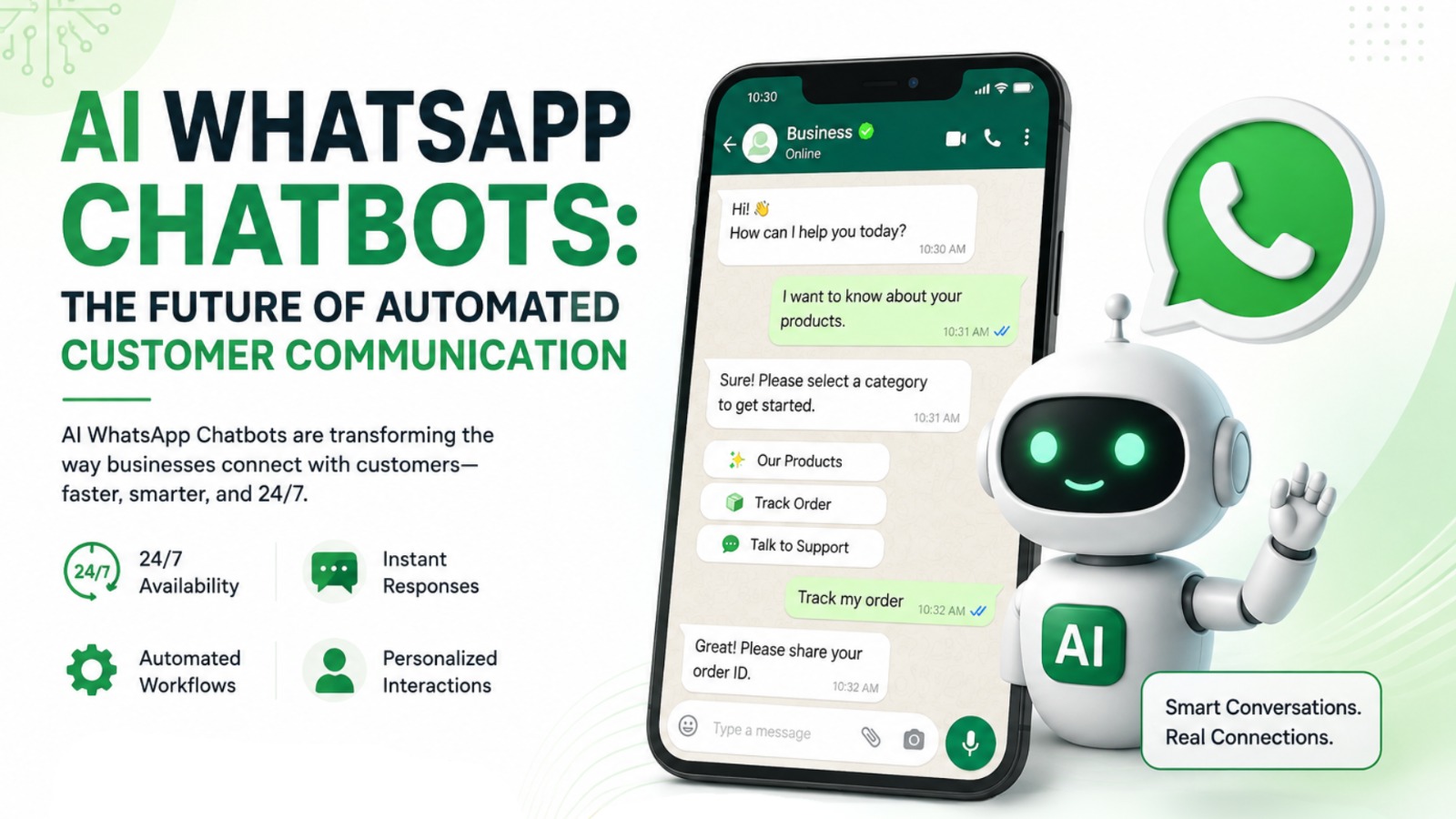
An AI WhatsApp chatbot is an automated system that uses artificial intelligence to communicate with customers through WhatsApp.
Traditional chatbots usually follow fixed rules. For example, they may ask customers to press a number or select an option from a menu.
AI chatbots work differently.
They can understand natural language and identify what the customer is trying to achieve. Therefore, customers can ask questions in their own words instead of following a strict conversation path.
For example, a customer might ask:
“Can you tell me the price of your service?”
Another customer might say:
“How much does your service cost?”
Someone else could simply type:
“Pricing please.”
Although the wording is different, all three customers have the same basic requirement.
An AI chatbot can recognize that intent and provide the appropriate information.
Moreover, advanced chatbots can use conversation context. As a result, customers can have more natural conversations without repeating the same information.
This makes AI WhatsApp chatbots much more flexible than basic rule-based automation.
Why WhatsApp Is Perfect for AI Customer Communication
WhatsApp is already part of everyday communication for many customers. Therefore, businesses can connect with customers on a familiar platform.
Customers do not need to download another application. They can simply open WhatsApp and start a conversation.
Furthermore, WhatsApp supports different communication formats. Businesses can use text messages, images, documents, buttons, lists, and other interactive features.
When these capabilities are combined with AI, businesses can create powerful customer journeys.
For example, a customer can:
- Receive a promotional message.
- Click a WhatsApp call-to-action.
- Ask questions about the product.
- Get instant AI-generated answers.
- Share their requirements.
- Become a qualified lead.
- Connect with a sales representative.
Consequently, WhatsApp can become more than a messaging channel. It can become an important part of the complete customer journey.
How Do AI WhatsApp Chatbots Work?
The process behind an AI WhatsApp chatbot may look complex. However, the basic concept is simple.
First, a customer sends a message through WhatsApp.
Next, the WhatsApp Business infrastructure delivers the message to the chatbot system.
Then, the AI analyzes the customer’s message. It identifies the intent and determines the most appropriate response.
Afterward, the chatbot may use business information, CRM data, or an integrated system to provide a useful answer.
Finally, the response reaches the customer through WhatsApp.
The basic process looks like this:
Customer Message → WhatsApp → AI Processing → Business Data → Automated Response → Customer
However, businesses can build more advanced workflows.
For example, an ecommerce company can connect its chatbot with an order management system. Therefore, customers can ask about an order and receive relevant information automatically.
Similarly, a real estate company can connect the chatbot with its lead management process. The chatbot can collect a customer’s location, budget, and property requirements before sending the lead to the sales team.
As a result, AI WhatsApp chatbots can connect customer conversations with business operations.
Key Benefits of AI WhatsApp Chatbots
1. Provide 24/7 Customer Support
Customers may contact a business at any time.
They might send a message early in the morning. Alternatively, they may have a question late at night.
Human teams cannot always respond immediately. However, an AI chatbot can remain available throughout the day.
Therefore, customers can receive instant answers to common questions even outside business hours.
For example, a chatbot can answer questions about:
- Business hours
- Product information
- Pricing
- Services
- Delivery
- Appointments
- Order status
- Frequently asked questions
As a result, businesses can provide a more convenient customer experience.
2. Deliver Instant Responses
Speed can directly affect customer satisfaction.
When customers have to wait too long, they may lose interest. In some cases, they may even contact a competitor.
AI WhatsApp chatbots can respond within seconds.
Therefore, customers can get the information they need without waiting for an agent.
For example, someone interested in a service can immediately receive pricing information, service details, and the next steps.
Furthermore, fast responses can help businesses capture leads while customer interest is high.
3. Automate Repetitive Questions
Customer support teams often answer the same questions repeatedly.
For instance:
“What are your working hours?”
“Where is your office located?”
“How much does this service cost?”
“How can I track my order?”
These questions may be simple. However, answering them manually every day can consume a lot of time.
AI WhatsApp chatbots can automate these conversations.
Consequently, employees can focus on more complex customer issues.
This approach can improve productivity without compromising basic customer support.
4. Generate and Qualify Leads
AI WhatsApp chatbots can also support sales teams.
Instead of simply collecting messages, a chatbot can ask relevant questions.
For example, a business can ask:
What service are you interested in?
What is your requirement?
What is your estimated budget?
When would you like to get started?
The chatbot can collect these details during the conversation.
Afterward, the system can identify potential leads based on predefined business criteria.
Therefore, sales representatives can focus on prospects who are more likely to convert.
This can save time and improve the efficiency of the sales process.
5. Personalize Customer Conversations
Customers do not want to feel like another number in a database.
They expect businesses to understand their needs.
AI can help create more personalized conversations by using available customer information and conversation context.
For example, a chatbot can recommend relevant products based on the customer’s previous interaction.
Similarly, it can ask follow-up questions based on the customer’s response.
As a result, the conversation becomes more relevant.
Furthermore, personalized communication can improve engagement and customer satisfaction.
6. Reduce Customer Support Workload
Customer service teams often deal with large volumes of repetitive requests.
An AI WhatsApp chatbot can handle many routine conversations automatically.
Therefore, human agents can spend more time on complex situations.
For example, the chatbot can handle a basic order-status request. However, if a customer reports a serious delivery problem, the chatbot can transfer the conversation to a human agent.
This creates a hybrid customer support model.
AI handles routine tasks.
Human agents handle complex conversations.
Together, they can create a more efficient support system.
7. Improve Sales Conversions
Quick communication can influence buying decisions.
Imagine a customer sees a product advertisement and immediately sends a WhatsApp message.
If nobody responds for several hours, the customer may lose interest.
However, an AI chatbot can respond immediately.
It can answer questions, share product details, provide options, and guide the customer toward the next step.
Therefore, businesses can reduce delays during the buying journey.
A typical journey may look like:
Discover → Ask → Understand → Compare → Decide → Purchase
AI WhatsApp chatbots can support customers throughout this journey.
8. Scale Customer Communication
Business growth usually brings more customer conversations.
However, hiring more employees for every increase in message volume may not always be practical.
AI WhatsApp chatbots provide another option.
They can automate routine interactions and support multiple customer conversations simultaneously, depending on the business setup.
Consequently, businesses can increase communication capacity without increasing manual work at the same rate.
This makes automation particularly useful for growing businesses.
AI WhatsApp Chatbots for Marketing Automation
AI WhatsApp chatbots are not only useful for customer support.
They can also improve marketing automation.
Traditional marketing often focuses on sending messages to customers. However, conversational marketing focuses on starting a two-way interaction.
For example, instead of sending:
“Our new collection is now available.”
A business can encourage customers to start a conversation:
“Our new collection is here! Would you like to explore it?”
If the customer responds, the chatbot can continue the conversation.
It may ask:
“Which category are you interested in?”
The customer can then select an option.
Next, the chatbot can share relevant products or information.
As a result, marketing becomes more interactive.
Furthermore, businesses can use these conversations to understand customer preferences and requirements.
How CampaignPlus Can Support WhatsApp Automation
Businesses need the right technology to manage WhatsApp communication efficiently.
This is where Campaign Plus can become a valuable part of a WhatsApp marketing strategy.
CampaignPlus is designed to help businesses manage WhatsApp-based communication and campaign activities in a structured way.
Businesses can use WhatsApp communication for different purposes, including:
- Customer engagement
- Marketing campaigns
- Lead communication
- Promotional messaging
- Customer support
- Automated workflows
- Business notifications
When AI chatbot capabilities are combined with WhatsApp campaign management, businesses can create a stronger communication ecosystem.
For example, a business can run a campaign through WhatsApp and encourage customers to respond.
Afterward, an AI chatbot can answer questions and qualify interested customers.
Finally, qualified leads can move to the sales team.
Therefore, the complete journey can become:
Campaign → Customer Response → AI Chatbot → Lead Qualification → Sales Follow-Up
This approach can help businesses move from one-way messaging toward two-way customer engagement.
AI WhatsApp Chatbots Across Different Industries
AI WhatsApp chatbots can work across many industries.
E-commerce
Ecommerce businesses can use AI chatbots for product discovery, order tracking, customer support, recommendations, and FAQs.
For example, customers can ask about product availability before making a purchase.
Therefore, the chatbot can help reduce friction during the buying process.
Education
Educational institutions can use chatbots to answer questions about courses, admissions, fees, schedules, and application processes.
Moreover, chatbots can collect student inquiries and send relevant information automatically.
Real Estate
Real estate companies receive many inquiries about properties.
A chatbot can ask customers about:
- Preferred location
- Budget
- Property type
- Number of bedrooms
- Buying timeline
The sales team can then receive a more qualified lead.
As a result, sales representatives can focus on relevant prospects.
Healthcare
Clinics can use WhatsApp chatbots for appointment information, reminders, general FAQs, and basic administrative communication.
However, businesses should always ensure that sensitive medical decisions remain with qualified professionals.
Travel and Hospitality
Hotels and travel businesses can use AI chatbots to answer questions about bookings, packages, check-in information, services, and travel details.
Therefore, customers can receive assistance before and during their journey.
Financial Services
Financial businesses can use chatbots for general information, FAQs, service-related communication, and lead qualification.
However, sensitive financial information requires appropriate security, privacy, and compliance measures.
AI Chatbots and Human Support: The Best Combination
Some businesses worry that automation will make customer service feel impersonal.
However, automation does not have to eliminate human interaction.
In fact, the strongest customer communication strategy often combines AI with human support.
AI can handle simple questions.
Human agents can handle complex problems.
For example, a chatbot can answer:
“What are your business hours?”
However, a customer with a complicated complaint may need a human representative.
Therefore, the chatbot should provide an easy handover option.
This creates a simple model:
AI for Speed + Humans for Empathy = Better Customer Experience
As a result, businesses can provide fast support without losing the human element.
Important Features of an AI WhatsApp Chatbot
Before choosing an AI WhatsApp chatbot solution, businesses should consider several important features.
Natural Language Understanding
The chatbot should understand different ways of asking the same question.
Context Awareness
The chatbot should use conversation context to provide more relevant answers.
Human Handover
Customers should have a clear option to speak with a human agent.
CRM Integration
CRM integration can help businesses manage customer information and sales opportunities.
Analytics
Businesses should be able to track conversations, leads, responses, and other important metrics.
WhatsApp Business Compatibility
The solution should work with the appropriate WhatsApp Business infrastructure and follow platform requirements.
Security
Businesses should protect customer information and use appropriate security controls.
How to Implement AI WhatsApp Chatbots
Businesses do not need to automate everything from day one.
Instead, start with one clear use case.
Step 1: Identify Repetitive Questions
First, identify the questions customers ask most frequently.
For example:
- What are your prices?
- Where are you located?
- What services do you offer?
- How can I place an order?
- How can I track my order?
These questions can become the foundation of the chatbot.
Step 2: Create Simple Conversation Flows
Next, create clear conversation paths.
Avoid unnecessary steps.
Customers should reach useful information quickly.
Step 3: Add Accurate Business Information
The chatbot needs reliable information.
Therefore, businesses should regularly update product details, prices, policies, and other important information.
Incorrect answers can reduce customer trust.
Step 4: Add AI Capabilities
Once the basic workflow is ready, businesses can add AI-powered natural-language understanding.
This allows customers to communicate more naturally.
Step 5: Add Human Handover
Create a clear process for transferring complex conversations to human agents.
This step is important for maintaining customer satisfaction.
Step 6: Track Performance
Finally, review chatbot performance regularly.
Businesses can monitor:
- Number of conversations
- Response rates
- Lead generation
- Frequently asked questions
- Handover rates
- Customer drop-offs
The business can then improve the chatbot based on real customer interactions.
Common AI WhatsApp Chatbot Mistakes to Avoid
AI automation can deliver excellent results. However, poor implementation can create frustration.
Making the Conversation Too Complicated
Customers should not have to navigate endless menus.
Keep conversations simple and focused.
Providing Outdated Information
AI should have access to accurate business information.
Otherwise, customers may receive incorrect answers.
Hiding Human Support
Customers should always have a clear way to reach a human when needed.
Automating Everything
Not every conversation should be automated.
Complex complaints, sensitive situations, and important negotiations may require human involvement.
Sending Too Many Promotional Messages
Automation should improve communication.
It should not turn into unnecessary messaging.
Therefore, businesses should focus on relevance, timing, and customer value.
The Future of AI WhatsApp Chatbots
The future of AI WhatsApp chatbots looks increasingly intelligent and personalized.
Today, businesses use chatbots mainly for FAQs, lead generation, support, and basic automation.
However, future systems can become much more advanced.
AI chatbots will increasingly connect with CRM systems, ecommerce platforms, booking systems, payment solutions, and other business tools.
As a result, customers may complete more tasks directly through a conversation.
For example, a customer could:
Ask a question → Receive a recommendation → Check availability → Place an order → Receive confirmation → Track delivery
All of these steps could happen within a connected communication journey.
Furthermore, AI can analyze conversations to identify customer trends.
For example, if hundreds of customers ask about the same product feature, businesses can use that information to improve their marketing, sales, or product strategy.
Therefore, AI WhatsApp chatbots will not only communicate with customers.
They can also help businesses understand customers better.
Why Businesses Should Adopt AI WhatsApp Chatbots Now
Customer expectations are increasing.
People want faster answers.
They want convenient communication.
They also expect businesses to understand their requirements.
At the same time, businesses need to manage increasing communication volumes.
AI WhatsApp chatbots can help address both sides of this challenge.
Customers receive faster responses.
Businesses reduce repetitive work.
Sales teams receive better-qualified leads.
Support teams can focus on complex conversations.
Furthermore, businesses can scale communication more efficiently.
However, businesses do not need to transform everything immediately.
A practical approach is to begin with one use case.
For example, a company can start with:
FAQ Automation
Then, it can add:
Lead Qualification
Afterward, it can introduce:
Customer Support Automation
Finally, it can connect multiple workflows into a complete customer journey.
This gradual approach makes implementation easier and allows businesses to measure results at every stage.
Conclusion
AI WhatsApp chatbots are changing the future of automated customer communication.
They combine the reach of WhatsApp with the intelligence of artificial intelligence. Therefore, businesses can communicate with customers faster, smarter, and more efficiently.
From 24/7 support to lead generation, personalized conversations, marketing automation, and sales assistance, AI chatbots can support multiple stages of the customer journey.
However, successful automation is not about replacing people.
Instead, it is about helping people work better.
AI can handle repetitive conversations. Meanwhile, human teams can focus on complex problems, important customers, and meaningful relationships.
Businesses can further strengthen their strategy by combining WhatsApp automation with solutions such as Campaign Plus and growth-focused strategies through Step4Growth.
At Trending Bulb, the focus is on helping businesses understand and adopt modern digital communication strategies that support sustainable growth.
The future of customer communication will be faster, more personalized, and increasingly conversational.
AI WhatsApp chatbots are helping businesses prepare for that future—one conversation at a time.