WhatsApp has become one of the most popular communication platforms for customers and businesses. People use it every day to ask questions, share information, make plans, and communicate with brands. However, businesses can use WhatsApp for much more than sending and receiving messages.
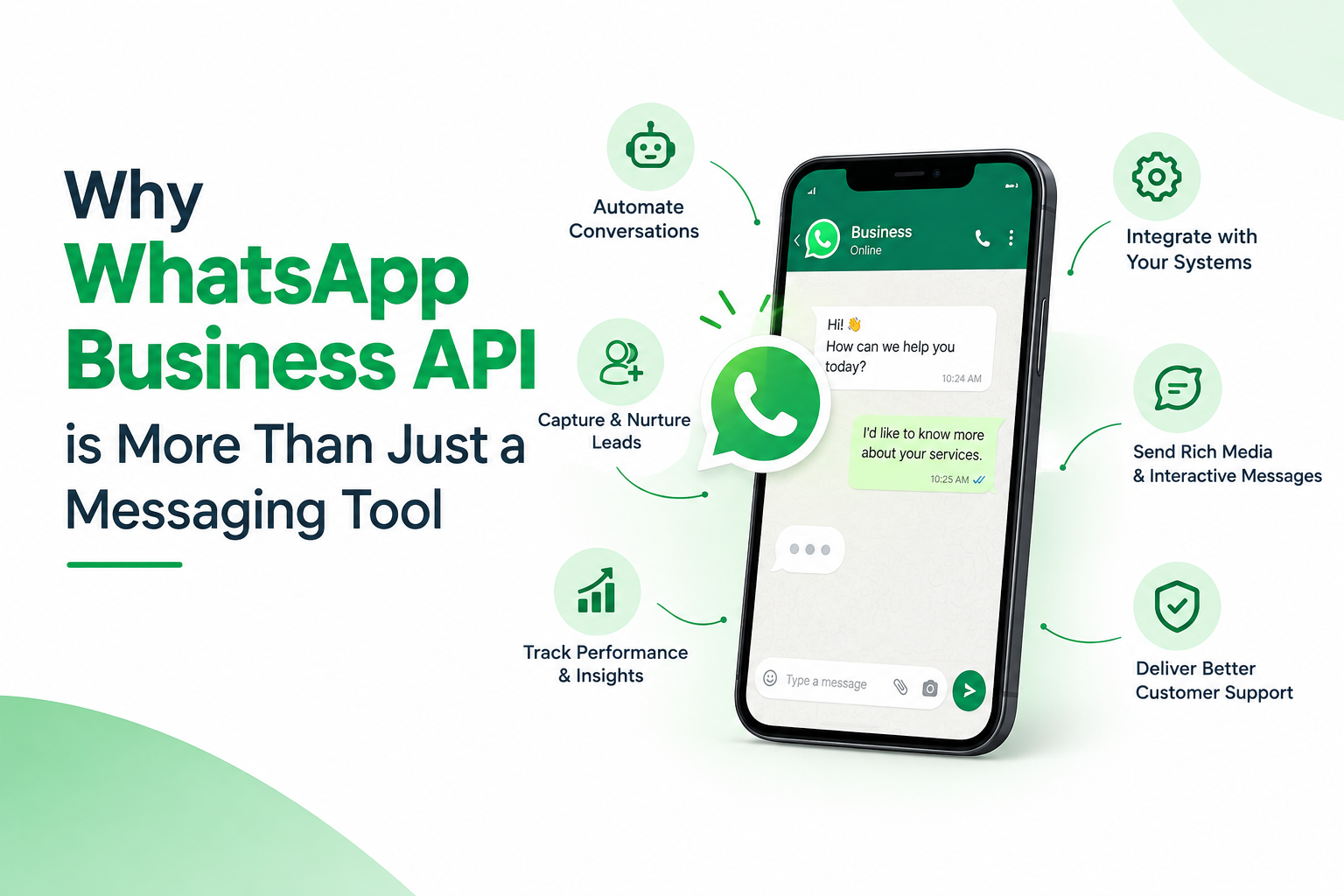
With WhatsApp Business API, companies can create automated conversations, manage leads, provide customer support, send notifications, connect business systems, and build stronger customer relationships.
In fact, WhatsApp Business API can become an important part of a company’s sales, marketing, support, and customer engagement strategy.
For modern businesses, the real opportunity is not simply messaging customers. Instead, the opportunity lies in creating useful conversations at every stage of the customer journey.
At Trending Bulb, we explore digital marketing trends and technologies that can help businesses grow. Similarly, Step4Growth focuses on practical digital growth strategies. Meanwhile, Campaign Plus provides WhatsApp automation, chatbot and more to make business growth easier.
So, why is WhatsApp Business API more than just a messaging tool? Let’s explore its role in modern business communication.
What Is WhatsApp Business API?
WhatsApp Business API is a business-focused solution that allows companies to communicate with customers through WhatsApp at scale.
Unlike regular WhatsApp communication, the API can connect with business software, CRM platforms, chatbots, automation systems, and other digital tools.
As a result, businesses can create structured communication workflows instead of handling every conversation manually.
For example, an e-commerce company can automatically send an order confirmation after a customer completes a purchase. Later, the same system can send shipping updates, delivery notifications, and customer support messages.
Similarly, an education company can use WhatsApp automation for admission enquiries, course information, reminders, and follow-ups.
Therefore, the real value of WhatsApp Business API comes from everything it can do around a customer conversation.
WhatsApp Business API Goes Beyond Basic Messaging
Traditional messaging usually focuses on one simple action: sending information.
However, WhatsApp Business API can support an entire communication journey.
A customer might first ask about a product. Next, an automated system can provide information, answer common questions, collect customer details, and guide the person toward the next step.
If the customer needs personal assistance, the conversation can move to a sales or support representative.
In this way, WhatsApp becomes part of the complete customer journey instead of remaining a simple messaging channel.
1. Automate Customer Conversations
One of the biggest advantages of WhatsApp Business API is automation.
Businesses often receive the same questions repeatedly. Customers may ask about prices, product availability, business hours, services, delivery times, or appointment availability.
Handling every question manually can take valuable time.
With WhatsApp automation, companies can create predefined workflows for common queries. Therefore, customers can receive quick responses without waiting for an employee.
For instance, a chatbot can provide options such as:
- Product Information
- Pricing
- Book a Demo
- Track an Order
- Talk to Sales
- Contact Support
Consequently, customers can find relevant information faster.
At the same time, employees can spend more time on complex conversations that require human attention.
2. Capture and Qualify Leads
Generating a lead is only the beginning of the sales process.
The next challenge is understanding whether that lead is genuinely interested in the product or service.
WhatsApp Business API can help businesses collect useful information during conversations.
For example, a real estate company can ask about:
- Preferred location
- Property type
- Budget
- Buying timeline
- Preferred property size
Likewise, a coaching institute can ask about the student’s course preference, academic level, and admission requirements.
As a result, sales teams receive better information before starting a personal conversation.
Furthermore, automated qualification can help businesses identify high-intent prospects and prioritize their follow-ups.
3. Nurture Leads Automatically
Not every customer makes a purchase immediately.
Some prospects need more information. Others compare different options before making a decision. In addition, some people may simply forget to respond.
This is where lead nurturing becomes valuable.
Businesses can use WhatsApp automation to send relevant follow-ups at different stages of the customer journey.
For example:
Day 1: Welcome message and basic information
Day 3: Product benefits and frequently asked questions
Day 5: Customer use cases or additional information
Day 7: Sales follow-up
As a result, businesses can maintain communication without manually remembering every follow-up.
Moreover, a structured nurturing journey can help keep interested prospects engaged.
Businesses should, of course, design these workflows responsibly and follow applicable WhatsApp policies and customer-consent requirements.
4. Improve Customer Support
Customers expect fast and convenient support.
However, support teams often spend a large amount of time answering repetitive questions.
WhatsApp Business API can simplify this process through automated support journeys.
For example, a customer can select:
Track Order → Enter Order ID → Receive Status
Alternatively, another customer can select:
Product Issue → Troubleshooting → Talk to Support
This approach creates a more organized support experience.
At the same time, human agents can handle complex problems that require personal attention.
Therefore, automation does not have to replace human support. Instead, it can help support teams work more efficiently.
5. Send Order and Transaction Updates
After making a purchase, customers want to know what happens next.
For an e-commerce business, important communication can include:
- Order confirmation
- Payment confirmation
- Shipping updates
- Delivery notifications
- Return information
- Refund updates
Rather than sending every update manually, businesses can connect their systems with WhatsApp workflows.
Consequently, customers receive timely information while support teams receive fewer repetitive status questions.
For this reason, WhatsApp can improve the customer experience even after the sale is complete.
6. Manage Appointment Reminders
Appointment-based businesses can also benefit from WhatsApp Business API.
Clinics, salons, consultants, fitness businesses, educational institutes, and service providers can use automated communication for appointment-related updates.
For example, a customer could receive a reminder before an appointment.
The message can then provide options such as:
- Confirm Appointment
- Reschedule
- Cancel
- Contact Support
As a result, customers have a convenient way to manage appointments.
Furthermore, businesses can reduce missed appointments by providing timely reminders and clear instructions.
7. Connect WhatsApp With CRM Systems
Another major benefit of WhatsApp Business API is integration.
Businesses often use CRM systems to manage leads, customers, sales activities, and follow-ups. However, customer conversations can become difficult to manage when they remain separate from the CRM.
With the right integration, WhatsApp conversations can become part of the wider customer-management process.
For example, a new lead can enter the CRM after submitting an enquiry. Next, an automated WhatsApp conversation can collect additional information.
The sales team can then view relevant customer information and continue the conversation more effectively.
Therefore, WhatsApp does not have to operate as an isolated communication channel.
8. Connect WhatsApp With Business Systems
CRM integration is only one possibility.
Depending on the business requirement, WhatsApp can also connect with different software systems and workflows.
These may include:
- CRM platforms
- E-commerce platforms
- Helpdesk software
- ERP systems
- Booking systems
- Lead management platforms
- Marketing automation tools
- Customer databases
For example, when an order status changes in an e-commerce system, the workflow can trigger a relevant WhatsApp notification.
Similarly, when a new lead enters a CRM, the system can initiate an appropriate communication journey.
As a result, businesses can create a connected digital communication ecosystem.
9. Create Interactive Customer Journeys
Modern customers expect more than plain text.
Fortunately, businesses can use different rich and interactive communication formats through supported WhatsApp Business solutions.
These may include:
- Images
- Videos
- Documents
- Buttons
- Lists
- Product information
- Interactive responses
For example, a fashion brand can showcase a new collection through visual content.
Meanwhile, a real estate company can share property information with interested prospects.
Likewise, an education company can share brochures, course details, or admission information.
Consequently, WhatsApp conversations can become more informative and engaging.
10. Support the Sales Process
WhatsApp can also play an important role in sales.
Imagine that a customer sees a digital advertisement and clicks a WhatsApp call-to-action.
Instead of immediately sending that person through multiple pages, the business can begin a direct conversation.
The customer can ask questions, receive information, compare options, and request assistance.
For products and services that require consideration, this conversational approach can be particularly useful.
After all, customers often want answers before they make a purchase.
Therefore, WhatsApp can help bridge the gap between marketing and sales.
11. Turn Marketing Campaigns Into Conversations
Many digital campaigns focus heavily on clicks and website visits.
However, a click does not automatically become a conversation or sale.
WhatsApp can help businesses create a more direct path from advertising to customer interaction.
A simple journey can look like this:
Advertisement → WhatsApp Conversation → Lead Qualification → Follow-Up → Sales
As a result, marketing and sales teams can work with a more connected customer journey.
For businesses working with Step4Growth, WhatsApp can become one part of a broader digital growth strategy.
Similarly, Campaign Plus can help businesses build WhatsApp automation and chatbot-based communication workflows.
At Trending Bulb, this shift is especially relevant because modern digital marketing increasingly focuses on meaningful customer interactions instead of simply generating impressions.
12. Reduce Manual Work
Manual communication creates several problems.
Employees may forget follow-ups. They may also spend hours answering questions that have simple and repetitive answers.
WhatsApp automation can reduce this workload.
For example, instead of manually sending a welcome message to every new lead, a business can automate the first response.
Likewise, an e-commerce company can automate order updates rather than asking employees to check each order individually.
As a result, teams can focus more on sales, strategy, customer relationships, and other high-value activities.
13. Provide Faster Communication
Customers do not always contact businesses during working hours.
Someone might enquire about a product late at night. Another customer may need information early in the morning.
Of course, businesses cannot always have employees available around the clock.
However, automated WhatsApp communication can provide immediate responses to common queries.
For example:
Customer: “What services do you provide?”
Automated Response: “Here are our services. Please select the service you want to explore.”
This gives the customer an immediate starting point.
Moreover, the system can explain when a human representative will become available.
14. Personalize Customer Communication
Automation does not have to mean generic communication.
When businesses connect customer data with communication systems, they can create more relevant conversations.
For example, an e-commerce company can send information based on a customer’s previous purchase.
Similarly, a coaching institute can send course information based on the program selected by a prospect.
Meanwhile, a real estate company can share properties based on location and budget preferences.
Therefore, businesses can combine automation with personalization.
This balance can make automated communication more useful and customer-focused.
15. Improve Customer Retention
Getting a new customer is important. Keeping that customer is equally valuable.
WhatsApp can support post-purchase communication and long-term customer relationships.
Businesses can use it for:
- Feedback requests
- Service reminders
- Renewal reminders
- Product updates
- Reorder opportunities
- Loyalty communication
- Customer support
For instance, an automobile business can send service reminders to existing customers.
Similarly, a fitness business can remind members about upcoming membership renewals.
As a result, WhatsApp can remain useful even after the initial purchase.
16. Track and Improve Communication
Businesses need data to understand whether their communication strategy is working.
Depending on the implementation and connected systems, companies can monitor different stages of the customer journey.
For example, teams can examine:
- Number of enquiries
- Customer responses
- Lead qualification
- Follow-up activity
- Support conversations
- Conversion stages
- Customer interactions
These insights can reveal where customers stop moving forward.
For instance, if many customers begin a conversation but very few complete the next step, the business can review its communication flow.
Therefore, WhatsApp Business API can become part of a data-driven customer communication strategy.
17. Connect Marketing, Sales and Support
Perhaps the biggest reason WhatsApp Business API is more than a messaging tool is its ability to support multiple business functions.
Marketing teams can use WhatsApp to generate conversations.
Sales teams can use it to qualify and nurture leads.
Customer support teams can use it to answer questions and resolve issues.
Operations teams can use it for important notifications and updates.
Consequently, one communication channel can support several stages of the customer journey.
This creates a more connected experience for both the business and its customers.
WhatsApp Business API vs Regular WhatsApp
Businesses should understand the difference between regular WhatsApp usage and WhatsApp Business API.
| Feature | Regular WhatsApp | WhatsApp Business API |
|---|---|---|
| Customer communication | Yes | Yes |
| Business automation | Limited | Advanced |
| Chatbot integration | Limited | Yes |
| CRM integration | Limited | Yes |
| Automated workflows | Limited | Yes |
| Lead nurturing | Mostly manual | Can be automated |
| Business system integration | Limited | Yes |
| Large-scale business communication | Limited | Designed for business use |
| Customer journey automation | Limited | Yes |
The exact capabilities depend on the business setup, technology provider, integrations, and applicable WhatsApp policies.
Nevertheless, the key difference remains clear.
Regular messaging focuses on communication, while WhatsApp Business API can connect communication with business processes.
Why Businesses Should Think Beyond “Messaging”
Businesses often ask:
“Can WhatsApp help us send messages?”
A better question would be:
“How can WhatsApp become part of our customer journey?”
This small change in thinking can create a much bigger strategic opportunity.
Instead of using WhatsApp only for promotional messages, companies can build communication journeys around customer needs.
For example:
Awareness → Enquiry → Qualification → Follow-Up → Purchase → Support → Retention
WhatsApp can potentially support several of these stages.
Therefore, businesses should consider WhatsApp Business API as a communication and automation channel rather than simply another messaging platform.
How Campaign Plus Can Help Businesses Use WhatsApp More Effectively
Implementing WhatsApp Business API is only the beginning.
Businesses also need to plan chatbot conversations, automation workflows, lead journeys, customer support processes, and system integrations.
Campaign Plus provides WhatsApp automation, chatbot and more to make business growth.
With a structured WhatsApp strategy, businesses can automate repetitive communication while maintaining meaningful customer interactions.
For example, a lead-generation workflow could look like:
Lead Generated → WhatsApp Welcome → Lead Qualification → Product Information → Follow-Up → Sales Team
Such a workflow can help businesses move from basic messaging to structured customer communication.
Furthermore, automation can help sales teams spend more time on qualified prospects.
How Step4Growth and TrendingBulb Fit Into the Bigger Picture
Digital growth rarely depends on one platform.
Instead, businesses need a combination of content, advertising, customer communication, automation, sales, and retention strategies.
At Step4Growth, digital growth can be approached through strategies that focus on business objectives rather than individual tools.
Meanwhile, Trending Bulb covers digital trends, marketing ideas, technology, and strategies that can help businesses understand the changing digital landscape.
WhatsApp Business API fits naturally into this wider ecosystem.
For example, a business can publish content to create awareness. Next, it can run digital advertising to generate enquiries. After that, WhatsApp automation can engage and nurture those prospects.
As a result, marketing activity can connect more closely with actual customer conversations.
Who Can Benefit From WhatsApp Business API?
WhatsApp Business API can support businesses across many industries.
E-commerce Businesses
E-commerce companies can use WhatsApp for order confirmations, shipping updates, delivery notifications, customer support, and product communication.
Real Estate Companies
Real estate businesses can qualify enquiries, share property details, schedule site visits, and follow up with prospects.
Education and Coaching Businesses
Educational institutions can communicate admission information, course details, class reminders, and follow-up messages.
Healthcare Businesses
Clinics and healthcare organizations can use WhatsApp for appointment-related communication, reminders, and customer support, subject to applicable privacy and regulatory requirements.
Automobile Businesses
Dealerships can use WhatsApp for enquiries, test-drive communication, service reminders, and customer follow-ups.
Travel and Hospitality Businesses
Hotels and travel companies can communicate booking details, reminders, itineraries, and support information.
B2B Companies
B2B businesses can use WhatsApp for lead nurturing, quotation follow-ups, sales communication, customer support, and account management.
Therefore, WhatsApp Business API is not restricted to one specific industry.
The Future of WhatsApp Business Communication
Customer expectations continue to evolve.
People want quick answers, convenient communication, relevant information, and fewer unnecessary steps.
At the same time, businesses want to reduce manual work and improve their sales and customer service processes.
WhatsApp Business API can address both needs.
As automation, chatbots, AI, CRM integration, and conversational commerce continue to develop, WhatsApp can become an increasingly important part of business communication.
However, businesses should not automate every interaction blindly.
The strongest strategy combines automation with human support.
Simple questions can receive automated answers. Complex issues can move to human agents. High-value leads can receive personal attention.
In this way, technology can improve efficiency without removing the human element from customer relationships.
Final Thoughts
WhatsApp Business API is much more than a tool for sending messages.
It can help businesses automate conversations, capture leads, nurture prospects, support customers, send notifications, connect business systems, personalize communication, and improve customer retention.
More importantly, it can connect multiple stages of the customer journey.
For businesses, this means WhatsApp can become part of a broader digital growth strategy.
With the right automation, integrations, chatbot workflows, and customer-focused communication, businesses can turn everyday WhatsApp conversations into meaningful business opportunities.
That is why the real question should not be:
“Can my business use WhatsApp for messaging?”
Instead, businesses should ask:
“How can my business use WhatsApp to create better customer journeys and drive growth?”
That is where the real potential of WhatsApp Business API begins.
At Trending Bulb, we continue to explore the digital trends shaping modern businesses. At the same time, Step4Growth focuses on digital growth strategies, while Campaign Plus helps businesses use WhatsApp automation, chatbots, and business communication solutions more effectively.
Ultimately, WhatsApp Business API is not just about sending a message.
It is about turning conversations into customer experiences, customer experiences into relationships, and relationships into business growth.