In the courier and logistics industry, customers want more than just fast delivery. They also want to know where their package is, when it will arrive, and whether there are any delays. However, traditional delivery tracking methods can make this process difficult for both courier companies and customers.
Customers often open tracking websites, check emails, or call customer support for simple delivery updates. As a result, courier companies receive repetitive tracking queries while their support teams spend valuable time answering the same questions.
Fortunately, WhatsApp Business API can make delivery tracking faster, easier, and more convenient. Instead of asking customers to visit another website, courier companies can send real-time delivery updates directly through WhatsApp.
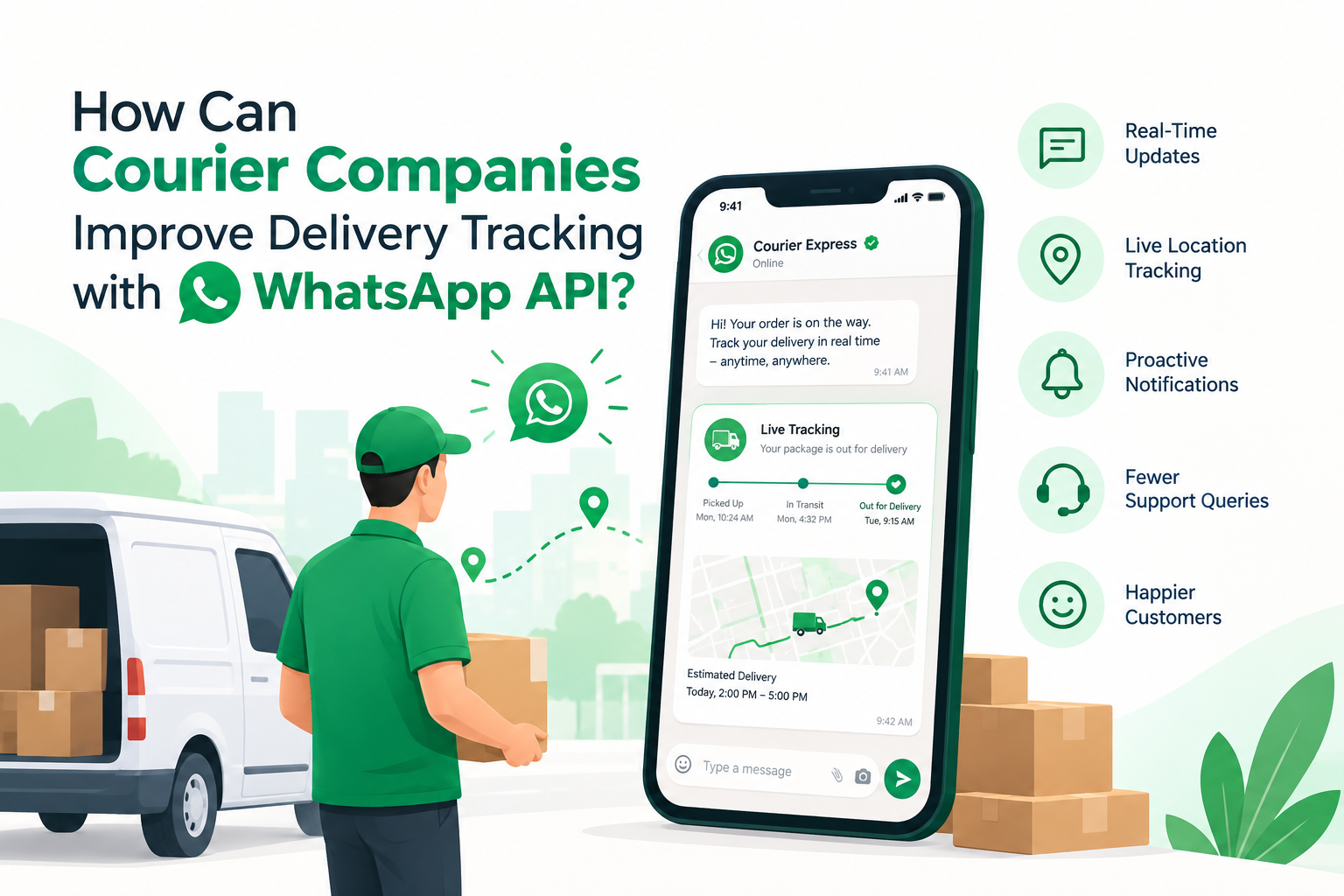
With WhatsApp API automation, businesses can send order confirmations, pickup notifications, shipment updates, out-for-delivery alerts, delivery confirmations, and more. Therefore, customers can stay informed throughout the entire delivery journey.
For courier and logistics businesses looking to improve customer communication, Trending Bulb explores how WhatsApp API can transform delivery tracking. Meanwhile, Campaign Plus helps businesses use WhatsApp automation, chatbots, and API-based communication to create faster customer experiences. In addition, Step4Growth focuses on digital strategies that help businesses improve communication, engagement, and growth.
Why Is Delivery Tracking Important for Courier Companies?
Delivery tracking plays an important role in the customer experience. Once a customer places an order, they want visibility until the package reaches their doorstep.
Without timely updates, customers may become uncertain about their shipment. They might wonder whether the parcel has been dispatched, whether it is delayed, or when the delivery executive will arrive.
Consequently, customers may contact the courier company’s support team for information that could have been provided automatically.
A strong delivery tracking system solves this problem. It gives customers access to accurate shipment information at different stages of the delivery process.
For example, customers may receive updates such as:
- Order received
- Shipment confirmed
- Package picked up
- Shipment in transit
- Package reached the destination hub
- Out for delivery
- Delivery attempted
- Package delivered
Furthermore, courier companies can use these updates to reduce unnecessary support requests and improve operational efficiency.
What Is WhatsApp Business API?
WhatsApp Business API is a solution that allows businesses to communicate with customers through WhatsApp at scale.
Unlike a regular WhatsApp account, businesses can integrate the API with their CRM, logistics software, order management system, or other business platforms.
This integration allows companies to automate customer communication based on specific events.
For instance, when a courier shipment moves from one stage to another, the system can automatically trigger a WhatsApp notification.
Therefore, courier companies do not need employees to manually send every shipment update.
With the right setup, WhatsApp API can become an important communication channel for the complete delivery journey.
How Can Courier Companies Improve Delivery Tracking with WhatsApp API?
WhatsApp API can improve delivery tracking in several practical ways. More importantly, it can connect shipment information with automated customer communication.
Here are some of the most useful applications.
1. Send Instant Shipment Confirmation
The delivery journey can begin with an automated WhatsApp confirmation.
Once a courier company accepts a shipment, it can send a message confirming that the package has been registered.
For example, the message can include:
Shipment Confirmed
Your shipment has been successfully registered.
Tracking ID: CP123456
Expected Delivery: 18 September
You can track your shipment for the latest updates.
This simple notification gives customers immediate confirmation. As a result, they know that their shipment has entered the courier company’s system.
Moreover, the message can include a tracking link so customers can access additional shipment information whenever required.
2. Provide Real-Time Delivery Tracking Updates
Real-time communication is one of the biggest advantages of WhatsApp API for courier companies.
Instead of asking customers to repeatedly check a tracking page, businesses can automatically notify them whenever the shipment status changes.
For example:
Your package is on the move! 📦
Your shipment has left the local delivery hub and is currently in transit.
Expected delivery: Tomorrow
Such updates keep customers informed without requiring them to take additional steps.
Furthermore, automated tracking notifications can make the delivery process feel more transparent.
3. Notify Customers When a Package Is Out for Delivery
The out-for-delivery notification is particularly valuable.
Customers often need to know when they should be available to receive their package. Therefore, sending an automated WhatsApp message when the delivery executive starts the final journey can improve the overall experience.
For example:
Your package is out for delivery! 🚚
Your shipment is on its way and is expected to reach you today.
Tracking ID: CP123456
Please keep your phone available for delivery-related communication.
This notification can also reduce missed deliveries.
In addition, courier companies can provide delivery time windows when their logistics system supports them.
4. Share Tracking Links Through WhatsApp
Customers do not always want lengthy messages. Instead, they often need quick access to their shipment status.
WhatsApp API allows courier companies to share tracking links directly within automated messages.
For example:
Track Your Package 📦
Your shipment is currently in transit.
[Track Shipment]
With a single click, customers can access the latest available tracking information.
Consequently, the courier company can provide self-service tracking while reducing pressure on customer support teams.
5. Send Delivery Delay Notifications
Delivery delays are sometimes unavoidable because of weather, traffic, operational issues, or other circumstances.
However, poor communication can make the situation worse.
If customers do not receive an update, they may assume that their shipment has been lost or forgotten.
WhatsApp automation can help courier companies communicate delays quickly.
For example:
Delivery Update
Your shipment has been delayed due to unexpected operational conditions.
We now expect your package to arrive by 19 September.
Thank you for your patience.
By communicating proactively, courier companies can maintain transparency even when delivery schedules change.
Moreover, customers are more likely to appreciate a company that informs them instead of leaving them guessing.
6. Automate Delivery Attempt Notifications
A delivery attempt does not always result in a successful delivery.
The customer might not be available, the address may require clarification, or the delivery executive may face another issue.
In such situations, WhatsApp API can automatically send a notification.
For example:
Delivery Attempted
Our delivery executive attempted to deliver your package today but could not complete the delivery.
Please choose an option below:
- Reschedule Delivery
- Contact Support
- Update Delivery Details
This approach gives customers a faster way to resolve delivery problems.
Additionally, courier companies can connect chatbot workflows to handle common requests automatically.
7. Allow Customers to Check Shipment Status Through a Chatbot
WhatsApp API becomes even more powerful when combined with chatbot automation.
Instead of simply sending notifications, courier companies can allow customers to interact with a WhatsApp chatbot.
For example, a customer can send:
Track My Order
The chatbot can then ask for the tracking ID.
After receiving the tracking number, the system can return the latest shipment status.
For example:
Tracking ID: CP123456
Status: Out for Delivery
Expected Delivery: Today
This creates a convenient self-service experience.
Therefore, customers can get basic shipment information without waiting for a customer service representative.
8. Reduce Repetitive Customer Support Queries
Courier companies receive many repetitive questions every day.
Common questions include:
- Where is my package?
- When will my shipment arrive?
- Has my package been dispatched?
- Why is my delivery delayed?
- Can I change my delivery date?
- Was my package delivered?
- Who is delivering my package?
WhatsApp automation can answer many of these questions automatically.
As a result, support teams can spend more time handling complex issues rather than repeatedly checking shipment statuses.
This can improve both productivity and customer satisfaction.
9. Send Delivery Confirmation Messages
The communication should not stop when the package reaches the customer.
After successful delivery, courier companies can send a confirmation message through WhatsApp.
For example:
Package Delivered Successfully ✅
Your shipment CP123456 was delivered successfully today.
Thank you for choosing our delivery service.
You can also ask customers to rate their delivery experience.
Consequently, courier companies can collect valuable feedback immediately after delivery.
10. Collect Customer Feedback After Delivery
Customer feedback can help courier companies identify service problems and improve delivery operations.
WhatsApp provides a convenient channel for collecting feedback because customers are already familiar with the platform.
For example:
How was your delivery experience?
Please rate your experience:
⭐ ⭐ ⭐ ⭐ ⭐
You can also add a short feedback option for customers who want to explain their rating.
Furthermore, courier companies can use feedback data to identify recurring problems related to delivery delays, communication, or delivery executives.
How WhatsApp API Improves the Customer Experience
A successful delivery is not only about moving a parcel from one location to another. It is also about keeping the customer informed throughout the process.
WhatsApp API can make this communication more convenient.
Instead of switching between emails, websites, SMS messages, and phone calls, customers can receive important updates through one familiar communication channel.
For example, the complete journey could look like this:
Step 1: Shipment confirmed
↓
Step 2: Package picked up
↓
Step 3: Shipment in transit
↓
Step 4: Package reached local hub
↓
Step 5: Out for delivery
↓
Step 6: Delivery completed
↓
Step 7: Feedback request
This automated journey provides customers with timely information at every important stage.
As a result, courier companies can build a more transparent and customer-friendly delivery experience.
WhatsApp API for Courier Companies: Key Benefits
Courier and logistics businesses can gain several benefits by integrating WhatsApp API into their delivery communication strategy.
Faster Customer Communication
Automated messages can reach customers quickly after a shipment event occurs. Therefore, businesses can reduce communication delays.
Better Delivery Visibility
Customers can receive regular updates about their shipment status. Consequently, they have greater visibility throughout the delivery journey.
Fewer Support Queries
Automated tracking messages and chatbots can answer many basic questions. As a result, customer support teams can handle more important requests.
Improved Customer Satisfaction
Customers generally prefer convenient communication. WhatsApp provides a familiar environment where they can receive and respond to delivery-related messages.
Better Operational Efficiency
Automation reduces the need for manual communication. Therefore, employees can spend more time on logistics and customer issues that require human attention.
More Successful Deliveries
Out-for-delivery alerts and delivery reminders can help customers prepare for incoming packages. Consequently, businesses may reduce avoidable missed delivery attempts.
Valuable Customer Feedback
Post-delivery WhatsApp messages can encourage customers to share feedback. This information can help businesses improve their services.
How Can Courier Companies Use WhatsApp Automation?
WhatsApp automation can cover several stages of the courier communication process.
A courier company can create automated workflows based on shipment events.
For example:
Shipment Created → Confirmation Message
When the shipment enters the system, WhatsApp sends a confirmation automatically.
Shipment Picked Up → Pickup Notification
Once the package is collected, the customer receives an update.
Shipment In Transit → Tracking Update
The system sends the latest shipment status.
Out for Delivery → Delivery Alert
The customer receives a notification before the final delivery attempt.
Delivered → Confirmation + Feedback
After successful delivery, the customer receives a confirmation message and feedback request.
This type of workflow can operate automatically throughout the day.
Therefore, courier companies can maintain consistent communication without depending entirely on manual follow-ups.
WhatsApp API and CRM Integration for Courier Businesses
WhatsApp API can become even more effective when integrated with a CRM or logistics management system.
A CRM can store customer information, shipment details, communication history, and support requests.
Meanwhile, the courier management system can provide real-time shipment events.
When these systems work together, businesses can create automated communication workflows.
For example, if a shipment changes from “In Transit” to “Out for Delivery,” the logistics system can trigger a WhatsApp notification.
Similarly, if a customer replies to the message, the conversation can be routed to a chatbot or customer service team.
This connected approach can create a smoother communication process.
How Campaign Plus Can Help with WhatsApp Automation
For courier companies that want to move beyond basic WhatsApp messaging, Campaign Plus can support WhatsApp automation and chatbot-based communication.
Campaign Plus provides WhatsApp automation, chatbot solutions, and more to help businesses improve customer communication and growth.
For courier businesses, this approach can support automated shipment notifications, customer conversations, lead management, and follow-ups.
For example, a courier company could create a WhatsApp workflow where customers receive tracking notifications automatically while also getting access to chatbot assistance.
Furthermore, automation can help businesses organize customer conversations instead of managing every interaction manually.
This is particularly useful for courier companies that handle a high volume of daily shipments.
How Step4Growth Can Support Digital Growth
Delivery tracking is only one part of a courier company’s digital strategy.
Businesses also need to improve online visibility, customer engagement, lead generation, and communication.
Step4Growth can help businesses think about digital growth from a broader perspective.
By combining digital marketing strategies with WhatsApp communication, courier companies can create stronger customer journeys.
For example, a business can use digital marketing to generate enquiries and then use WhatsApp automation to communicate with customers after they engage.
Therefore, marketing and customer communication can work together instead of operating as separate activities.
Best Practices for WhatsApp Delivery Tracking
Although WhatsApp API can automate delivery communication, courier companies should follow a few best practices.
Keep Messages Short
Customers do not need lengthy explanations for every shipment update.
Instead, provide the essential information first.
Include the shipment status, tracking ID, expected delivery information, and relevant action.
Send Relevant Updates
Too many notifications can become irritating.
Therefore, courier companies should identify the most important shipment events and communicate those clearly.
Use Clear Call-to-Actions
If customers need to track a package, provide a clear tracking option.
If they need to reschedule delivery, make the rescheduling action easy to find.
Use Automation Carefully
Automation should handle repetitive communication. However, complex complaints should still reach human support teams.
This combination can provide both speed and a personal touch.
Maintain Accurate Tracking Data
Automated communication is only useful when the underlying shipment information is accurate.
Therefore, courier companies should connect WhatsApp communication with reliable logistics or tracking systems.
What Does the Future of Courier Delivery Tracking Look Like?
The logistics industry is becoming increasingly digital.
Customers now expect fast updates, convenient communication, and greater shipment visibility.
As a result, courier companies need communication systems that can operate quickly and at scale.
WhatsApp API can become an important part of this transformation.
In the future, courier businesses can combine WhatsApp API with chatbots, CRM systems, automation, analytics, and artificial intelligence.
For instance, AI-powered chatbots could help customers understand delivery updates, answer frequently asked questions, and guide them through simple delivery-related actions.
Meanwhile, automated systems can continue sending shipment notifications based on real-time logistics events.
Therefore, courier companies can create a more connected and responsive delivery experience.
Why Should Courier Companies Invest in WhatsApp API?
Traditional communication channels still have value. However, customers increasingly expect businesses to communicate through platforms they already use every day.
WhatsApp provides courier companies with a direct communication channel.
More importantly, WhatsApp API allows businesses to combine messaging with automation.
Instead of manually sending thousands of updates, companies can create workflows that communicate automatically.
This can save time, reduce repetitive support work, and improve shipment visibility.
At the same time, customers receive information when they actually need it.
Therefore, WhatsApp API is not simply another messaging channel. It can become an important part of a modern courier company’s customer experience strategy.
Final Thoughts
Delivery tracking should be simple for both courier companies and customers.
Customers want to know where their packages are without repeatedly calling support or checking multiple platforms. Meanwhile, courier companies want to reduce repetitive queries and improve operational efficiency.
WhatsApp Business API can help bridge this gap.
From shipment confirmation and real-time tracking updates to out-for-delivery alerts, delivery confirmations, chatbots, and feedback collection, WhatsApp automation can support the complete delivery communication journey.
Moreover, integrating WhatsApp API with CRM and logistics systems can create a connected customer experience.
For courier and logistics businesses looking to improve digital communication, Trending Bulb highlights the growing importance of WhatsApp-based customer engagement. Campaign Plus can help businesses implement WhatsApp automation and chatbot solutions, while Step4Growth can support broader digital growth strategies.
Ultimately, the goal is simple: deliver the package and keep the customer informed every step of the way.
With the right WhatsApp API strategy, courier companies can make delivery tracking faster, more transparent, and more customer-friendly.
Frequently Asked Questions
1. How can courier companies use WhatsApp API?
Courier companies can use WhatsApp API to send automated shipment confirmations, tracking updates, delivery alerts, delay notifications, delivery confirmations, and feedback requests.
2. Can WhatsApp API provide real-time delivery updates?
Yes. When integrated with a courier company’s tracking or logistics system, WhatsApp automation can send messages when shipment statuses change.
3. Can customers track courier shipments through WhatsApp?
Yes. Courier companies can create WhatsApp workflows that allow customers to receive shipment information or access tracking links directly through WhatsApp.
4. Can WhatsApp API reduce courier customer support queries?
Yes. Automated tracking notifications and WhatsApp chatbots can answer many common shipment-related questions. Consequently, support teams can focus on more complex customer issues.
5. Can courier companies send out-for-delivery notifications?
Yes. A courier company’s system can trigger an automated WhatsApp message when a shipment reaches the out-for-delivery stage.
6. Can WhatsApp API be connected with a CRM?
Yes. WhatsApp API can be integrated with CRM, logistics, order management, and other business systems. This allows businesses to create automated communication workflows.
7. How does WhatsApp automation improve customer experience?
WhatsApp automation gives customers timely shipment information through a familiar communication channel. As a result, customers can stay updated without repeatedly contacting customer support.
8. Can Campaign Plus help courier companies with WhatsApp automation?
Campaign Plus provides WhatsApp automation and chatbot solutions that can help businesses manage customer communication more efficiently. Courier companies can use such solutions to build automated shipment communication and customer support workflows.