Introduction
E-commerce customers expect more than a smooth checkout experience. Today, they also expect fast updates, instant answers, and simple communication after placing an order.
For that reason, businesses need a communication channel that can keep customers informed throughout the buying journey.
This is where WhatsApp Business API for E-Commerce can make a significant difference.
Instead of relying only on email or SMS, e-commerce businesses can use WhatsApp to send order confirmations, shipping updates, delivery notifications, support messages, and personalized offers.
As a result, businesses can stay connected with customers from the first interaction to post-purchase support.
Moreover, WhatsApp can connect with CRM systems, e-commerce platforms, customer databases, and automation tools. Therefore, businesses can create communication workflows without depending entirely on manual follow-ups.
At Trending Bulb, digital marketing is not only about attracting visitors. Instead, businesses also need to think about what happens after someone clicks an advertisement or visits a website.
Similarly, Step4Growth focuses on connecting digital strategies with measurable business growth. Meanwhile, Campaign Plus can help businesses use WhatsApp-based communication and automation to create more connected customer journeys.
What Is WhatsApp Business API for E-Commerce?
WhatsApp Business API is designed for businesses that need to communicate with customers at scale.
Unlike a regular WhatsApp account, the API can connect business communication with different software systems and automation workflows.
For example, an online store can connect its order management system with WhatsApp.
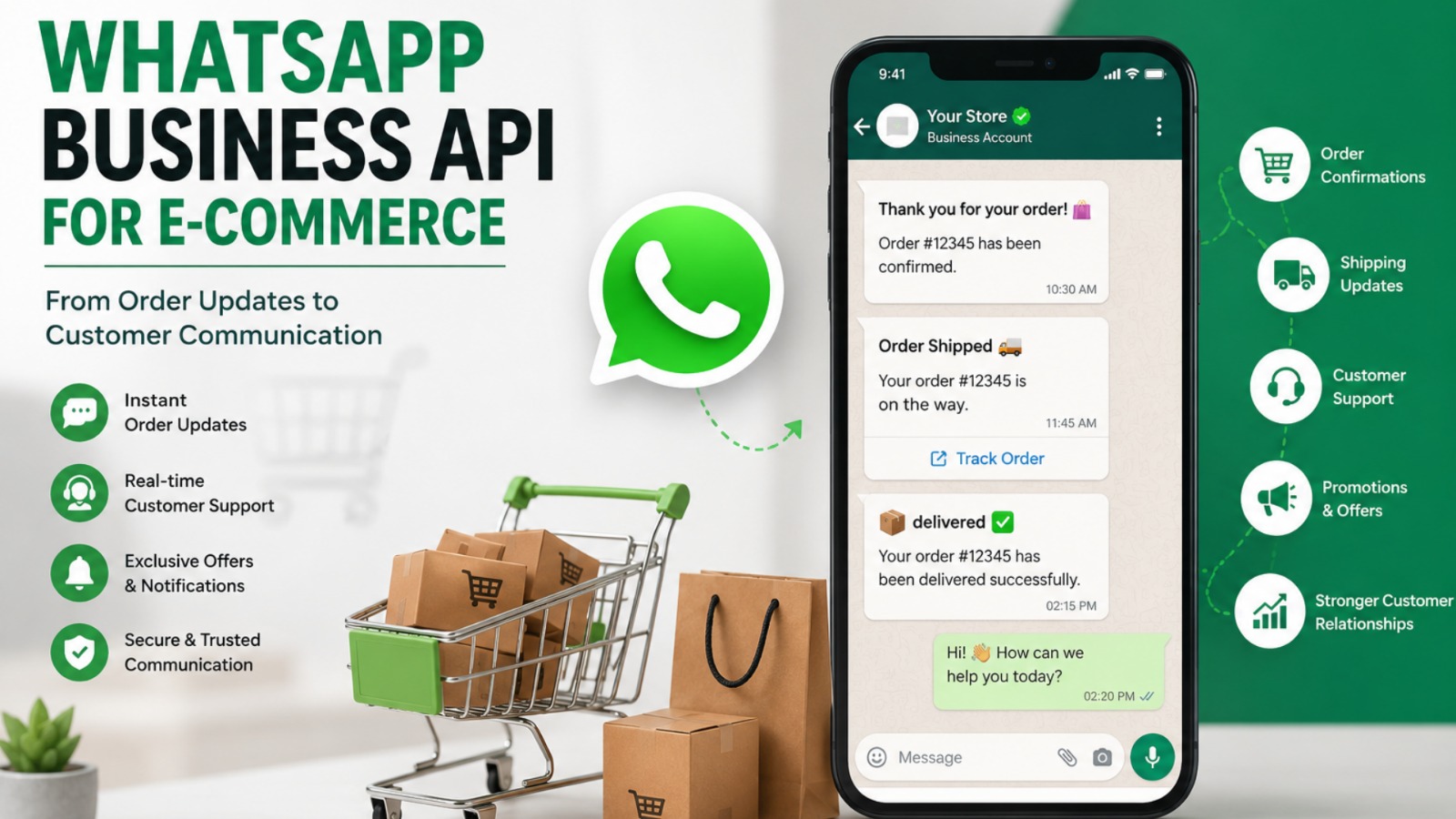
Once a customer places an order, the system can automatically trigger a confirmation message. Then, when the order is shipped, another message can be sent.
Later, the customer can receive a delivery notification. Finally, the business can follow up with a feedback request or product recommendation.
Consequently, one WhatsApp conversation can support several stages of the customer journey.
This makes WhatsApp Business API especially useful for e-commerce brands that handle large numbers of orders and customer conversations.
Why WhatsApp Business API Matters for E-Commerce
Customers want information quickly.
More importantly, they want information through channels that are convenient and familiar.
Email remains useful for detailed communication. SMS can work well for short alerts. However, WhatsApp can combine messaging, support, notifications, and engagement in one conversational environment.
Therefore, e-commerce brands can use WhatsApp for multiple purposes.
These include:
- Order confirmations
- Payment notifications
- Shipping updates
- Delivery alerts
- Customer support
- Product recommendations
- Abandoned cart reminders
- Promotional campaigns
- Return and exchange updates
- Customer feedback
- Back-in-stock notifications
- Loyalty communication
As a result, WhatsApp can become more than a notification channel.
It can become an important part of the overall customer experience.
1. Send Instant Order Confirmations
The first communication after a purchase is extremely important.
Customers want reassurance that their order was received successfully. Therefore, businesses should send an immediate order confirmation whenever possible.
With WhatsApp Business API for E-Commerce, businesses can automate this process.
A confirmation message can include:
- Customer name
- Order number
- Product details
- Order amount
- Payment status
- Estimated delivery date
- Tracking information
- Customer support option
For example, a customer could receive a message such as:
Your order has been confirmed! Order #12345 is now being processed. We will notify you when your order is shipped.
This simple update can reduce uncertainty.
Furthermore, it can reduce unnecessary customer support questions about whether an order was successfully placed.
As a result, customers receive reassurance while support teams handle fewer repetitive enquiries.
2. Keep Customers Updated About Shipping
After placing an order, customers usually want to know what happens next.
They may ask whether the product has been packed, shipped, or handed over to the delivery partner.
Without regular updates, customers may become anxious about their purchase.
Therefore, shipping notifications are an important part of e-commerce communication.
WhatsApp automation can send messages whenever an order reaches a new stage.
For example:
Your order #12345 has been shipped. Track your package using the link below.
Later, another message can inform the customer that the order is out for delivery.
Consequently, customers do not have to repeatedly visit the website to check their order status.
This also creates greater transparency between the brand and the customer.
3. Improve Customer Support
Customer support plays a major role in e-commerce success.
Customers may have questions about products, sizes, payments, delivery dates, returns, refunds, and exchanges.
Unfortunately, slow responses can create frustration.
For this reason, businesses can use WhatsApp automation to answer common questions instantly.
For example, a customer might ask:
Where is my order?
An automated workflow can provide the latest available order status.
Similarly, a customer could ask:
What is your return policy?
The chatbot can provide the relevant information immediately.
However, automation should not replace human support completely.
Instead, businesses should use automation for repetitive questions and transfer complex conversations to trained support agents.
This approach combines speed with human assistance.
4. Recover Abandoned Carts
Abandoned carts remain a major challenge for online stores.
A customer may add products to the cart and then leave without completing the purchase. Sometimes the customer gets distracted. In other cases, they may need additional information before buying.
Therefore, a timely reminder can help bring the customer back.
For example:
You left something in your cart. Your selected products are still waiting for you. Complete your purchase today.
Businesses can also include a direct checkout link.
Moreover, brands can create different follow-up messages based on customer behavior.
For instance:
First reminder: Remind the customer about the product.
Second reminder: Offer help with questions or concerns.
Third reminder: Provide a relevant incentive if appropriate.
However, businesses should avoid sending excessive reminders.
Instead, communication should remain timely, relevant, and customer-friendly.
5. Personalize Product Recommendations
E-commerce businesses generate valuable customer data.
Customers browse products, purchase specific categories, and sometimes show interest without completing a transaction.
Therefore, businesses can use customer behavior to create more relevant communication.
For example, a customer who purchased skincare products may be interested in complementary products.
Similarly, someone who purchased running shoes may also be interested in socks, fitness accessories, or other relevant products.
This approach is more useful than sending the same promotion to every customer.
As a result, personalized WhatsApp communication can improve engagement while creating a more relevant shopping experience.
6. Promote New Products and Offers
WhatsApp can also support promotional communication.
E-commerce brands can use it to announce new collections, seasonal offers, product launches, and special promotions.
For example, a fashion brand could send:
Our new festive collection is now available. Explore the latest styles today.
Likewise, a jewelry brand can use WhatsApp to promote gifting collections during festive seasons.
However, promotional messages should provide genuine value.
Customers do not want to receive irrelevant advertisements every day.
Therefore, businesses should consider customer interests, purchase history, and communication preferences before sending campaigns.
In addition, clear calls to action can make promotional messages easier to use.
Examples include:
- Shop Now
- Explore Collection
- View Product
- Claim Offer
- Talk to Us
7. Send Payment Notifications
Payment communication is another useful application of WhatsApp.
Sometimes a customer’s payment fails during checkout. As a result, the customer may leave without completing the purchase.
A timely WhatsApp message can help the customer continue the payment process.
For example:
Your payment for order #12345 was unsuccessful. Please try again using the payment option below.
Businesses can also send payment confirmations after a successful transaction.
Therefore, WhatsApp can support both customer reassurance and smoother order processing.
Moreover, timely payment communication can reduce confusion and unnecessary support requests.
8. Simplify Returns and Exchanges
Returns and exchanges are common in e-commerce.
Customers may need to change a size, return a product, or ask about their refund.
Unfortunately, complicated return processes can create a poor customer experience.
Therefore, businesses can use WhatsApp to guide customers through these processes.
For example, a chatbot can display:
How can we help you?
- Return an order
- Exchange a product
- Check refund status
- Talk to support
The customer can select an option and continue the conversation.
As a result, customers can find the right information without searching through multiple website pages or emails.
9. Send Delivery Notifications
Delivery day is an important moment in the customer journey.
Customers want to know when their package will arrive.
Therefore, businesses can use WhatsApp to send delivery-related notifications.
For example:
Your order is out for delivery today. Please keep your phone available for delivery updates.
Once the order has been delivered, another message can confirm the completion.
Furthermore, businesses can use post-delivery communication to request feedback or offer customer support.
This creates a smoother transition from delivery to retention.
10. Collect Customer Feedback
Customer communication should not stop after delivery.
Instead, businesses should use the post-purchase stage to understand customer satisfaction.
WhatsApp can make feedback collection simple.
For example:
How was your shopping experience? Rate your experience from 1 to 5.
Businesses can also ask customers to review their purchased products.
This information can reveal common issues and customer preferences.
Moreover, positive feedback can support future marketing activities, while negative feedback can help businesses identify areas for improvement.
Therefore, feedback becomes another valuable part of the customer communication journey.
11. Build Customer Loyalty
Getting a customer to make one purchase is valuable.
However, getting that customer to return can create even greater long-term value.
For this reason, e-commerce brands should focus on retention as well as acquisition.
WhatsApp can support customer loyalty through relevant communication.
Businesses can send:
- Loyalty rewards
- Early-access offers
- Personalized recommendations
- New product announcements
- Birthday offers
- Festival campaigns
- Back-in-stock alerts
- Exclusive customer offers
For example, a returning customer could receive early access to a new collection.
As a result, customers can feel recognized rather than treated like anonymous website visitors.
WhatsApp Business API and AI Automation
The future of e-commerce communication is becoming increasingly intelligent.
AI-powered automation can help businesses understand customer questions and guide conversations.
For example, a customer might ask whether a particular product is available in a specific size.
Instead of sending a generic response, an intelligent workflow can guide the customer toward relevant product information.
Similarly, an AI chatbot can ask questions about:
- Product preferences
- Budget
- Size
- Quantity
- Delivery requirements
- Product category
Then, it can guide the customer toward suitable options.
However, human support still matters.
Therefore, the strongest strategy combines AI automation with human assistance.
Automation can handle repetitive conversations. Meanwhile, sales and support teams can focus on customers who need personalized attention.
How WhatsApp Business API Connects With E-Commerce Systems
The biggest advantage of WhatsApp Business API comes from integration.
Businesses can connect WhatsApp with several systems, including:
- E-commerce platforms
- CRM systems
- Inventory software
- Payment systems
- Shipping platforms
- Customer databases
- Helpdesk tools
- Marketing automation platforms
Consider a simple order workflow.
First, the customer places an order.
Next, the e-commerce system records the transaction.
Then, the WhatsApp automation system receives the relevant event.
After that, an order confirmation is sent automatically.
Later, the shipping system updates the order status.
Finally, WhatsApp sends the shipping or delivery notification.
Consequently, businesses can reduce manual work while keeping customers informed.
The Complete E-Commerce Customer Journey With WhatsApp
A strong WhatsApp strategy can support customers from discovery to repeat purchase.
Step 1: Customer Discovery
First, a customer discovers the business through Google Search, social media, SEO, or paid advertising.
Step 2: Product Research
Next, the customer visits the website and explores available products.
Step 3: WhatsApp Enquiry
Then, the customer clicks a WhatsApp CTA to ask a question or request information.
Step 4: Instant Response
After that, WhatsApp automation provides an immediate response.
Step 5: Purchase
Once the customer is ready, they complete the purchase.
Step 6: Order Confirmation
Immediately afterward, WhatsApp sends an order confirmation.
Step 7: Shipping Update
When the product ships, the customer receives tracking information.
Step 8: Delivery Notification
Next, the customer receives an out-for-delivery or delivery confirmation message.
Step 9: Feedback
After delivery, the business can request a review or feedback.
Step 10: Retention
Finally, relevant offers and recommendations can encourage another purchase.
In this way, WhatsApp can connect multiple stages of the e-commerce journey.
Benefits of WhatsApp Business API for E-Commerce
When implemented correctly, WhatsApp Business API can provide several business benefits.
Faster Communication
First, automated messaging allows businesses to send important information quickly.
Better Customer Experience
Furthermore, customers receive updates without repeatedly contacting support.
Lower Support Workload
Additionally, automation can handle repetitive questions and routine requests.
Better Conversion Opportunities
Meanwhile, timely communication can help businesses engage customers while their buying intent is still active.
Stronger Retention
Moreover, personalized follow-ups can encourage repeat purchases.
Greater Transparency
Shipping and delivery notifications keep customers informed throughout the order journey.
Better Operational Efficiency
Finally, automated workflows can reduce repetitive manual tasks.
Together, these benefits can create a more connected e-commerce experience.
WhatsApp Business API vs Traditional Communication Channels
Email, SMS, phone calls, and website chat still have their own advantages.
However, WhatsApp can bring several customer communication activities into one conversational channel.
| Channel | Common E-Commerce Use |
|---|---|
| Detailed updates and newsletters | |
| SMS | Short notifications |
| Website Chat | Website-based customer support |
| Phone | Complex customer assistance |
| Notifications, support, automation, and engagement |
For example, an email may provide detailed information about an order.
However, WhatsApp can make the interaction more conversational and immediate.
Similarly, SMS can deliver a short notification.
Meanwhile, WhatsApp can allow the customer to respond and continue the conversation.
Therefore, businesses can use WhatsApp alongside their existing communication channels rather than treating it as a complete replacement.
Best Practices for WhatsApp Business API for E-Commerce
Technology alone does not create a successful customer communication strategy.
Instead, businesses need to use WhatsApp thoughtfully.
Keep Messages Short
First, make messages easy to understand.
Customers should quickly identify the purpose of each message.
Personalize Communication
Next, use relevant customer and order information whenever appropriate.
Personalized messages can feel more useful than generic broadcasts.
Provide Clear CTAs
Furthermore, every message should make the next step obvious.
For example:
Track Order
View Product
Complete Payment
Talk to Support
Avoid Excessive Messaging
Additionally, businesses should control message frequency.
Too many messages can reduce customer engagement.
Combine Automation With Humans
Automation is useful for repetitive requests.
However, complex issues should reach a human support agent when necessary.
Track Performance
Finally, businesses should measure communication performance.
Useful metrics include:
- Delivery rate
- Response rate
- Click-through rate
- Conversion rate
- Customer satisfaction
- Support resolution time
- Repeat purchase rate
Therefore, businesses can use performance data to improve their WhatsApp strategy over time.
Common Mistakes to Avoid
WhatsApp automation can create excellent customer experiences.
However, poor implementation can have the opposite effect.
One common mistake is sending too many messages.
Another mistake is using identical communication for every customer.
Businesses should also avoid complicated chatbot menus.
Instead, customers should reach the information they need with as few steps as possible.
Another issue is excessive automation.
Customers sometimes need empathy, explanation, or human assistance.
Therefore, businesses should create clear handover points between automation and support teams.
Ultimately, the goal should be faster and better communication, not automation for its own sake.
How Trending Bulb Can Connect Marketing With WhatsApp
Digital marketing attracts attention.
However, attracting attention is only the first step.
A customer may discover an e-commerce brand through an Instagram post, Google Search, Meta Ad, or SEO content.
Next, that customer may visit the website.
Then, a WhatsApp CTA can encourage the customer to start a conversation.
From there, WhatsApp automation can answer questions, share information, qualify enquiries, and support the buying journey.
This creates a stronger connection between marketing and customer communication.
At Trending Bulb, this approach can help businesses look beyond clicks and impressions.
Instead, businesses can consider the complete journey:
Reach → Interest → WhatsApp Conversation → Purchase → Support → Retention
As a result, marketing becomes more connected to actual customer relationships.
How Step4Growth Can Support a Growth-Focused Strategy
Business growth requires multiple channels working together.
For example, SEO can help customers discover a brand through search engines.
Meanwhile, Google Ads can capture high-intent searches.
Meta Ads can generate awareness and product interest.
Social media can build trust and engagement.
Content marketing can answer customer questions.
Finally, WhatsApp can support real-time communication and follow-up.
At Step4Growth, this connected approach can help businesses view WhatsApp as part of a larger digital growth strategy.
Instead of treating marketing channels separately, businesses can connect them.
Consequently, a visitor generated through digital marketing can move into a personalized WhatsApp conversation and eventually become a customer.
The Role of Campaign Plus
For businesses that want to build WhatsApp-based customer communication, Campaign Plus can be part of the technology and automation strategy.
E-commerce brands can use WhatsApp communication for several workflows.
These may include:
- Order notifications
- Customer enquiries
- Automated replies
- Lead follow-ups
- Promotional communication
- Customer support
- Payment reminders
- Delivery updates
- Engagement workflows
Moreover, businesses can structure these workflows around different customer journeys.
For example, a new customer may need product information.
On the other hand, an existing customer may need order support.
Therefore, communication should adapt to the customer’s stage rather than using one message for everyone.
The Future of E-Commerce Customer Communication
E-commerce is becoming more conversational.
Customers increasingly expect businesses to provide fast answers and convenient support.
As a result, messaging can become an important part of the digital shopping experience.
WhatsApp Business API can support this shift by bringing notifications, support, automation, and engagement into one communication channel.
AI can take this even further.
For example, businesses can combine:
AI + WhatsApp + CRM + E-Commerce + Automation
This combination can help businesses create faster and more personalized customer journeys.
However, technology should always support a clear business objective.
Therefore, businesses should start with the customer journey and then select the right automation workflows.
Final Thoughts
An e-commerce order is not the end of the customer journey.
Instead, it is the beginning of an ongoing relationship.
Customers want confirmation after making a purchase.
They also want shipping updates while waiting for delivery.
Furthermore, they need quick support when something goes wrong.
After delivery, customers may appreciate personalized recommendations, loyalty offers, and useful updates.
Therefore, WhatsApp Business API for E-Commerce can become a valuable part of a modern customer communication strategy.
From order confirmations and shipping notifications to customer support, abandoned cart recovery, payment reminders, promotions, feedback, and retention, WhatsApp can connect multiple stages of the buying journey.
At Trending Bulb, the opportunity is to connect digital marketing with meaningful customer communication.
Meanwhile, Step4Growth can bring a growth-focused perspective to the overall digital strategy.
With WhatsApp automation solutions such as Campaign Plus, businesses can create structured communication workflows that support customers before, during, and after a purchase.
Ultimately, the goal is simple: attract customers, communicate faster, deliver better experiences, and build long-term relationships.
In today’s competitive e-commerce environment, fast communication can create a meaningful advantage.
Therefore, businesses should not view WhatsApp only as a messaging platform.
Instead, they can use it as a bridge between marketing, orders, customer support, engagement, and long-term e-commerce growth.