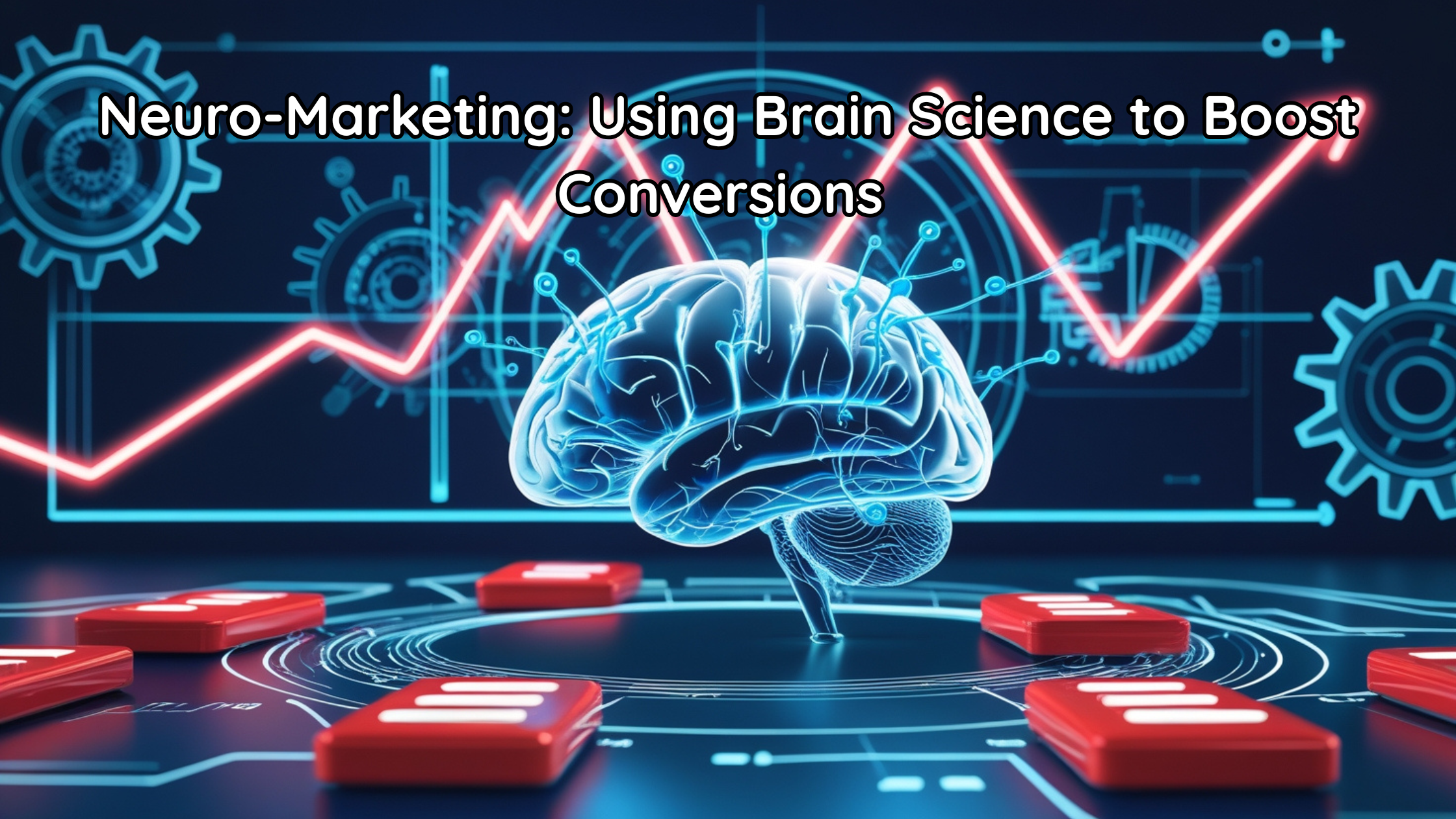
Introduction:Why Neuro-Marketing to Boost Conversions Matters Today
If you’re looking for a powerful way to influence buyer behavior, neuro-marketing to boost conversions is a proven strategy that leverages how the human brain makes decisions. In today’s crowded digital landscape, where consumers are bombarded with countless ads and messages, brands that tap into brain science stand out.
By using techniques rooted in neuroscience and psychology, neuro-marketing helps businesses trigger emotional responses, shape subconscious choices, and increase engagement — all leading to higher conversions and ROI.
What is Neuro-Marketing?
Neuro-marketing is a fusion of neuroscience, psychology, and marketing. It investigates how the brain responds to marketing stimuli — such as images, sounds, colors, messages, and layouts — to better understand what drives consumer behavior.
Instead of guessing what works, neuro-marketing helps marketers create content and experiences based on how people really think and feel, not just what they say in surveys.
For example:
Why do people trust some websites immediately?
Why do they feel emotionally connected to certain brands?
Why do they click “Buy Now” without hesitation?
Neuro-marketing holds the key to answering these questions.
How the Brain Makes Buying Decisions
Contrary to popular belief, most decisions aren’t logical — they’re emotional. The brain operates on two levels:
System 1 (Fast Brain): Emotional, automatic, intuitive
System 2 (Slow Brain): Rational, deliberate, analytical
Research shows up to 95% of decisions are made by System 1. This means you need to speak to the heart first, then justify with logic later.
Neuro-Marketing Strategies to Boost Conversions
Let’s dive deep into proven neuro-marketing strategies you can apply to your website, landing pages, ads, and content to increase conversion rates.
1. Use Emotional Triggers in Content
People buy with emotion and justify with logic. Your headlines, visuals, and copy should trigger emotions like:
Joy
Fear
Curiosity
Trust
Excitement
Example:
Instead of “Buy Our Insurance Plan” say, “Protect Your Family’s Future Today.”
Pro Tip: Use power words like safe, exclusive, secret, limited, guaranteed to boost emotional appeal.
2. Apply the Scarcity & Urgency Principle
The fear of missing out (FOMO) is a powerful motivator. When people think something is rare or time-sensitive, it triggers the brain’s survival instincts.
Tactics:
“Only 5 left in stock!”
“Offer expires in 2 hours”
“Join the waitlist — limited spots!”
This creates cognitive tension that encourages immediate action.
3. Use Social Proof to Build Trust
Humans are social creatures. When others approve of a product, your brain automatically perceives it as more trustworthy and valuable.
Examples of Social Proof:
Star ratings and reviews
Testimonials and case studies
Social shares and influencer endorsements
Real-time user activity (e.g., “123 people are viewing this product”)
Pro Tip: Place social proof near CTAs for maximum effect.
4. Optimize with Color Psychology
Colors trigger specific emotions and behaviors. For example:
| Color | Emotion/Meaning | Use For |
|---|---|---|
| Red | Urgency, passion | Sale buttons, flash deals |
| Blue | Trust, security | Tech, finance, B2B |
| Green | Growth, calm | Health, eco-products |
| Yellow | Optimism, energy | Attention-grabbing banners |
Choose your website and ad colors based on the psychological impact you want to have on visitors.
5. Make Decisions Easy with Simplicity
Too many options = choice overload, which leads to indecision. This is called the Paradox of Choice.
Tips:
Limit pricing plans to 3 options
Use one clear CTA per page
Eliminate unnecessary form fields
Provide a “Most Popular” suggestion
Bonus Tip: Highlight one choice using visual emphasis (like a colored box or tag) to nudge users toward it.
6. Mirror Neurons and Storytelling
When people see others experiencing something, their mirror neurons activate. It’s as if they’re having the same experience.
That’s why storytelling and real-life scenarios work so well. They help customers imagine themselves using your product.
Example:
Show a smiling family using your air purifier, not just the machine alone.
7. Eye-Tracking & Visual Hierarchy
Studies using eye-tracking technology show where users look first. Most users:
Scan from top-left to bottom-right
Focus on faces, CTAs, and bold colors
Tips:
Put your CTA button above the fold
Use arrows or gaze direction to guide attention
Keep important info aligned with visual hierarchy
Case Study: How Apple Uses Neuro-Marketing
Apple’s marketing is engineered with neuro principles:
Minimalist design: reduces cognitive load
Emotional messaging: emphasizes creativity, lifestyle, and identity
Consistent branding: builds trust and recognition
They don’t just sell products — they sell experiences and emotions.
Start Implementing Neuro-Marketing Today
Here’s a quick checklist to get started:
✅ Use emotional copy and power words
✅ Trigger FOMO with urgency and scarcity
✅ Highlight testimonials and reviews
✅ Choose colors that fit your brand emotion
✅ Simplify choices and limit distractions
✅ Use stories and imagery to create empathy
✅ Structure pages for easy scanning
Conclusion: The Future of Marketing is Neurological
Neuro-marketing is not manipulation — it’s alignment. When you market in a way that works with the brain, not against it, you create better experiences for your users and better results for your business.
If you’re not using neuro-marketing yet, now’s the time to start. Your customers’ brains are already making decisions — make sure your brand is guiding them.