Introduction
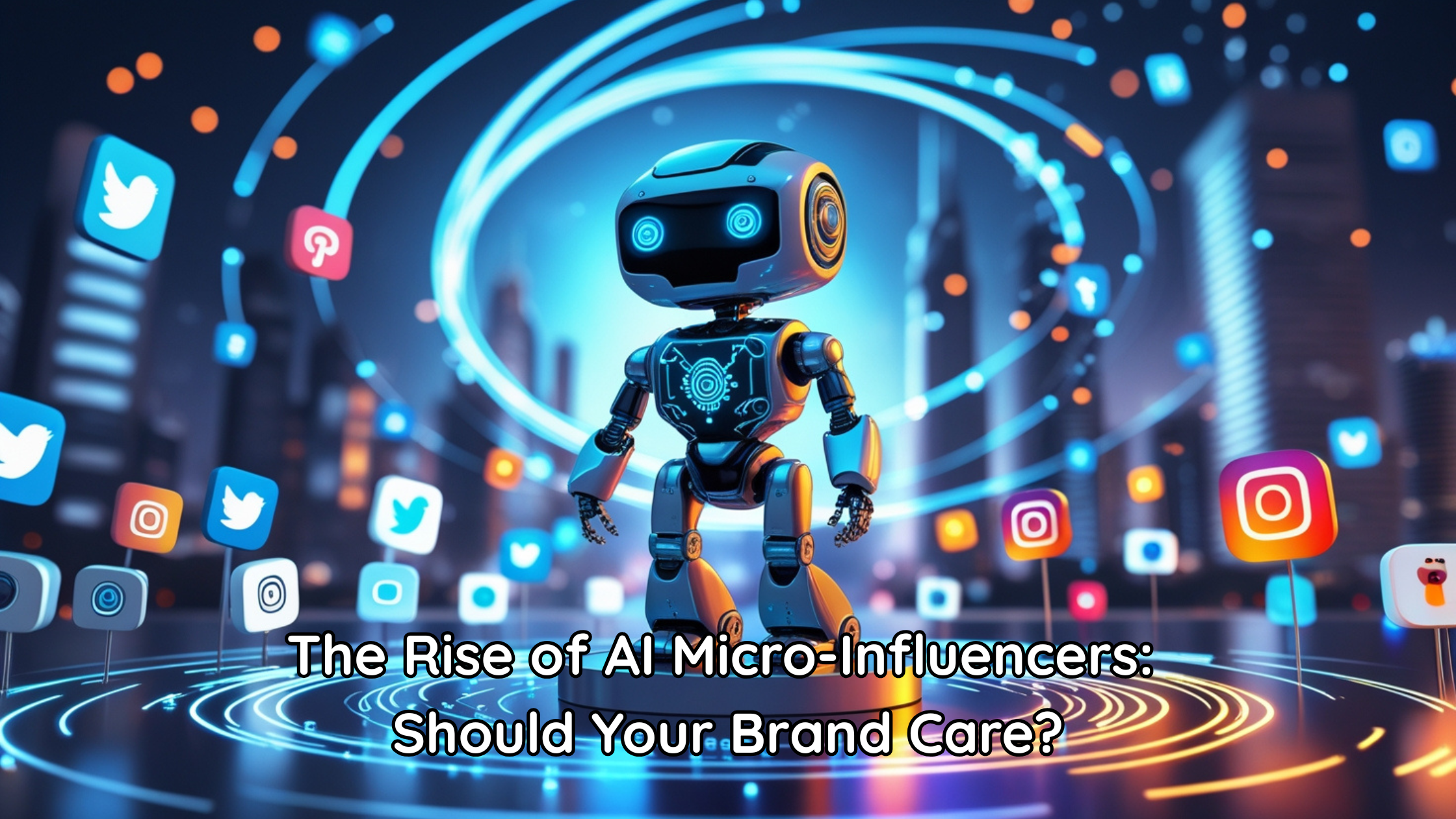
In 2025, influencer marketing is evolving faster than ever. Enter: AI micro-influencers — virtual personas powered by artificial intelligence with a growing presence on platforms like Instagram, TikTok, and YouTube.
They’re not human, but they post, interact, and influence just like us. The big question is: Should your brand care?
In this post, we’ll break down what AI micro-influencers are, their benefits and limitations, and how they fit into your digital strategy.
🤖 What Are AI Micro-Influencers?
AI micro-influencers are virtual influencers with follower counts typically between 1,000 to 100,000. Unlike mega-influencers or celebrities, they focus on niche communities — beauty, fitness, gaming, fashion, finance, etc.
These influencers are created using:
AI-generated visuals (via tools like Midjourney or DALL·E)
Natural language models for captions & replies (like ChatGPT)
Behavioral algorithms to simulate human engagement
Think: a 25-year-old AI fashionista with a vegan lifestyle and 50k followers who never sleeps, never ages, and always posts on time.
📈 Why Are AI Micro-Influencers on the Rise?
Here are 5 reasons why they’re exploding in popularity:
Cost-Effective
You don’t need to negotiate contracts, send free products, or worry about payments.Always On-Brand
Brands can control the voice, tone, and aesthetics 100% of the time.Scalable Content
AI can generate content 24/7 without burnout.Data-Driven Personalization
AI tools can create hyper-personalized campaigns for niche audiences.No Human Scandals
No risk of PR disasters, rude comments, or brand violations.
🧩 Should Your Brand Use AI Micro-Influencers?
Here’s a breakdown depending on your brand size and goals:
✅ You Should Consider AI Influencers If:
You’re a tech-savvy startup or eCommerce brand
Your audience is Gen Z or digital-native Millennials
You want to experiment affordably before hiring big creators
You need consistent, fast-paced content
❌ You Might Avoid Them If:
Your product depends on real human trust (e.g., healthcare, baby products)
You market to older demographics
Your brand focuses heavily on authentic storytelling
🛠️ How to Work with AI Micro-Influencers
You have two main options:
1. Partner with Existing AI Influencers
Like:
Lil Miquela (fashion/music)
Shudu (beauty)
Noonoouri (luxury)
2. Create Your Own AI Influencer
You’ll need:
AI image generation (e.g., Midjourney, Leonardo.Ai)
Text generation (e.g., ChatGPT)
Scheduling & automation (e.g., Later, Buffer)
Social listening tools (e.g., Brandwatch)
🧪 Real-World Examples
💄 L’Oréal’s AI Influencer
L’Oréal launched an AI beauty ambassador that answers skincare questions and recommends products — with higher engagement than some real influencers.
🧥 Zalando’s Virtual Models
The fashion eCommerce brand used AI models to wear clothing — increasing click-through rates by 35%.
⚖️ Pros vs Cons at a Glance
| Pros | Cons |
|---|---|
| Low cost | May feel inauthentic |
| Scalable 24/7 | Limited spontaneity |
| Full creative control | Audience trust issues |
| Perfectly on-brand | No “human” endorsements |
🔍 SEO Benefits of AI Micro-Influencers
AI influencers can boost your SEO indirectly by:
Generating shareable content
Increasing branded search queries
Driving traffic to your website/socials
Helping you dominate niche keywords with influencer collabs
🚀 Final Thoughts: Are AI Micro-Influencers the Future?
They’re not a replacement for humans — yet. But in the evolving landscape of influencer marketing, AI micro-influencers are becoming powerful allies for the right brands.
If you’re forward-thinking, want to stand out, and appeal to younger, digital-native audiences, this could be a game-changer.
📌 Key Takeaways
AI micro-influencers are low-cost, scalable virtual personas.
Great for brand control, niche targeting, and Gen Z engagement.
Not suited for every industry — authenticity still matters.
You can partner with existing ones or build your own AI brand asset.
🎯 SEO Keywords to Include Throughout the Blog
AI micro-influencers
virtual influencers
influencer marketing trends 2025
should brands use AI influencers
AI in social media marketing
create AI influencer for brand