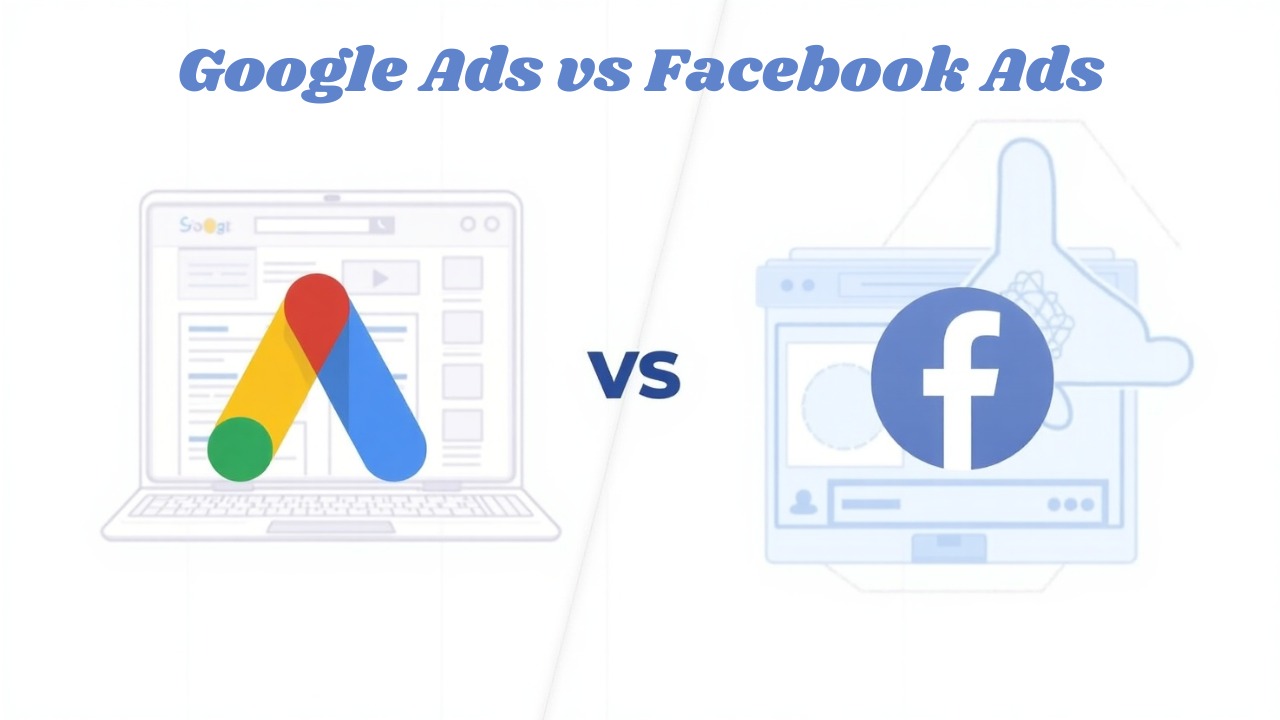
In today’s digital landscape, paid advertising is essential for business growth. But with multiple platforms available, the big question is: Google Ads or Facebook Ads—where should you invest your budget?
Both platforms offer unique advantages, and the right choice depends on your goals, target audience, and industry. Let’s break down the key differences and help you decide which platform is best for your business.
📌 Google Ads vs. Facebook Ads: The Key Differences
| Feature | Google Ads | Facebook Ads |
|---|---|---|
| Ad Type | Search, Display, Shopping, Video, App | Image, Video, Carousel, Stories, Lead Forms |
| Targeting | Keyword-based | Interest & demographic-based |
| User Intent | High (people actively searching) | Passive (users discover ads while browsing) |
| Best For | Capturing demand, driving conversions | Building awareness, engaging audiences |
| Cost | Higher CPC (Cost-Per-Click) | Lower CPC but variable ROI |
| Placement | Google Search, YouTube, Partner Sites | Facebook, Instagram, Messenger, Audience Network |
🔹 Google Ads: Best for High-Intent Searches & Conversions
Google Ads works on a pay-per-click (PPC) model, meaning you only pay when someone clicks your ad. With over 8.5 billion searches per day, Google Ads helps businesses reach highly motivated customers who are actively searching for products or services.
✅ Why Invest in Google Ads?
✔ High Intent – Users are searching with a purpose, increasing chances of conversion.
✔ Diverse Ad Formats – Search ads, display ads, video ads, shopping ads, and more.
✔ Strong ROI for Lead Generation – Best for businesses offering services, B2B solutions, and e-commerce products.
✔ Local & Global Reach – Perfect for businesses targeting both local customers and international audiences.
💡 Best for: E-commerce, service-based businesses, B2B companies, local businesses.
🔹 Facebook Ads: Best for Engagement & Brand Awareness
Unlike Google, where users search for what they need, Facebook Ads help brands create demand by showing relevant ads to people based on their interests, behaviors, and demographics.
✅ Why Invest in Facebook Ads?
✔ Advanced Audience Targeting – Reach users based on interests, location, behaviors, and even lookalike audiences.
✔ Lower CPC (Cost-Per-Click) – Generally cheaper than Google Ads, making it budget-friendly.
✔ Visual & Engaging Formats – Video, carousel, and story ads drive more engagement.
✔ Great for Retargeting – Convert warm leads by showing ads to users who visited your website or interacted with your brand.
💡 Best for: E-commerce brands, lifestyle & fashion, local businesses, and B2C brands.
🔹 Google Ads vs. Facebook Ads: Which One Should You Choose?
Choose Google Ads if:
✅ Your business relies on high-intent searches (e.g., “best digital marketing agency near me”).
✅ You want to drive immediate sales or conversions.
✅ You are in a competitive industry and need to reach customers actively searching for solutions.
✅ You have a higher budget and want strong search engine visibility.
Choose Facebook Ads if:
✅ You want to build brand awareness and reach new audiences.
✅ Your business thrives on visual content (e.g., fashion, fitness, lifestyle brands).
✅ You want to retarget website visitors and increase engagement.
✅ You have a smaller budget but still want impactful ad reach.
🔹 The Winning Strategy: Use Both for Maximum Impact
Rather than choosing one over the other, the best strategy is to use Google Ads and Facebook Ads together.
💡 Example Strategy:
1️⃣ Use Google Ads to target high-intent buyers ready to convert.
2️⃣ Use Facebook Ads to build brand awareness and retarget users who didn’t convert the first time.
3️⃣ Combine both to create a full-funnel marketing strategy for long-term success.
🚀 Want to scale your business with the right ad strategy? Let Trending Bulb help you maximize ROI and achieve high-converting results!
📩 Contact Trending Bulb today to get started!
#GoogleAds #FacebookAds #DigitalMarketing #PPC #AdvertisingStrategy #TrendingBulb