Introduction
In today’s competitive digital world, businesses need effective ways to communicate with customers. Traditional marketing methods, such as SMS campaigns and email newsletters, still have value. However, customers increasingly prefer instant, convenient and personalised communication.
This is where WhatsApp Bulk Messaging in India becomes an important marketing strategy.
With WhatsApp becoming a popular business communication channel, companies can connect with customers, share promotional offers and announce new products more efficiently. Moreover, businesses can use WhatsApp to maintain relationships with existing customers while attracting potential buyers.
Whether you operate a retail store, an e-commerce company, a healthcare service or an educational institute, WhatsApp bulk messaging can support your marketing objectives.
However, sending messages to hundreds or thousands of customers requires proper planning. Businesses must also follow WhatsApp’s messaging policies and obtain appropriate customer permissions.
In this complete guide, Trending Bulb explains how Indian businesses can use WhatsApp bulk messaging effectively. Additionally, we will explore how Campaign Plus and Step4Growth can help companies improve customer communication, automate marketing activities and generate business opportunities.
1. What Is WhatsApp Bulk Messaging?
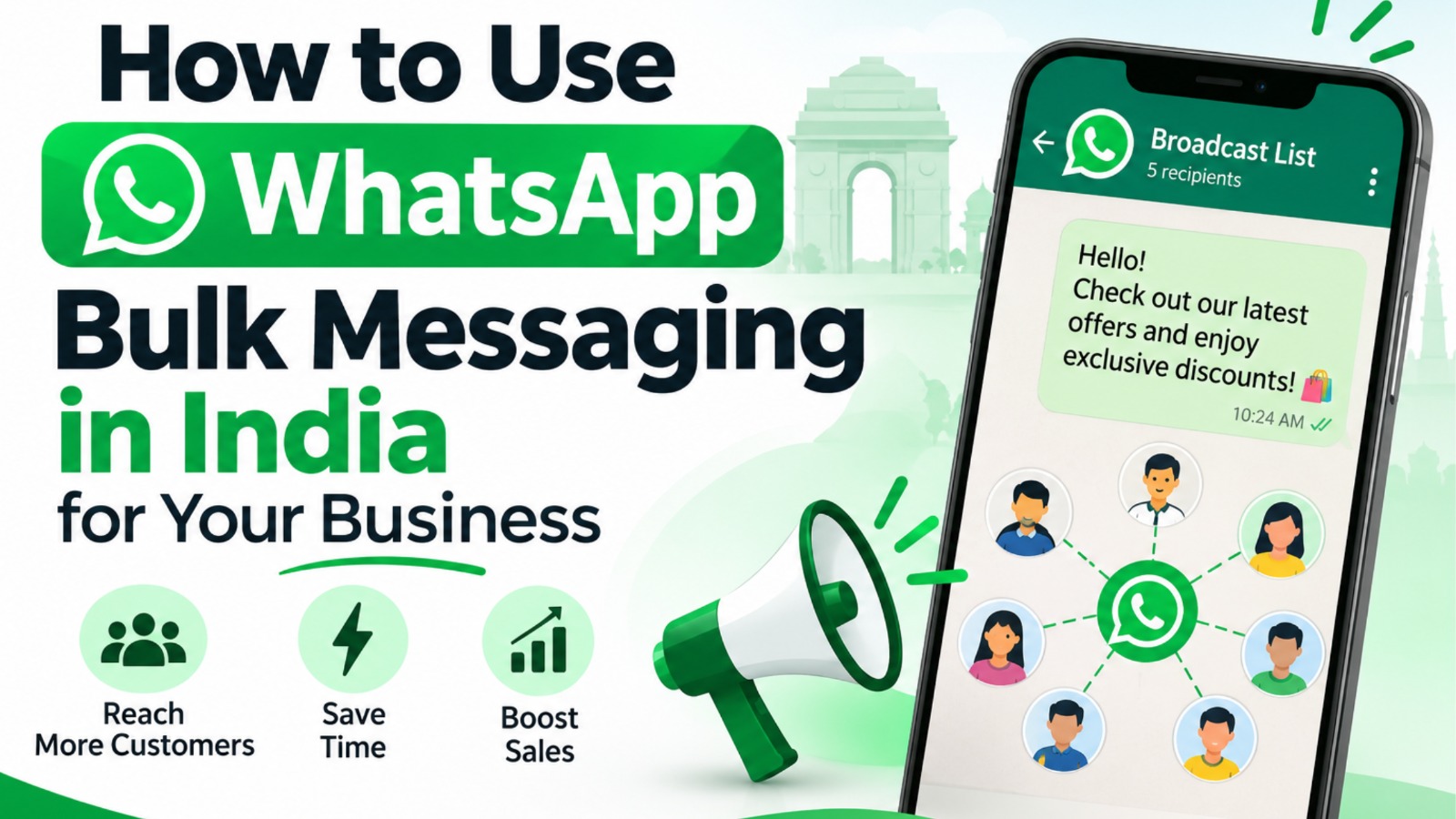
WhatsApp bulk messaging refers to sending business messages to multiple customers through WhatsApp using supported business messaging tools.
Instead of sending individual messages manually, businesses can use broadcast features or the WhatsApp Business Platform to manage larger communication campaigns.
For example, imagine that you own a clothing store in Mumbai. You want to announce your new Diwali collection to 2,000 existing customers.
Sending every announcement individually would consume considerable time. However, an appropriate WhatsApp bulk messaging solution allows you to manage your campaign more efficiently.
Businesses can use bulk messaging for several purposes, including:
- New product announcements.
- Festival offers and discounts.
- Promotional campaigns.
- Order confirmations and updates.
- Appointment reminders.
- Payment notifications.
- Event invitations.
- Customer feedback requests.
- Restock announcements.
- Special customer offers.
Furthermore, businesses can personalise their messages to make communication more relevant.
Therefore, WhatsApp bulk messaging is not simply about sending numerous messages. Instead, it focuses on delivering useful information to the right audience at the right time.
2. Why Is WhatsApp Bulk Messaging Important for Indian Businesses?
India has a large and active WhatsApp user base. Consequently, the platform has become an important communication channel for businesses across different industries.
Customers already use WhatsApp to communicate with friends, families and service providers. Therefore, businesses can connect with potential buyers through a familiar platform.
Let’s explore its major benefits.
A. Direct Customer Communication
WhatsApp allows businesses to communicate directly with customers who have agreed to receive relevant updates.
Unlike traditional advertising, where customers must discover your advertisement, WhatsApp campaigns can reach an existing permission-based audience.
For instance, a beauty salon can inform its customers about a festive package or a special appointment offer.
Moreover, businesses can share important updates without depending entirely on social media algorithms.
As a result, WhatsApp becomes a useful addition to a company’s digital marketing strategy.
B. Better Customer Engagement
Customer engagement plays an important role in business growth.
With WhatsApp bulk messaging, companies can share product images, promotional videos, catalogues and interactive messages.
Additionally, customers can respond directly to businesses and ask questions about their products or services.
This creates an opportunity for two-way communication. Instead of simply viewing an advertisement, customers can start meaningful conversations with a brand.
Consequently, businesses can build stronger relationships and understand customer requirements more effectively.
C. Improved Lead Generation
WhatsApp can support lead generation by encouraging interested customers to start conversations.
For example, a real estate company can share information about a new property project and invite potential buyers to request pricing details.
Similarly, an educational institute can promote its courses and encourage students to enquire about admissions.
Furthermore, businesses can connect WhatsApp with their lead management systems to organise incoming enquiries.
Therefore, WhatsApp campaigns can help move potential customers towards the next stage of the buying journey.
D. Cost-Effective Marketing
WhatsApp marketing can become an effective addition to a business’s marketing budget.
However, businesses should understand that WhatsApp Business Platform messaging may involve Meta charges and additional provider fees.
The overall cost depends on message categories, recipient locations, provider pricing and campaign requirements.
Nevertheless, targeted campaigns can help companies use their marketing resources more efficiently.
E. Stronger Customer Relationships
Regular communication helps businesses maintain relationships with existing customers.
For example, an online store can share order updates, delivery information and relevant product recommendations.
In addition, companies can collect customer feedback and provide support through WhatsApp.
As a result, customers receive a more connected experience throughout their buying journey.
3. Choose the Right WhatsApp Bulk Messaging Solution
Before launching a campaign, businesses should understand the difference between the WhatsApp Business App and the WhatsApp Business Platform.
Although both options support business communication, they serve different requirements.
WhatsApp Business App
The WhatsApp Business App is suitable for smaller businesses that manage customer conversations on a limited scale.
It offers useful features such as:
- Business profiles.
- Product catalogues.
- Quick replies.
- Customer labels.
- Greeting messages.
- Away messages.
- Broadcast lists, subject to applicable limitations.
However, the app has limitations when businesses require advanced automation, team collaboration and larger-scale marketing campaigns.
Additionally, broadcast delivery depends on applicable account and recipient requirements.
WhatsApp Business Platform (API)
The WhatsApp Business Platform is designed for companies that require advanced communication and automation capabilities.
It allows businesses to connect WhatsApp messaging with approved business platforms and workflows.
Important capabilities include:
- Large-scale messaging through approved templates.
- Automated customer responses.
- Multiple-agent inbox management.
- CRM integration.
- Lead management.
- Customer segmentation.
- Campaign reporting.
- Automated notifications.
- Structured customer journeys.
Furthermore, businesses can connect WhatsApp communication with their sales and customer support processes.
Therefore, companies planning to expand their marketing activities should evaluate the WhatsApp Business Platform.
4. How to Use WhatsApp Bulk Messaging in India: Step-by-Step Guide
A successful WhatsApp campaign requires more than a contact list and a promotional message.
Businesses must plan their audience, content, campaign objectives and follow-up process.
Here is a practical step-by-step approach.
Step 1: Define Your Marketing Objective
First, decide what you want to achieve through your WhatsApp bulk messaging campaign.
Different objectives require different messaging strategies.
For example, your business may want to:
- Increase product sales.
- Generate qualified leads.
- Promote a new product.
- Announce festival discounts.
- Encourage repeat purchases.
- Share important business updates.
- Improve customer retention.
If your goal is to increase sales, create a campaign that highlights product benefits and includes a clear buying action.
On the other hand, if you want to generate enquiries, encourage customers to reply or visit your website.
Therefore, defining your objective helps you create a focused marketing campaign.
Step 2: Build a Permission-Based Customer Database
Your customer database is one of the most important elements of WhatsApp marketing.
However, businesses should never purchase random contact lists or send unsolicited promotional messages.
Instead, collect customer details through legitimate business interactions and clear permission-based subscription methods.
You can collect customer information through:
- Website enquiry forms.
- Online purchases.
- Store registration forms.
- QR codes.
- Click-to-WhatsApp advertisements.
- Subscription forms.
- Existing customer interactions.
Additionally, explain your business identity and the types of messages customers can expect.
Always provide a simple way for customers to stop receiving promotional messages.
As a result, a permission-based database helps improve campaign relevance and reduces unwanted communication.
Step 3: Segment Your Audience
Not every customer has the same interests or requirements.
For example, a clothing brand may have customers interested in men’s fashion, women’s fashion and children’s clothing.
Sending identical promotions to everyone may reduce customer engagement.
Therefore, divide your contact database into relevant groups.
Useful customer segments include:
- New customers.
- Existing customers.
- Repeat buyers.
- Interested leads.
- Inactive customers.
- Product-specific customers.
- Location-based customers.
For instance, an online beauty brand can send skincare offers to customers interested in skincare products.
Similarly, a jewellery store can share bridal collection updates with customers who have expressed interest in wedding jewellery.
Consequently, audience segmentation makes campaigns more relevant and customer-focused.
Step 4: Create an Engaging WhatsApp Message
Your message determines whether customers will pay attention to your campaign.
Therefore, keep your content simple, relevant and easy to understand.
A good WhatsApp marketing message should include:
- A personalised greeting.
- A clear announcement.
- An attractive offer or useful information.
- A strong call to action.
- Your business identity.
Example: Fashion Store Promotional Message
Hello {{Name}}!
Our new festive collection has arrived!
Explore stylish outfits, exclusive designs and special festive offers.
Discover your favourite look today.
Shop Now: {{Website Link}}
Thank you for being part of our community!
Moreover, use relevant images or product links when they add value to the message.
However, avoid excessive promotional language, misleading claims and unnecessary links.
Additionally, use approved message templates when initiating conversations through the WhatsApp Business Platform.
Step 5: Choose a Reliable WhatsApp API Platform
If your business wants to manage large-scale campaigns, consider an appropriate WhatsApp Business Platform solution.
A reliable platform should support your actual business requirements.
Look for features such as:
- Official WhatsApp Business Platform connectivity.
- Bulk campaign management.
- Message template management.
- Automated replies.
- Shared team inbox.
- Customer segmentation.
- CRM integration.
- Campaign analytics.
- Contact management.
- Customer support.
For example, Campaign Plus offers WhatsApp messaging, chatbot and automation capabilities that businesses can explore.
Moreover, suitable automation workflows can help manage enquiries, organise customer conversations and improve communication efficiency.
Therefore, choosing the right platform can create a more structured WhatsApp marketing process.
Step 6: Schedule Your WhatsApp Campaign
Timing can influence how customers respond to your messages.
Therefore, choose a suitable schedule based on your audience and campaign objective.
For example:
- Retail stores can announce weekend offers.
- Restaurants can promote lunch and dinner specials.
- Educational institutes can share admission updates.
- E-commerce businesses can announce seasonal sales.
- Healthcare providers can share relevant appointment reminders.
However, avoid sending too many messages within a short period.
Instead, maintain a reasonable communication frequency and monitor customer feedback.
As a result, your campaigns can remain useful without overwhelming your audience.
Step 7: Track Campaign Performance
After sending your campaign, evaluate its performance.
Importantly, do not measure success only by the number of messages sent.
Instead, monitor important campaign metrics such as:
- Messages delivered.
- Read rates, where available.
- Customer replies.
- Link clicks, where tracked.
- Generated enquiries.
- Qualified leads.
- Purchases.
- Unsubscribes and negative feedback.
Furthermore, compare different campaigns to identify which messages generate better responses.
This information can help you improve future marketing decisions.
5. Best WhatsApp Bulk Messaging Strategies for Different Industries in India
WhatsApp bulk messaging can support businesses across different industries.
However, every company should develop a strategy according to its customers, products and services.
Let’s look at some practical examples.
A. Retail and Clothing Businesses
Retail brands can use WhatsApp to announce new collections, seasonal discounts and exclusive shopping offers.
For example, a clothing store can share product images with customers who have subscribed to promotional updates.
Additionally, brands can send restock announcements when popular products become available.
As a result, businesses can stay connected with existing buyers and encourage repeat purchases.
B. E-Commerce Businesses
Online stores can use WhatsApp to support customers throughout their shopping journey.
For instance, they can send:
- Product launch announcements.
- Order confirmations.
- Shipping updates.
- Delivery notifications.
- Relevant promotional offers.
- Back-in-stock announcements.
Moreover, businesses can use automated workflows to handle common customer questions.
Consequently, customers receive useful information without waiting for manual responses.
C. Real Estate Businesses
Real estate companies can use WhatsApp campaigns to promote new property launches and generate enquiries.
For example, a property developer can share project images, location information and booking details with interested customers.
Furthermore, sales teams can follow up with customers who request additional information.
This approach helps organise communication and improve lead management.
D. Educational Institutes
Schools, colleges and coaching institutes can use WhatsApp to share admission announcements, course details and important updates.
For example, an institute can send information about upcoming batches to interested students.
Additionally, automated responses can answer common questions about fees, course duration and admission procedures.
Therefore, educational institutions can improve communication with prospective students.
E. Healthcare and Wellness Businesses
Clinics, wellness centres and healthcare providers can use WhatsApp for appropriate appointment-related communication.
For instance, they can share appointment confirmations, scheduling information and service updates.
However, businesses must protect personal information and follow applicable privacy and professional requirements.
F. Restaurants and Food Businesses
Restaurants can share menu updates, seasonal offers and special dining announcements.
For example, a restaurant can promote a weekend food festival to customers who have opted to receive promotional messages.
Moreover, customers can use WhatsApp to ask questions or enquire about reservations.
As a result, restaurants can create a convenient communication channel for their customers.
6. How WhatsApp Automation Improves Bulk Messaging
Sending bulk messages is only one part of an effective WhatsApp marketing strategy.
Businesses must also manage customer replies and follow-up conversations.
This is where WhatsApp automation becomes valuable.
With automation, companies can create workflows that handle repetitive communication tasks.
Let’s understand some important applications.
Automated Welcome Messages
When a customer starts a conversation, an automated welcome message can introduce your business.
Additionally, it can provide options for products, services or customer support.
As a result, customers can understand how to proceed without waiting for a manual response.
Automated FAQ Responses
Customers often ask similar questions about pricing, availability, delivery and business hours.
Therefore, businesses can use chatbots to provide instant answers to frequently asked questions.
This approach can reduce repetitive work for customer support teams.
Automated Lead Qualification
A chatbot can ask customers relevant questions about their requirements.
For example, a real estate chatbot can ask about preferred location, property type and budget range.
Consequently, the sales team can prioritise enquiries based on the information collected.
Automated Follow-Ups
Businesses can create appropriate follow-up workflows for customers who have requested additional information or shown interest.
However, follow-up messages must respect customer permissions and WhatsApp messaging rules.
Multiple-Agent Customer Support
As businesses grow, managing every conversation through one person becomes difficult.
A shared team inbox allows multiple agents to manage customer conversations more efficiently.
Campaign Plus provides WhatsApp automation and chatbot solutions that businesses can explore to organise communication and support customer engagement.
In addition, businesses can work with Step4Growth to develop a broader digital marketing strategy connecting WhatsApp campaigns with lead generation, customer acquisition and online growth.
Therefore, combining messaging and automation can help businesses manage customer communication more effectively.
7. WhatsApp Bulk Messaging Rules and Best Practices in India
Using WhatsApp for business marketing requires attention to platform policies and applicable laws.
Before launching a campaign, businesses should understand the following guidelines.
Obtain Appropriate Customer Permission
Only contact customers who have agreed to receive relevant business communications.
Clearly identify your business and explain the types of messages they will receive.
Furthermore, respect customer requests to stop receiving promotional messages.
Use Approved Message Templates
On the WhatsApp Business Platform, businesses must use approved message templates to initiate conversations.
These templates are categorised according to their intended purpose, such as marketing, utility and authentication.
Additionally, businesses should use each template only for its approved purpose.
Understand the 24-Hour Customer Service Window
When a customer sends a message to your business, a 24-hour customer service window opens and resets with each new customer message.
During this window, businesses can respond using free-form messages.
However, outside this window, businesses must use approved message templates to initiate communication.
Therefore, companies should plan their customer support and follow-up workflows accordingly.
Always check the latest Meta messaging rules because platform policies and pricing can change.
Avoid Spam and Misleading Content
Do not send irrelevant messages repeatedly.
Similarly, avoid misleading offers, deceptive claims and excessive promotional communication.
If customers frequently block or report your business, your messaging quality may suffer.
Consequently, focus on useful content and relevant communication.
Follow Applicable Data Protection Requirements
Businesses should handle customer information responsibly.
Collect only the information required for your business purpose and protect it from unauthorised access.
Additionally, follow applicable Indian data protection requirements and WhatsApp’s business policies.
Importantly, TRAI’s DLT requirements apply to regulated commercial SMS communication. Do not assume that SMS registration and WhatsApp Business Platform requirements are identical.
8. Common WhatsApp Bulk Messaging Mistakes Businesses Should Avoid
Although WhatsApp marketing offers several opportunities, incorrect campaign practices can reduce results.
Here are some common mistakes and ways to avoid them.
1. Sending Messages Without Permission
Sending promotional messages to people who never agreed to receive them can create negative customer experiences.
Instead, build a permission-based customer database.
2. Sending the Same Message to Everyone
Different customers have different requirements.
Therefore, segment your audience and share relevant information.
3. Sending Too Many Messages
Frequent promotional messages can annoy customers.
As a result, people may block your business or unsubscribe.
To avoid this problem, maintain a sensible messaging schedule.
4. Ignoring Customer Replies
Bulk messaging should encourage conversations.
However, some businesses send campaigns without preparing their support teams to handle incoming enquiries.
Therefore, make sure someone can respond to customer questions.
5. Choosing an Unreliable Messaging Tool
Businesses should avoid tools that promise unlimited messaging without considering official platform policies.
Instead, choose a suitable WhatsApp Business Platform solution with transparent pricing and reliable support.
6. Not Measuring Campaign Results
Without performance tracking, businesses cannot identify what works.
Therefore, review delivery information, customer responses, enquiries and conversions after each campaign.
9. How to Calculate the Cost of WhatsApp Bulk Messaging in India
Understanding the cost of WhatsApp bulk messaging helps businesses plan their marketing budgets.
However, there is no single fixed price for every WhatsApp campaign.
The total cost may include the following components.
1. Meta Messaging Charges
Meta charges businesses according to applicable message categories and recipient markets.
For example, marketing messages, utility messages and authentication messages have different pricing structures.
Additionally, applicable rates may change over time.
2. WhatsApp Platform Provider Charges
Some providers charge subscription fees for access to additional features.
These may include chatbot builders, automation, team inboxes and campaign management.
However, pricing structures differ between providers.
3. Additional Integration Costs
Businesses may also require CRM integration, customised workflows or other technical services.
Therefore, the overall cost depends on the company’s communication requirements.
Before selecting a platform, compare its features, pricing structure, support and scalability.
For accurate budgeting, always check the latest official Meta rate card and the provider’s current commercial terms.
10. How Campaign Plus and Step4Growth Help Businesses Grow with WhatsApp Marketing
Choosing the right strategy and technology is important for successful WhatsApp marketing.
However, businesses also need a clear plan for customer acquisition, communication and conversions.
This is where Campaign Plus and Step4Growth can support different aspects of business growth.
Campaign Plus: WhatsApp Automation and Business Messaging
Campaign Plus focuses on WhatsApp Business API solutions, business messaging and automation.
Its capabilities help businesses organise their WhatsApp communication more effectively.
Businesses can explore solutions such as:
- WhatsApp bulk messaging.
- WhatsApp chatbot automation.
- Automated customer responses.
- Customer communication management.
- Marketing campaign management.
- Lead enquiry handling.
- Team inbox functionality.
Moreover, automation can reduce repetitive manual work and help businesses respond to customer enquiries more efficiently.
For companies looking to improve their WhatsApp marketing process, Campaign Plus offers a platform to support business communication and automation requirements.
Step4Growth: Digital Marketing and Lead Generation
WhatsApp marketing works best when it becomes part of a larger digital marketing strategy.
Step4Growth helps businesses focus on digital marketing activities that support online visibility, audience engagement and lead generation.
For example, businesses can combine:
- Meta advertising campaigns.
- Social media marketing.
- Website optimisation.
- Search engine optimisation.
- Lead generation strategies.
- WhatsApp marketing.
- Customer conversion activities.
Furthermore, combining advertising with WhatsApp communication can create a more connected customer journey.
A potential customer may discover a business through a Facebook or Instagram advertisement. After clicking the WhatsApp button, that customer can start a conversation and enquire about the product or service.
Consequently, businesses can connect advertising, lead generation and customer communication through a structured marketing approach.
11. Tips to Make Your WhatsApp Bulk Messaging Campaign More Successful
To improve campaign performance, businesses should follow a consistent strategy.
Here are some practical recommendations.
1. Personalise Your Messages
Use customer names and relevant information wherever appropriate.
Moreover, personalise your message according to customer interests and previous interactions.
This can make communication more relevant and engaging.
2. Use Attractive Visual Content
Product images, promotional creatives and short videos can help communicate information effectively.
However, make sure your visuals are clear and relevant to your campaign.
3. Include a Clear Call to Action
Tell customers what they should do next.
For example, use actions such as Shop Now, Enquire Today, Book an Appointment or Explore Products.
As a result, customers can understand the next step without confusion.
4. Test Different Message Formats
Experiment with different headlines, message lengths and offers.
Then, compare the results to understand which approach performs better.
Furthermore, use those insights to improve your next campaign.
5. Maintain Consistent Communication
Stay connected with customers without overwhelming them.
Instead of sending promotional messages every day, share valuable and relevant information.
6. Combine WhatsApp with Other Marketing Channels
Use WhatsApp alongside SEO, social media, email and paid advertising.
Additionally, connect your advertising campaigns with WhatsApp conversations wherever suitable.
This creates more opportunities for customers to discover and interact with your business.
7. Focus on Customer Experience
Respond to enquiries promptly and provide accurate information.
Moreover, make sure your team understands customer requirements before recommending products or services.
Ultimately, a positive customer experience is more valuable than simply sending a large number of messages.
12. The Future of WhatsApp Bulk Messaging for Indian Businesses
Business communication continues to evolve as customers expect faster responses and more personalised experiences.
Consequently, WhatsApp marketing is becoming an important part of digital communication strategies.
Automation, artificial intelligence, CRM integration and conversational commerce are creating new opportunities for businesses.
For example, companies can use chatbots to guide customers through product enquiries, collect lead information and provide basic support.
Similarly, CRM integration can help sales teams manage customer information and follow-up activities.
Furthermore, businesses can connect advertising campaigns with WhatsApp conversations to create a smoother customer journey.
However, technology alone does not guarantee business growth.
Companies must combine the right tools with useful content, relevant targeting and responsible messaging practices.
Therefore, businesses that focus on customer needs and communication quality can build stronger relationships over time.
Conclusion
WhatsApp bulk messaging in India offers businesses an effective way to communicate with customers, promote products, generate enquiries and strengthen customer relationships.
However, successful WhatsApp marketing requires more than sending messages to a large contact list.
Businesses must build permission-based databases, segment their audiences, create engaging content and follow WhatsApp’s messaging policies.
Moreover, combining bulk messaging with chatbot automation and lead management can improve communication efficiency.
With Campaign Plus, businesses can explore WhatsApp Business API, bulk messaging and automation solutions to support customer communication.
At the same time, Step4Growth can help businesses connect WhatsApp marketing with broader digital marketing and lead generation strategies.
As highlighted by Trending Bulb, the key to successful WhatsApp marketing is simple: send relevant messages, provide genuine value and build meaningful customer relationships.
Ready to improve your business communication with WhatsApp?
Explore WhatsApp automation, chatbot and business messaging solutions with Campaign Plus. Additionally, discover digital marketing strategies with Step4Growth to support your business growth.
Frequently Asked Questions (FAQs)
1. What is WhatsApp bulk messaging in India?
WhatsApp bulk messaging allows businesses to send relevant messages to multiple customers through WhatsApp using supported business messaging tools. Companies use it for promotions, product announcements, customer updates and lead generation.
2. How can I send bulk WhatsApp messages to customers?
You can use the WhatsApp Business App’s broadcast functionality for smaller-scale communication or the WhatsApp Business Platform for advanced messaging and automation. However, always follow applicable messaging policies and customer permission requirements.
3. Is WhatsApp bulk messaging legal in India?
Businesses can use WhatsApp for legitimate business communication. However, they must comply with WhatsApp’s policies, applicable Indian laws and customer consent requirements. Therefore, avoid sending unsolicited or misleading promotional messages.
4. What is the difference between WhatsApp Business App and WhatsApp API?
The WhatsApp Business App supports basic business communication, while the WhatsApp Business Platform provides advanced capabilities such as approved template messaging, automation, CRM integration and multi-agent communication.
5. Can I automate WhatsApp bulk messaging?
Yes. Businesses can use suitable WhatsApp Business Platform solutions to manage approved messaging campaigns and automate customer communication. For example, Campaign Plus provides WhatsApp automation and chatbot capabilities.
6. How much does WhatsApp bulk messaging cost in India?
The cost depends on Meta’s applicable message charges, message categories, recipient locations and additional platform or provider fees. Therefore, businesses should check the latest pricing before planning a campaign.
7. Can WhatsApp bulk messaging generate leads?
Yes. Businesses can use relevant promotional messages, product announcements and enquiry campaigns to encourage customers to start conversations. Additionally, chatbots can help collect lead information and organise enquiries.
8. Which businesses can use WhatsApp bulk messaging?
Retail stores, e-commerce companies, educational institutes, real estate businesses, healthcare providers, restaurants and service-based companies can all use WhatsApp messaging for appropriate business communication.
9. How can I improve WhatsApp bulk messaging results?
Segment your audience, personalise messages, use clear calls to action, maintain appropriate messaging frequency and monitor campaign performance. Furthermore, respond to customer enquiries promptly.
10. Which platform can help businesses with WhatsApp automation?
Campaign Plus provides WhatsApp Business API-related messaging, chatbot and automation solutions that businesses can explore to improve customer communication and marketing workflows.
About Trending Bulb
Trending Bulb shares insights, guides and updates on digital marketing, WhatsApp Business API, automation, technology and online business growth.
Through informative content, Trending Bulb helps businesses understand changing digital trends and explore practical marketing strategies.
Explore smarter business communication with Campaign Plus and digital growth strategies with Step4Growth.